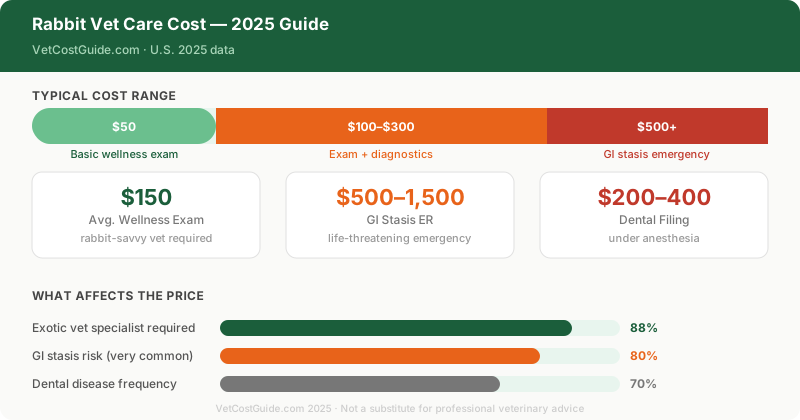
Rabbits are often marketed as low-maintenance pets — but their veterinary care is anything but cheap. Because rabbits are considered exotic animals in veterinary medicine, they require a specialist with specific training, and that expertise comes at a premium. The average wellness exam at an exotic vet costs $75–$150, and common health problems like GI stasis can generate bills of $500–$1,500 overnight. Anyone considering a rabbit as a pet should understand these costs before bringing one home.
- Rabbit wellness exams cost $75–$150 at an exotic or rabbit-savvy veterinarian — not all vets see rabbits.
- GI stasis, the most common rabbit emergency, costs $500–$1,500 for hospitalization and treatment.
- Chronic dental disease requires anesthesia-based filing every 3–6 months at $200–$500 per procedure.
- Annual vet costs for a healthy rabbit run $300–$800; senior rabbits or those with dental issues average $1,000–$3,000/year.
Rabbit Vet Care Cost Breakdown
| Service | Low Estimate | High Estimate |
|---|---|---|
| Wellness exam (exotic vet) | $75 | $150 |
| Annual dental check | $100 | $200 |
| X-rays (2-view) | $150 | $300 |
| Bloodwork panel | $150 | $250 |
| Parasite diagnosis and treatment | $50 | $150 |
| GI stasis — outpatient treatment | $200 | $500 |
| GI stasis — hospitalization | $500 | $1,500 |
| Dental malocclusion filing (under anesthesia) | $200 | $500 |
| Head tilt (E. cuniculi) treatment | $150 | $400 |
| Abscess treatment (dental or other) | $300 | $800 |
| Urinary sludge/stones treatment | $300 | $700 |
| Annual wellness cost (healthy adult) | $300 | $800 |
| Annual wellness cost (senior/dental rabbit) | $1,000 | $3,000 |
What’s Included in Rabbit Vet Care
The exotic vet requirement is the most important thing to understand. Most general practice veterinarians do not see rabbits — and those who do without proper training can do more harm than good. Rabbits have unique physiology: they are obligate nasal breathers, have continuously growing teeth, and die quickly from GI slowdown. An exotic vet or rabbit-savvy small animal vet is essential.
Annual wellness exams include a full physical: weighing, examining teeth (both incisors and molars), assessing GI sounds with a stethoscope, palpating the abdomen, and checking skin and coat condition. Rabbits over age 5 benefit from annual bloodwork ($150–$250) to screen for early organ disease.
Dental care is the most common ongoing expense. Rabbit teeth grow continuously throughout life. Misalignment (malocclusion) of the incisors or molars causes spurs — sharp points that cut into the cheek or tongue. This requires filing under anesthesia, a $200–$500 procedure. Some rabbits need this every 3–6 months for life; others never develop the problem.
Diagnostic imaging: X-rays ($150–$300) are used to assess dental roots, detect GI blockages or gas, evaluate urinary tract stones, and diagnose spinal issues. Rabbit radiographs require positioning skill and sometimes sedation.
The GI Stasis Emergency
GI stasis — a dangerous slowdown or complete stop of the digestive tract — is the most common rabbit emergency and can be fatal within 24–48 hours if untreated. Unlike dogs and cats, rabbits must keep food moving through their gut continuously. Causes include stress, insufficient hay, pain, or dehydration.
Signs of GI stasis include refusing food, no fecal pellets, a hunched posture, and tooth grinding. This is a same-day emergency.
Treatment includes: IV or subcutaneous fluids, pain management (GI stasis is extremely painful), motility drugs, syringe feeding, and sometimes hospitalization for 24–48 hours of monitoring. Outpatient treatment if caught early runs $200–$500; hospitalization runs $500–$1,500.
What Affects the Cost
Finding an exotic vet affects cost significantly. In major cities, there are often multiple rabbit-experienced exotic practices competing on price. In rural or suburban areas, the nearest exotic vet may be 1–2 hours away, and there may be no competitive pricing pressure — fees trend higher.
Rabbit age is a major cost driver. Young, healthy rabbits under 3 have relatively modest vet expenses. Rabbits 5 and older develop dental disease, early kidney disease, and uterine cancer (in unspayed females) at high rates. Senior rabbit care costs easily double or triple what young rabbit care costs.
Breed affects dental risk. Dwarf breeds (Netherland Dwarf, Holland Lop, Mini Rex) have compressed skulls that predispose them to malocclusion. Larger breeds like Flemish Giants and New Zealand Whites have fewer dental issues on average.
Spay/neuter status dramatically affects cancer risk in females. An unspayed doe has an 80% chance of developing uterine cancer by age 5 — which then requires expensive surgery or leads to premature death.
- Never taking your rabbit to a vet who says “I don’t usually see rabbits, but I’ll try”: Incorrect anesthesia protocols and misdiagnosis of GI conditions are leading causes of preventable rabbit deaths. Always seek out an exotic vet or a practice that explicitly lists rabbits as a specialty.
- Ignoring teeth: Dental disease is silent until it’s severe. Annual molar exams require sedation because you cannot adequately visualize rabbit molars without specialized equipment. Do not skip this.
- Underestimating GI stasis urgency: Owners sometimes wait to see if a rabbit “perks up” overnight. GI stasis untreated for 24 hours often becomes fatal. Err on the side of an emergency visit.
- Pellet-heavy diets: High-pellet, low-hay diets are a leading cause of dental malocclusion and GI problems. Unlimited timothy hay should make up 80% of an adult rabbit’s diet.
Is Pet Insurance Worth It for Rabbits?
Yes — more so than for dogs and cats in many cases, because the gap between expected and emergency costs is enormous. A GI stasis hospitalization can cost more than two full years of pet insurance premiums in a single event.
A handful of insurers cover exotic pets including rabbits. Nationwide’s Avian and Exotic plan is the most widely cited option for rabbits. Monthly premiums run $25–$50 for a rabbit with a standard deductible and 90% reimbursement.
Coverage typically includes: illness treatment, emergency care, diagnostics, surgery, and hospitalization. Dental disease coverage varies — check the fine print. Pre-existing conditions including dental issues diagnosed before enrollment are excluded.
How to Save Money on Rabbit Vet Care
Spay your female rabbit early. Spaying a healthy young doe costs $250–$600 but eliminates the $1,500–$4,000 uterine cancer surgery that statistically affects 80% of unspayed females by age 5. This is the single highest-ROI health investment for female rabbits.
Feed unlimited timothy hay. This is not just nutritional advice — it’s the single best preventative for both dental disease and GI stasis. Hay wears down teeth naturally and keeps the gut moving. A large bale from a local feed store costs $15–$30 and lasts weeks. Bagged hay from pet stores costs three to five times more per pound.
Find an exotic vet before you have an emergency. Emergency exotic vet care is expensive and rare. Knowing your exotic vet’s number — and their emergency hours or partner emergency clinic — before your rabbit is sick is priceless.
Consider an exotic pet wellness plan. Some exotic practices offer in-house wellness plans covering the annual exam, basic dental check, and common diagnostics for a flat annual fee ($200–$400), similar to dog/cat wellness plans.
FAQ
Do rabbits need annual vaccinations? In the United States, there are currently no licensed rabbit vaccines for routine use in pet rabbits. (RHDV2, a deadly rabbit hemorrhagic disease, does not yet have a widely available licensed vaccine in the US as of 2025.) Annual exams are still critical for dental and GI monitoring.
How long do rabbits live, and what does senior care cost? Well-cared-for indoor rabbits live 8–12 years. Senior care (age 5+) costs $1,000–$3,000/year for a rabbit with dental disease, and increases if kidney disease, GI problems, or cancer develop. Budget accordingly if you’re adopting a young rabbit.
Why is rabbit anesthesia more dangerous? Rabbits are obligate nasal breathers and cannot be intubated the same way as dogs and cats. They are more sensitive to anesthetic agents and require specialized monitoring. An experienced exotic vet uses appropriate anesthetic protocols that make rabbit procedures safe — but an inexperienced vet using dog/cat protocols significantly increases risk.
Are there low-cost rabbit vet options? Rabbit rescues sometimes host low-cost vaccine clinics or can refer to rabbit-savvy vets with reasonable fees. House Rabbit Society chapters (houserabbit.org) maintain local resource lists. Some veterinary schools with exotic animal programs offer services at lower cost.