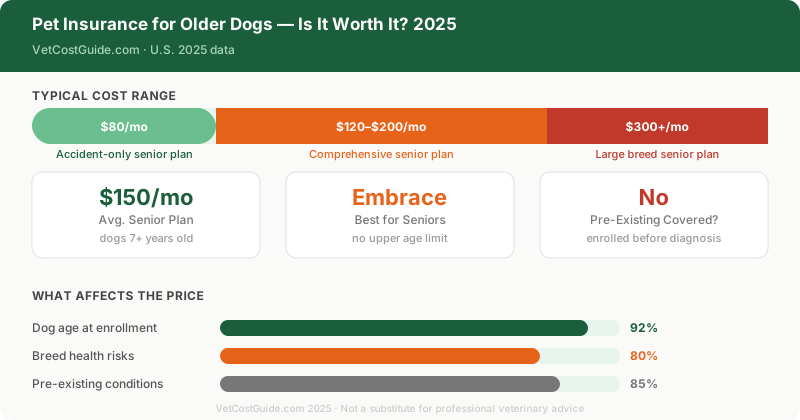
The math on pet insurance for older dogs is more nuanced than “premiums are high, so it’s not worth it.” Yes, a 9-year-old Labrador Retriever can cost $150 per month to insure—$1,800 per year. But a single cancer diagnosis, a spinal cord surgery, or a severe kidney disease episode can run $5,000 to $18,000 in a matter of weeks. The real question isn’t whether the premium is high; it’s whether the catastrophic coverage value exceeds the premium cost given your specific dog’s health history and breed risk profile. For a healthy senior dog with no prior diagnoses, the answer is often yes.
- Dogs aged 7–9 typically cost $80–$150/month to insure; dogs aged 10+ cost $120–$250/month depending on breed and location.
- Only Embrace, Nationwide, and Hartville have no upper age limit for new enrollments—other major carriers cap new enrollment at 14 years.
- Cancer affects approximately 1 in 3 dogs over age 10, with treatment costs averaging $5,000–$20,000—making this the primary financial risk to insure against.
- Pre-existing conditions already diagnosed will not be covered regardless of when you enroll, so the value calculation must focus on future, undiagnosed conditions.
Monthly Premium Costs for Senior Dogs (2025)
Estimates based on a medium-size dog (30–50 lbs) in the Columbus, Ohio market. $250 annual deductible, 80% reimbursement, $10,000 annual limit. Large or high-risk breeds (Great Dane, Bulldog, Rottweiler) will be priced higher.
| Age | Monthly Premium (Est.) | Annual Cost | Carriers That Accept New Enrollments |
|---|---|---|---|
| 7 years | $80–$115 | $960–$1,380 | All major carriers |
| 8 years | $95–$135 | $1,140–$1,620 | All major carriers |
| 9 years | $110–$155 | $1,320–$1,860 | Most major carriers |
| 10 years | $120–$175 | $1,440–$2,100 | Embrace, Nationwide, Hartville, ASPCA |
| 11 years | $135–$200 | $1,620–$2,400 | Embrace, Nationwide, Hartville |
| 12 years | $155–$240 | $1,860–$2,880 | Embrace, Nationwide, Hartville |
| 13–14 years | $175–$275 | $2,100–$3,300 | Embrace, Nationwide (select plans) |
Senior Dog Insurance: Options Explained
Comprehensive accident and illness coverage is the most relevant option for senior dogs. This covers cancer, organ disease, neurological conditions, emergency surgery, and specialist care. At 80% reimbursement, a $12,000 hospitalization and chemotherapy course is reduced to roughly $2,650 out-of-pocket (after $250 deductible). This is the plan structure most likely to produce positive ROI for a senior dog.
Accident-only plans are not recommended for senior dogs. The primary health risks in older dogs—cancer, heart disease, kidney disease, arthritis, diabetes—are all illness-based. An accident-only plan provides essentially no coverage for the conditions most likely to generate large bills in a 9-year-old dog.
Carriers without upper enrollment age limits: Embrace remains the top recommendation for senior enrollments, combining flexible pre-existing condition reviews with no age cap. Nationwide’s Whole Pet plan is the most comprehensive (covers exam fees, alternative therapies) and accepts dogs up to 10 years for new enrollment. Hartville is underwritten by Nationwide and provides similar coverage at slightly different pricing.
What Affects the Senior Dog Coverage Calculation
Breed-specific risk profiles are the most significant variable. Cancer rates vary dramatically by breed:
- Golden Retrievers: ~60% lifetime cancer rate, with many cases occurring in dogs aged 8–12
- Bernese Mountain Dogs: ~50% cancer mortality
- Rottweilers: elevated bone cancer (osteosarcoma) risk, with treatment costs $8,000–$20,000
- Standard Poodles: elevated bloat risk (treatable with $3,000–$7,500 surgery)
- Boxers: heart disease and cancer at elevated rates after age 8
Pre-existing conditions already documented will be excluded. If your 9-year-old has been treated for arthritis, that won’t be covered. But a dog that’s arthritis-free at 9 years old can still benefit from coverage against cancer, kidney disease, or a new orthopedic injury—conditions that haven’t been diagnosed yet.
Health status at enrollment drives the value calculation more than age alone. A healthy 9-year-old with clean labs and no prior diagnoses is a better insurance candidate than a 7-year-old with documented IBD, allergies, and a previous cruciate repair.
| Scenario | Annual Premium | Risk Being Covered | Expected Value Positive? |
|---|---|---|---|
| Healthy 7-yr Lab (no prior dx) | $1,260 | Cancer, kidney disease, cardiac | Likely yes |
| 7-yr Lab with arthritis + allergies | $1,260 | Future conditions only (not arthritis/allergies) | Borderline |
| Healthy 10-yr Golden Retriever | $1,920 | Cancer (60% lifetime rate), cardiac | Likely yes |
| 10-yr dog with diabetes + CHF | $1,920 | Coverage excludes diabetes/CHF | Likely no |
- Buying accident-only coverage for a senior dog to save on premiums—the conditions most likely to generate large bills are illness-based and won’t be covered.
- Enrolling a senior dog that already has several documented chronic conditions and expecting meaningful coverage—most of the likely future costs will trace back to excluded conditions.
- Not comparing the no-age-limit carriers (Embrace, Nationwide, Hartville) and defaulting to whichever plan appears first in a search.
- Overlooking the fact that premiums for senior dogs often increase annually at renewal—factor escalating costs into a multi-year projection, not just year one.
Decision Framework: Is It Worth It for Your Dog?
Run through this decision matrix:
Strong case FOR insuring at 7+:
- Dog has no prior diagnoses and clean recent bloodwork
- Breed has elevated cancer, cardiac, or orthopedic risk
- You cannot comfortably self-fund a $10,000–$20,000 emergency
- Dog is otherwise healthy and active (no signs of systemic disease)
Weak case or AGAINST insuring at 7+:
- Dog already has 3+ documented chronic conditions (most likely bills are excluded)
- Breed has low actuarial risk and dog is in excellent health with strong finances
- Premium would exceed $2,500/year and budget is tight
- Dog is already showing signs of terminal illness
The breakeven math: a $1,500/year premium requires one major claim every 2–3 years to justify itself financially. Given that dogs over age 10 average one major illness event every 2.1 years (AVMA data), the premium typically pencils out for healthy seniors.
FAQ
Can I still insure my 12-year-old dog? Yes, with Embrace, Nationwide, and Hartville. Premiums will be $175–$300/month, and some riders may not be available. The coverage is meaningful if the dog is otherwise healthy.
Will my senior dog’s premium increase every year? Yes. Most insurers apply age-based premium increases at each annual renewal. Budget for 8–15% annual increases in senior years. Some policies offer premium-lock guarantees if no claims are filed.
Does pet insurance cover end-of-life care? Palliative and hospice care is generally not covered. Euthanasia is excluded from virtually all plans. Some policies cover the diagnostics leading up to a terminal diagnosis but not the terminal care itself.
Is it better to self-insure a senior dog with a dedicated savings account? Self-insurance works if you can set aside $5,000–$10,000 as a dedicated veterinary fund before your dog reaches senior age. The risk is a catastrophic illness in year one before the fund is adequately funded. Insurance eliminates that timing risk.