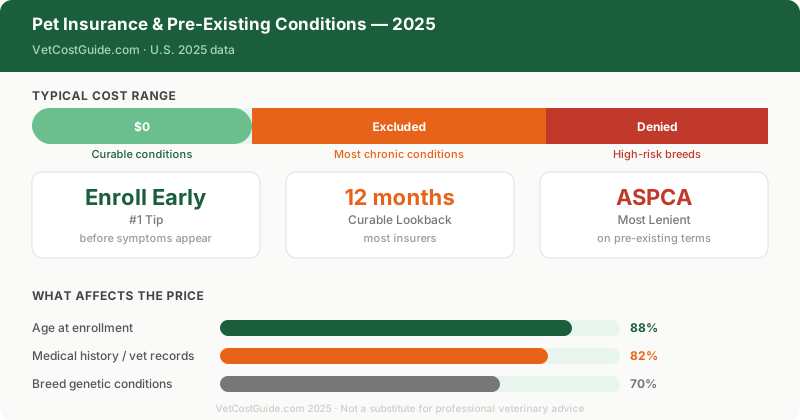
The single most common reason pet insurance claims get denied isn’t an obscure policy clause—it’s a pre-existing condition the owner didn’t know was being tracked. Insurers review your pet’s complete medical history at enrollment, and any condition documented in those records before your policy start date is subject to exclusion. Knowing which conditions are permanently excluded, which may become coverable after a symptom-free period, and which insurers apply the most flexible standards is essential before you sign up.
- Permanent pre-existing conditions—including cancer already diagnosed, hip dysplasia documented before enrollment, and congenital heart disease—are excluded by virtually every insurer.
- Curable pre-existing conditions like urinary tract infections and ear infections may be covered after 12–24 months symptom-free, depending on the insurer.
- ASPCA and Embrace are the most lenient major insurers on curable condition lookback periods; Trupanion applies stricter lifetime exclusion standards.
- Getting insurance before your pet’s first vet visit is the single most effective strategy for maximizing coverage—even one documented vet visit creates a medical record that insurers will review.
How Major Insurers Handle Pre-Existing Conditions
The table below reflects 2025 policy terms. “Curable lookback” is the symptom-free period required before a previously treated curable condition may become eligible for coverage.
| Insurer | Permanent Exclusions | Curable Lookback | Notes |
|---|---|---|---|
| ASPCA | Cancer (prior dx), CHD, bilateral conditions | 12 months | Most lenient on curable conditions |
| Embrace | Hip dysplasia, IVDD (if prior sx) | 12 months | Offers pre-enrollment exam review |
| Spot | Documented chronic conditions | 12–24 months | Bilateral condition exclusion applies |
| Lemonade | Prior diagnoses, hereditary if symptomatic | 12 months | AI-based medical record review |
| Trupanion | All prior conditions, bilateral | Lifetime exclusion standard | Strictest—few exceptions for curable |
| Nationwide | Documented chronic/recurring conditions | 12–24 months | Whole Pet plan most flexible |
How Pre-Existing Condition Reviews Work
When you enroll a pet in an insurance policy, the insurer will request access to your pet’s complete veterinary medical records—sometimes going back 2–3 years, sometimes from birth if records are available. This review happens either at enrollment (proactive review) or at the time of your first claim (reactive review).
Proactive review insurers (Embrace, Healthy Paws) evaluate records upfront and issue a written exclusion list before your policy activates. This is the more transparent approach—you know exactly what’s excluded before paying your first premium. The downside is that this review can take 1–2 weeks.
Reactive review insurers (many others) approve enrollment quickly but review records when a claim is filed. This means you may pay premiums for months before discovering that the condition you’re claiming was excluded due to a pre-existing finding in your records.
The review process looks for: diagnoses, symptoms noted in clinical records (not just formal diagnoses), prescribed treatments, and even “discussed owner’s concern about X”—which can be enough to trigger an exclusion even without a formal diagnosis.
What Affects Whether a Condition Gets Excluded
Bilateral conditions are among the most significant exclusion triggers. If your dog had a torn ACL (cruciate ligament) in the left knee before enrollment, most insurers will exclude both knees—the logic being that bilateral conditions affect both sides of the body and the other side is therefore “at risk” in a pre-existing way. This rule affects hips, knees, cataracts, and other bilateral structures.
Symptom documentation vs. formal diagnosis is a critical distinction. You don’t need a diagnosed condition to generate an exclusion. A vet note stating “owner reports occasional limping” can be enough for an insurer to exclude orthopedic conditions. Some owners avoid mentioning minor symptoms to their vet to keep records clean—this is not recommended, as it compromises your pet’s care.
Breed-specific hereditary conditions receive special treatment. Hip dysplasia in a German Shepherd, syringomyelia in a Cavalier King Charles Spaniel, and brachycephalic obstructive airway syndrome in a French Bulldog may be excluded based on breed alone at some insurers—regardless of whether your specific pet has been diagnosed.
Age at enrollment affects exclusion exposure. A puppy enrolled at 8 weeks with no prior vet history has essentially zero pre-existing exclusions. A 5-year-old dog with several years of vet records is far more likely to have exclusions documented.
| Condition Type | Likely Coverage Outcome | Lookback Possibility |
|---|---|---|
| Cancer (prior diagnosis) | Permanently excluded | No |
| Hip dysplasia (documented) | Permanently excluded | No |
| UTI (single prior episode) | Curable—may be covered | Yes, 12 months symptom-free |
| Ear infection (prior) | Curable—may be covered | Yes, 12 months symptom-free |
| Diabetes (diagnosed) | Permanently excluded | No |
| Broken leg (healed, pre-enrollment) | Gray area—insurer-specific | Sometimes |
| Allergies (documented) | Chronic—usually excluded | Rare exceptions apply |
- Enrolling after your pet’s first veterinary visit for a new symptom—even a single note in the medical record can trigger a permanent exclusion.
- Assuming “cured” conditions are automatically covered—you must formally request a curable condition review after the symptom-free period.
- Not requesting a proactive records review before enrolling, leaving you unaware of exclusions until you file a claim.
- Choosing a policy based on premium alone without checking how that insurer specifically handles bilateral condition exclusions.
How to Maximize Coverage Given Pre-Existing Rules
Enroll as early as possible. Most insurers accept puppies and kittens at 8 weeks. Enrolling before the first vet visit eliminates virtually all pre-existing exclusion risk. Every week you wait with an uninsured pet is a week during which a new vet record entry could generate a future exclusion.
Request a pre-enrollment exam review. Embrace offers a formal exam review service where they evaluate your records before your policy activates and issue a written list of any exclusions. This removes uncertainty.
Ask about curable condition reviews. If your pet had a UTI, kennel cough, or other curable condition more than 12 months ago with no recurrence, proactively contact your insurer to request a review. Approved removals of exclusions are typically issued in writing and attached to your policy.
Compare insurer leniency before committing. If your pet already has a prior diagnosis, ASPCA’s 12-month curable lookback and Embrace’s flexible review process are meaningfully better than Trupanion’s stricter lifetime exclusion standard for many common conditions.
FAQ
Can a pre-existing condition exclusion ever be removed from my policy? Yes, for curable conditions. After the required symptom-free period (12–24 months depending on the insurer), you can request a review. Chronic or permanent conditions like hip dysplasia, diabetes, or cancer cannot be removed once excluded.
What if I disagree with an exclusion my insurer applied? Most insurers have a formal appeals process. Submit your vet records showing the condition was resolved and request a coverage review. Success rates vary but are highest for conditions documented as fully resolved in the medical record.
Does a new insurer inherit exclusions from my previous insurer? No—each insurer conducts its own medical records review. However, switching insurers does not erase the underlying medical history, so a condition excluded by one insurer will almost certainly be excluded by the next.
If my pet has no vet records, will the insurer accept them without exclusions? Insurers may accept pets with no prior records with no documented exclusions, but they reserve the right to exclude conditions that appear to be pre-existing based on physical exam at the time of a claim. Some insurers require a wellness exam within 14 days of enrollment.