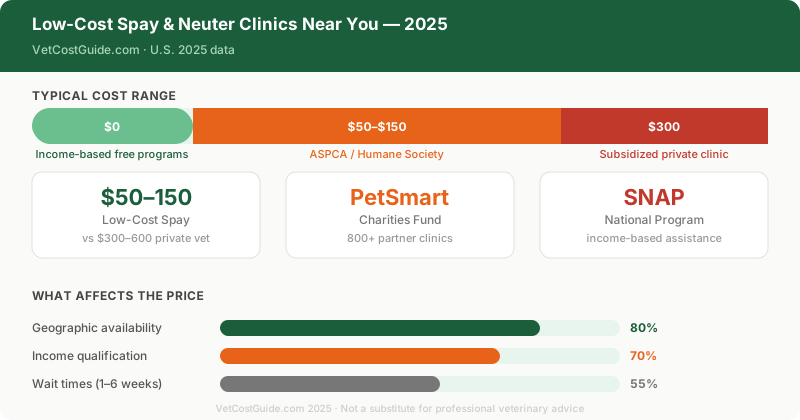
You just adopted a puppy or kitten and you’re doing everything right — except when you called three local vets to ask about spaying or neutering, the quotes came back at $350, $480, and $620. For something that vets universally recommend for your pet’s health and the community’s welfare, those prices feel like a punishment for being a responsible pet owner. The truth is, a thriving network of nonprofit spay/neuter clinics across the United States exists precisely to eliminate cost as a barrier — and millions of pet owners have no idea these options exist in their own backyards.
- Nonprofit spay/neuter clinics typically charge $50–$175 compared to $300–$800 at private practices
- PetSmart Charities has funded over 9 million spay/neuter surgeries through its grant network — find partners at petsmartcharities.org
- SNAP (Spay-Neuter Assistance Program) offers free or heavily subsidized surgeries for income-qualifying owners
- Many humane society and ASPCA-affiliated clinics require no income verification — the low price is available to everyone
Cost Comparison: What You’ll Pay Where
| Clinic Type | Cat Spay | Dog Spay (<40 lbs) | Dog Spay (>40 lbs) | Neuter (cat) |
|---|---|---|---|---|
| Private vet practice | $250–$500 | $300–$600 | $400–$800 | $150–$300 |
| Nonprofit SNAP clinic | $40–$100 | $75–$175 | $100–$250 | $30–$75 |
| Humane society clinic | $50–$125 | $75–$200 | $125–$275 | $35–$80 |
| Vet school teaching hospital | $150–$300 | $175–$350 | $250–$450 | $80–$175 |
| Mobile clinic / event | $25–$75 | $50–$125 | $75–$175 | $20–$60 |
Major Programs and How They Work
PetSmart Charities Spay/Neuter Network
PetSmart Charities is one of the largest funders of spay/neuter access in the country, having invested over $500 million in animal welfare since its founding. Their grantee network includes hundreds of clinics and mobile units. Prices vary by partner but are consistently subsidized. Visit petsmartcharities.org/find-a-spay-neuter-provider to search by ZIP code.
SNAP — Spay-Neuter Assistance Program
SNAP operates primarily in Texas but has expanded its model to partner organizations in other states. Income-qualified applicants (typically households at or below 200% of the federal poverty line) can receive free or near-free surgery. SNAP also offers a voucher system — you receive a certificate redeemable at participating local vets, expanding access even in rural areas. Visit snapus.org for eligibility and application details.
ASPCA Spay/Neuter Alliance
The ASPCA runs its own high-quality, high-volume spay/neuter clinics and also funds partners nationally. Their clinics use dedicated spay/neuter surgeons who perform 20–40 surgeries per day, making them extraordinarily efficient and cost-effective. In New York City, an ASPCA cat spay runs $65–$125 depending on weight.
SpayUSA / North Shore Animal League
SpayUSA maintains a referral network of over 1,800 low-cost providers nationwide. Call 1-800-248-SPAY or visit spayusa.org to find affiliated providers near you. The network includes both income-based and flat-rate low-cost options.
Petco Love Grantees
Petco Love (formerly the Petco Foundation) funds spay/neuter access through grants to local shelters and nonprofits. Their partner organizations are listed at petcolove.org. Many run standalone clinics or mobile units with services starting at $35 for cats.
Local Humane Societies and Municipal Shelters
Most county humane societies and city/county animal shelters either operate their own spay/neuter clinics or maintain relationships with low-cost providers. These services are often available to any community member, not just shelter adopters. Pricing is typically $50–$200 depending on species, sex, and weight.
Step-by-Step: How to Find and Book a Low-Cost Clinic
Step 1: Search aggregator sites first. Start with petsmartcharities.org/find-a-spay-neuter-provider and spayusa.org. Both have ZIP-code search tools that pull up current providers within a set radius.
Step 2: Call your county humane society. Even if they don’t operate their own clinic, they almost always have referrals to the lowest-cost options in your area. Ask specifically: “Do you have a list of low-cost spay/neuter providers in the area?”
Step 3: Check income-based programs. If you receive SNAP, Medicaid, WIC, or other government assistance, you likely qualify for free or heavily discounted surgery through programs like SNAP, RedRover Relief, or local shelter programs. Have documentation ready when you call.
Step 4: Ask about what’s included. Low-cost clinics vary on what’s bundled with the surgery. Ask whether the price includes: pre-surgical exam, anesthesia, pain medication to take home, an E-collar, and a follow-up if complications arise. Most reputable clinics include all of this; some charge add-ons.
Step 5: Book early. High-volume nonprofit clinics often have 2–6 week waitlists, especially in spring (kitten/puppy season). Book as soon as possible — your pet can safely wait a few weeks for a scheduled surgery at a lower cost.
Step 6: Prepare for the appointment. Most clinics require your pet to fast (no food) for 8–12 hours before surgery. Bring vaccination records if available. Arrive 15 minutes early to complete intake paperwork. Most pets go home the same day.
- Don’t assume “low cost” means lower safety standards — high-volume spay/neuter clinics often have better surgical outcomes than general practice vets because their surgeons do these procedures exclusively, every day
- Don’t skip the post-operative care instructions — the most common complications (infection, incision opening) come from pets licking wounds or being too active; follow the instructions carefully
- Don’t wait too long for female pets — spaying before the first heat cycle dramatically reduces the risk of mammary cancer; for dogs, this is typically around 6 months of age
Real Savings Examples
Case 1 — Jennifer, Atlanta: Jennifer adopted two female kittens from a rescue. Private vet quotes ranged from $280–$420 per cat. She found an ASPCA partner clinic through petsmartcharities.org and had both cats spayed for $85 each — saving $390–$670 compared to private vet estimates.
Case 2 — Carlos, San Antonio: Carlos, a SNAP benefits recipient, used the SNAP voucher program for his 65-pound Labrador mix. The female dog’s spay — which would have cost $550–$700 at local private vets — was completely free after SNAP voucher coverage.
Case 3 — Priya, rural Ohio: Priya lived 45 minutes from the nearest city. Her county humane society connected her with a mobile clinic that visited her town twice a year. She had her cat neutered for $30 at the mobile event.
Frequently Asked Questions
Is it safe to use a high-volume spay/neuter clinic? Yes — in many cases, these clinics have safety records equal to or better than general practice vets. Their surgical teams perform these specific procedures repeatedly every day, developing a level of expertise and efficiency that generalist vets can’t match. Look for clinics that are members of the Association of Shelter Veterinarians (ASV) or that are ASPCA- or PetSmart Charities-affiliated for added confidence.
What age should I spay or neuter my pet? Traditional guidelines recommend 6 months. However, recent research on large and giant breed dogs suggests waiting until physical maturity (12–18 months) may reduce the risk of certain orthopedic problems and cancers. Discuss timing with your vet, but for cats and small dogs, 5–6 months remains the standard recommendation.
Will the clinic give my pet pain medication? Reputable low-cost clinics always provide post-operative pain management. Ask specifically what is included — most send pets home with 3–5 days of oral pain medication. If a clinic says they don’t provide take-home pain medication, consider that a red flag.
What if my pet has complications after surgery? Before you leave any clinic, ask about their complication protocol. Most reputable nonprofits have a follow-up phone line and will see post-surgical complications at no additional charge within the first week. Keep the clinic’s number and any emergency vet contacts handy just in case.