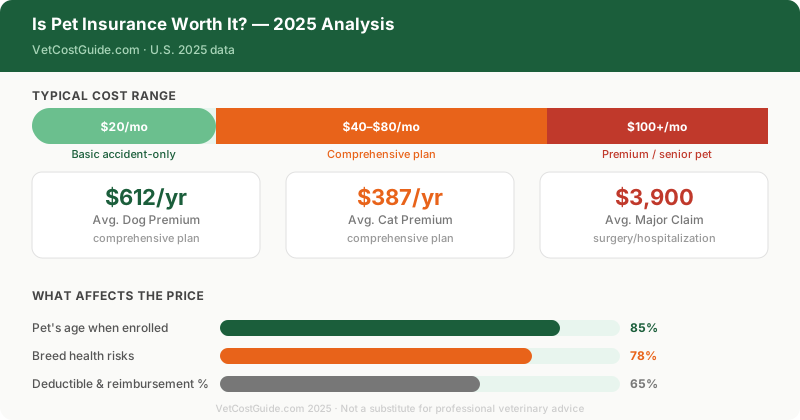
The average American dog owner will spend over $15,000 on veterinary care across their pet’s lifetime—and about one in three pets requires unexpected emergency treatment every year. That’s the uncomfortable reality that makes pet insurance either a financial lifeline or, depending on your situation, an expensive luxury. Before you sign up for a monthly premium or swear off insurance entirely, let’s look at the actual numbers.
- A single emergency surgery—like a swallowed foreign object or CCL tear—can cost $3,000–$7,000 and wipe out years of self-funded savings overnight.
- Over 5 years, a healthy dog in a low-risk breed costs roughly $4,200–$6,000 in premiums with a comprehensive plan—often more than actual claims paid.
- Insurance wins decisively if your pet has one major accident or illness; self-funding wins if your pet stays mostly healthy.
- Enrolling before age 3 locks in lower rates and avoids pre-existing condition exclusions on developing health issues.
The 5-Year Cost Model: Insurance vs. Self-Pay
To make this concrete, we modeled two scenarios: a medium-risk dog (Labrador Retriever, enrolled at age 2) and a high-risk dog (French Bulldog, enrolled at age 1) over five years. Insurance pricing based on 2025 national averages for a $250 annual deductible, 80% reimbursement, and $10,000 annual limit plan.
| Scenario | 5-Yr Premiums | Expected Claims Paid | Net Cost (Insurance) | Self-Pay Risk |
|---|---|---|---|---|
| Lab, no major illness | $5,400 | $1,800 | $3,600 out-of-pocket | $3,200 avg vet bills |
| Lab, one CCL surgery | $5,400 | $4,800 | $600 out-of-pocket | $6,200 total bills |
| French Bulldog (no surgery) | $7,800 | $2,400 | $5,400 out-of-pocket | $4,100 avg vet bills |
| French Bulldog (BOAS surgery) | $7,800 | $6,200 | $1,600 out-of-pocket | $9,500 total bills |
| Mixed breed cat, healthy | $2,900 | $900 | $2,000 out-of-pocket | $1,800 avg vet bills |
| Mixed breed cat, cancer dx | $2,900 | $7,200 | -$4,300 (net gain) | $14,000+ treatment costs |
The data tells a clear story: for healthy, low-risk pets, self-funding often comes out ahead over five years. The calculus flips dramatically the moment a serious diagnosis enters the picture. A single cancer diagnosis in a cat can generate $10,000–$20,000 in treatment costs; insurance turns that into a manageable expense.
How Pet Insurance Actually Works
Pet insurance in the United States operates on a reimbursement model, which surprises many first-time buyers. You pay the vet bill upfront, then file a claim with your insurer. After your deductible is met, the insurance company reimburses a set percentage—typically 70%, 80%, or 90%—of eligible costs.
Most comprehensive plans cover accidents and illnesses, including cancer, orthopedic conditions, hereditary diseases, and emergency care. Wellness add-ons can layer in routine care like vaccines, annual exams, and flea prevention, though these rarely pencil out as good value on their own.
The three variables that most affect your financial outcome are your deductible structure (annual vs. per-incident), your reimbursement percentage, and your annual limit. Choosing a $500 annual deductible instead of $100 can cut your premium by 25–35% while still protecting against catastrophic costs.
What Affects Whether Insurance Pays Off
Breed matters enormously. Breeds predisposed to expensive conditions—French Bulldogs (respiratory surgery), German Shepherds (degenerative myelopathy), Golden Retrievers (cancer), Bulldogs (orthopedic issues)—see dramatically better returns on insurance. Mixed breeds and cats generally have lower average claim amounts.
Your financial cushion. If you have $10,000–$15,000 in liquid savings earmarked for pet emergencies, self-funding is a viable strategy. If an unexpected $4,000 vet bill would force you into debt or difficult decisions about your pet’s care, insurance provides both financial protection and peace of mind.
Enrollment age. Premiums for dogs rise sharply after age 5–6, and pre-existing conditions identified before enrollment are permanently excluded. A healthy 1-year-old dog with Embrace might run $45–$55/month; the same dog at age 7 could cost $90–$130/month for worse coverage.
Geographic location. Veterinary costs in New York City, Los Angeles, and San Francisco run 30–50% higher than national averages. If you live in a high-cost metro, insurance thresholds are easier to clear.
- Waiting until your pet is sick to enroll. Any condition your vet has documented before your policy start date becomes a permanent pre-existing exclusion. Once your dog’s ACL starts showing wear on radiographs, that $4,500 surgery is yours to pay.
- Choosing the cheapest plan without checking the fine print. Some budget plans cap payouts per condition (e.g., $1,500 lifetime for orthopedic issues) or exclude hereditary conditions entirely. Read what’s actually covered, not just the monthly price.
- Ignoring the annual limit. A $5,000 annual limit sounds like a lot until your dog needs a $7,000 TPLO surgery plus post-op rehab. Choose a plan with at least a $10,000 annual limit, or opt for unlimited coverage if your breed is high-risk.
Our Verdict: When Insurance Is Worth It
Pet insurance is worth it if: you own a breed with known expensive health issues, you couldn’t comfortably absorb a $5,000–$10,000 emergency bill, your pet is under 3 years old (maximizing pre-existing condition protections), or you simply want the psychological freedom to say “yes” to recommended treatment without financial hesitation.
Self-funding makes more sense if: you have significant liquid savings, your pet is a healthy mixed breed, you’re disciplined enough to maintain a dedicated pet emergency fund of $8,000+, or your pet is already over 7–8 years old with several documented health conditions.
The providers we most frequently recommend for value: Embrace for customizable deductibles and diminishing deductible rewards, Trupanion for its zero-copay option and direct vet payment program, and Lemonade for straightforward digital claims and competitive cat pricing.
How to Get Started
- Get quotes now, not when your pet is sick. Use comparison tools to pull quotes from Embrace, Trupanion, Lemonade, ASPCA, and Spot simultaneously.
- Choose your deductible strategically. If budget is tight, go with a higher annual deductible ($500) to keep premiums affordable while protecting against catastrophic costs.
- Read the exclusions list. Ask specifically about hereditary conditions, bilateral conditions, and any breed-specific exclusions before committing.
- Set a calendar reminder for renewal. Premiums increase at renewal; compare competing quotes every 2 years to ensure you’re still getting fair value.
- Document your pet’s health history. Some insurers request exam records at enrollment; having a clean bill of health on file makes the claims process smoother.
Frequently Asked Questions
Is pet insurance worth it for a healthy dog? If your dog stays healthy for 5 years, you’ll likely pay more in premiums than you recover in claims. But “likely healthy” is unknowable in advance—one ACL tear, swallowed object, or cancer diagnosis changes the equation entirely. For most owners, the financial protection is worth the cost of premiums.
What’s the average monthly cost of pet insurance in 2025? For dogs, expect $35–$75/month for a mid-tier accident and illness plan. Cats run significantly cheaper at $15–$35/month. Premiums vary widely by breed, age, location, and coverage level.
Can I get pet insurance after my pet is diagnosed with something? Yes, you can still enroll—but the diagnosed condition and anything related to it will be excluded from coverage as a pre-existing condition. Insurance enrolled after a diagnosis still covers future unrelated illnesses and accidents.
Which pet insurance company pays claims fastest? Lemonade and Embrace both claim average reimbursement times of 2–5 business days for straightforward claims. Trupanion offers direct vet payment (no upfront cost) at participating clinics, which sidesteps the reimbursement wait entirely.