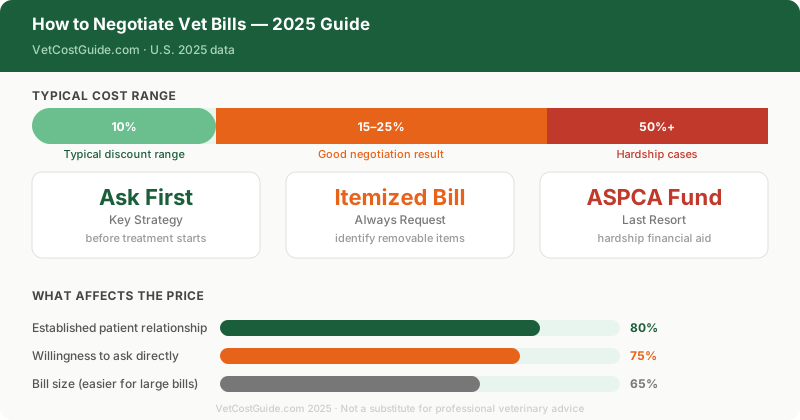
Veterinary bills are not fixed prices printed in stone—they are itemized estimates assembled by a clinic with real pricing flexibility, especially for established clients, multi-service visits, or financial hardship situations. According to surveys of independent veterinary practice owners, approximately 25–30% of clients who ask directly for a discount or payment arrangement receive one. The gap between those who ask and those who don’t isn’t ability to pay—it’s knowing what to say and when to say it.
- Asking for an itemized estimate before authorizing any treatment is the single most effective way to reduce a bill—it removes services you may not need.
- Long-standing clients who ask for flexibility directly and politely receive a discount 20–30% of the time at independent practices.
- Generic medications can replace brand-name prescription drugs at 30–60% lower cost—but you must ask specifically, as vets rarely offer this proactively.
- Payment plans are available at roughly 30% of practices and almost universally through CareCredit or Scratchpay financing—always ask before assuming the full bill is due on discharge.
What You Can Realistically Negotiate
| Negotiation Tactic | Success Rate | Typical Savings | Best Timing |
|---|---|---|---|
| Ask for itemized estimate | Very high | 10–25% (remove unwanted items) | Before treatment authorization |
| Long-standing client discount request | 25–30% | 10–20% off total | After visit, before payment |
| Generic medication substitution | High (with Rx) | 30–60% per medication | When prescription is written |
| Payment plan request | ~30% of practices | Full amount spread over time | Before payment is due |
| Phase treatment over multiple visits | Moderate | Varies (avoids one large bill) | During treatment planning |
| Cash/check discount | 20–30% of practices | 3–8% off total | At payment |
| Bundled service discount (wellness) | Moderate | 5–15% on multi-service days | At scheduling |
| Emergency fee waiver (established client) | 15–20% | $50–$150 off emergency surcharge | After service, before payment |
The Scripts That Work
Script 1: Getting the itemized estimate Before authorizing any treatment plan, say: “Can you walk me through each line item on this estimate? I want to understand what each service is for.”
This works because it forces a service-by-service review. In many practices, wellness panels, optional diagnostics, and prophylactic medications are added as defaults. Once you understand what each item is, you can make informed decisions about what to decline. Common items that can often be deferred or declined: pre-anesthetic bloodwork on young healthy animals (sometimes optional), take-home pain medications you can source at a human pharmacy, and same-day recheck appointments that can be rescheduled.
Script 2: Long-standing client flexibility request After service, before payment: “I’ve been bringing [pet’s name] here for [X] years and I really appreciate the care you provide. I’m having a tight month financially—is there any flexibility on today’s total?”
This works better than a generic “can I get a discount” because it acknowledges the relationship, is specific about the financial situation, and isn’t framed as a demand. Independent practices (not corporate chains like Banfield or VCA) have the most flexibility here. Corporate chains rarely discount because pricing is managed at the corporate level.
Script 3: Generic medication substitution When a prescription is written: “Is there a generic version of this medication available? I’d like to fill it at a pharmacy if that’s an option.”
Many veterinary medications—particularly antibiotics, anti-inflammatories, and thyroid medications—are available in generic form at human pharmacies at dramatically lower cost. Amoxicillin, metronidazole, prednisone, and methimazole (feline hyperthyroid) are all examples. Your vet can write a pharmacy-fillable prescription. Some vets may charge a small prescription fee ($5–$15) but the drug cost savings typically far exceed this.
Script 4: Payment plan or financing Before the invoice is due: “The total is more than I can cover today. Do you offer a payment plan, or do you work with CareCredit or Scratchpay?”
Never assume the answer is no. About 30% of independent practices offer informal payment plans for established clients. CareCredit and Scratchpay are veterinary financing tools accepted at thousands of practices; CareCredit offers 6-month no-interest financing for balances over $200, and Scratchpay offers instant approval with flexible terms. Apply for these before your appointment if you anticipate a large bill.
Script 5: Phased treatment During the treatment planning discussion: “Is this something we need to address all at once, or can we prioritize the most critical item today and schedule the rest when I’m better financially positioned?”
Many treatment plans bundle medically necessary items with nice-to-have items. A vet who recommends dental cleaning, bloodwork panel, and a skin allergy treatment in the same visit may be entirely comfortable performing the dental cleaning now and scheduling bloodwork in 4–6 weeks. Ask directly which items are urgent and which can wait.
- Negotiating after the procedure is complete rather than before—your leverage drops significantly once treatment is done.
- Asking for a discount at a corporate chain clinic (Banfield, VCA, BluePearl)—pricing at these practices is managed centrally and front-desk staff have no authority to discount.
- Using confrontational language (“this is outrageous,” “you’re overcharging me”)—veterinary staff respond to respect, not pressure.
- Not asking about generic medications because it feels awkward—this single question can save $50–$200 on a prescription.
How to Prepare Before Your Appointment
The best negotiation happens before the visit, not during or after. These steps put you in the strongest position:
Call for a price range before you go. Ask: “I’m coming in for [specific reason]—can you give me a typical cost range so I can plan?” Most clinics will give honest estimates over the phone.
Apply for CareCredit before you go. CareCredit approval takes 5 minutes online and having it in hand gives you negotiating flexibility—you can offer immediate payment via financing rather than asking for a payment plan.
Know your leverage. Are you a multi-pet household? A long-standing client? Referring friends to the practice? These are all relevant relationship factors that increase a clinic’s willingness to work with you.
Ask about multi-service bundles. If you need three different services, ask whether combining them in one visit generates any pricing efficiency. Many practices discount the second and third service on a multi-service day.
FAQ
Is it rude to negotiate a vet bill? No. Veterinary practices are businesses, and respectful financial conversations are normal. The key is tone—ask, don’t demand, and acknowledge the value of the care you received.
Will my vet treat my pet differently if I negotiate? No ethical veterinary practice withholds quality care based on price negotiations. If you feel that happened, it’s a sign to find a different clinic.
Can I get a second opinion on a treatment plan to negotiate? Absolutely. Getting a second opinion—especially for treatments over $500—is medically appropriate, not just financially strategic. Some owners use a second opinion to identify if a treatment plan is on the higher end and return to their regular vet with that information.
What if I genuinely can’t pay the bill? Tell the practice directly and honestly. Clinics deal with financial hardship regularly and often have access to charity funds, payment deferral options, and connections to programs like RedRover Relief. Leaving without addressing the bill creates collection problems for both parties.