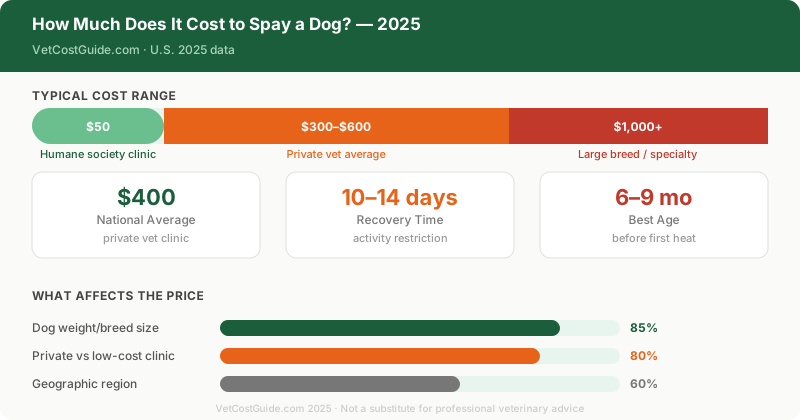
Spaying your dog is one of the most straightforward surgeries in veterinary medicine, yet prices swing from $50 at a low-cost clinic to $800 at a full-service private practice. That range confuses a lot of pet owners into thinking the cheap option is dangerous or the expensive option is superior. In most cases, neither is true. Here’s what drives the price and how to find the right option for your budget.
- Private vet clinics charge $200–$800 for a dog spay in 2025.
- Low-cost spay/neuter clinics charge $50–$200 for the same procedure.
- Larger dogs cost more due to increased anesthesia and surgical time — a 90-lb dog costs $100–$200 more than a 20-lb dog.
- In-heat or pregnant females add $50–$200 to the procedure cost.
- The procedure eliminates the risk of pyometra (uterine infection), which costs $1,500–$5,000 to treat.
What Does It Cost to Spay a Dog?
Costs vary significantly by where you go and the size and condition of your dog at the time of surgery.
| Facility / Scenario | Low | Average | High |
|---|---|---|---|
| Low-cost spay/neuter clinic | $50 | $120 | $200 |
| Private general practice | $200 | $400 | $650 |
| Veterinary teaching hospital | $150 | $280 | $450 |
| Emergency/after-hours spay | $600 | $900 | $1,400 |
| In-heat surcharge | $50 | $100 | $200 |
| Pregnant female surcharge | $100 | $200 | $400 |
| Pre-op bloodwork (if required) | $80 | $150 | $220 |
| E-collar (cone) + pain meds | $30 | $60 | $100 |
What’s Included in the Price?
A standard spay (ovariohysterectomy) removes both ovaries and the uterus under general anesthesia. The quoted price at a private vet typically includes pre-surgical physical examination, inhalant anesthesia with a dedicated technician monitoring vitals, the surgery itself (30–60 minutes for a routine case), sutures or surgical glue for incision closure, and basic post-operative monitoring until your dog is awake and stable.
Most practices include pain medication for the procedure and a short-term take-home prescription (2–5 days of meloxicam or carprofen). An e-collar (cone) to prevent licking may be included or charged separately at $15–$35.
Low-cost clinics provide the same core procedure — anesthesia, surgery, monitoring, sutures — with less amenity. They run efficient, high-volume operations that keep overhead low. Pre-anesthetic bloodwork is sometimes optional rather than required, which reduces cost but removes an anesthesia safety screen. For healthy young dogs, the risk tradeoff is minimal.
Laparoscopic spay is a newer option offered at some practices: two small incisions instead of one larger one, with faster recovery and less post-operative pain. It typically costs $400–$900 more than traditional open spay. It’s not medically necessary but is a reasonable choice for owners who want the option.
What Affects the Cost?
Dog size and weight. Anesthesia is dosed by weight, and larger dogs need more of it. The surgery itself takes longer in a large-breed dog with more tissue and a deeper abdominal cavity. Expect to pay $75–$150 more for a 70–90 lb dog than for a 20 lb dog at the same clinic.
Reproductive status at time of surgery. A dog in heat has engorged, highly vascular reproductive tissue that bleeds more readily and makes surgery more complex. Most clinics add $50–$200 for in-heat procedures. Pregnant dogs are even more complex — expect an additional $100–$400.
Age. The ideal age for spaying is typically 6 months to 1 year, though recommendations vary by breed. Older intact females — especially those who have had multiple heat cycles — often have more complex anatomy. Some vets charge more for dogs over 5 years old.
Geographic location. Urban practices in California, New York, and the Pacific Northwest routinely charge $500–$800 for routine spays. The same procedure in the rural Midwest or South commonly costs $200–$350.
Pre-anesthetic screening. Full bloodwork before anesthesia adds $80–$220 but provides peace of mind for senior dogs or those with unknown health histories. Many vets recommend it for dogs over 5; some require it for all patients.
- Waiting too long to spay. An intact female who develops a pyometra (life-threatening uterine infection) requires emergency surgery costing $1,500–$5,000. Elective spaying at $200–$500 is significantly better economics than emergency pyometra treatment — and that’s before counting the pain, risk, and stress.
- Skipping bloodwork for “cost savings” in an older dog. For dogs over 7, pre-anesthetic bloodwork is a safety measure. Kidney or liver disease caught on bloodwork changes anesthesia protocols and can prevent complications. The $150 screen is worth it.
- Surprise charges for in-heat status. If your dog recently finished a heat cycle or seems to be entering one, tell your vet beforehand. Some clinics will reschedule; those that proceed will apply a surcharge you may not have anticipated.
Is Pet Insurance Worth It for This?
Standard pet insurance policies (illness and accident coverage) do not cover elective spaying — it’s a preventive procedure. However, if complications arise — anesthesia reaction, surgical site infection, internal bleeding — those would be covered under most illness plans.
Wellness or preventive care add-on riders are the relevant product here. Insurers like Nationwide, Embrace, and PetFirst offer wellness riders that reimburse $75–$150 toward spay/neuter procedures. It won’t cover the full cost of a $400 procedure, but it reduces net cost.
If you adopt from a rescue or shelter, spay/neuter is often included in the adoption fee ($50–$350). Many shelters spay animals before adoption.
How to Save Money
Find a low-cost clinic. ASPCA, Humane Society chapters, and independent spay/neuter nonprofits operate across the country. Use the ASPCA’s low-cost spay/neuter database or SpayUSA’s referral line to find programs near you. Costs run $50–$200 with no sacrifice in surgical quality.
Ask your local shelter. Many animal shelters run community spay/neuter programs open to the public, not just shelter animals. Call and ask — wait times can be long, but the savings are real.
Time the surgery before the first heat. Spaying before the first heat cycle (around 6 months for most breeds) is the simplest, fastest procedure and eliminates the in-heat surcharge. It also provides the strongest evidence-based reduction in mammary tumor risk.
Veterinary school clinics. Schools at UC Davis, Tufts, Ohio State, and others offer subsidized spay services through student clinics supervised by licensed veterinarians. Expect to pay $150–$300.
Ask about package pricing. If you’re adopting a new puppy and plan to get vaccines, microchipping, and spay all in the first year, some practices offer package pricing that reduces per-procedure costs by 10–20%.
Frequently Asked Questions
What is the best age to spay a dog? For most small to medium breeds, 6 months is the traditional recommendation. For large and giant breeds (over 50 lbs), emerging research suggests waiting until 12–18 months reduces orthopedic disease risk. Discuss breed-specific timing with your vet — the answer is not one-size-fits-all.
How long is recovery from a spay? Most dogs resume normal behavior within 3–5 days. Full internal healing takes 10–14 days, during which you should restrict running, jumping, and rough play. The incision should be kept clean and dry; most dogs wear an e-collar for 10–14 days to prevent licking.
What’s the difference between a spay and an ovariectomy? Traditional spay (ovariohysterectomy) removes ovaries and uterus. An ovariectomy removes only the ovaries and is common in Europe. Both eliminate heat cycles and pregnancy risk. Ovariectomy is slightly less invasive; both are appropriate. Ask your vet which they perform.
Can I spay my dog while she’s in heat? Yes, but most vets prefer to wait 2–3 months after the heat cycle ends because the increased vascularity raises surgical risk and cost. If waiting isn’t practical (aggressive males in the household, behavioral concerns), your vet can proceed with appropriate precautions and will likely charge a surcharge.