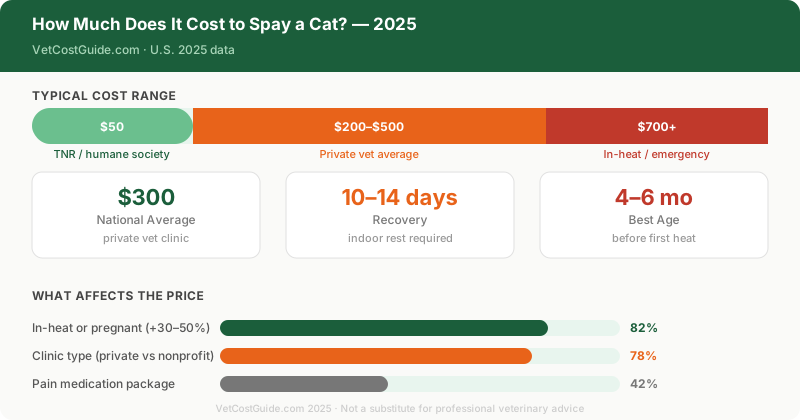
Spaying your female cat is one of the most cost-effective decisions you’ll ever make as a pet owner — yet the upfront price can still catch people off guard. At a full-service private veterinary clinic, spay surgery costs $200–$500 depending on your cat’s age, weight, and location. Low-cost spay/neuter clinics run $50–$150 for the same core procedure. Knowing the difference between these options — and what each actually includes — helps you choose the right path for your cat and your budget.
- Private clinic spays average $300–$400 in most US markets in 2025.
- Low-cost and nonprofit clinics charge $50–$150 and are safe, legitimate options.
- An unspayed female cat in heat can develop pyometra — a life-threatening infection — costing $1,500–$3,000 to treat surgically.
- Most clinics include pre-anesthesia bloodwork as an optional add-on for $50–$120, which is worth considering for cats over 5 years old.
What Does It Cost to Spay a Cat?
Costs vary by clinic type, geographic region, and whether your cat is in heat or pregnant at the time of surgery. Here’s the realistic 2025 price range.
| Clinic Type | Low | Average | High |
|---|---|---|---|
| Low-Cost/Nonprofit Clinic | $50 | $100 | $150 |
| Humane Society Program | $40 | $85 | $140 |
| General Practice Vet | $200 | $325 | $500 |
| Specialty/Boutique Clinic | $400 | $550 | $750 |
| In-Heat Surcharge (add-on) | $25 | $50 | $100 |
| Pregnant Cat Surcharge (add-on) | $50 | $100 | $200 |
Spay prices in California, New York, and Massachusetts consistently run 25–40% above the national average. States like Texas, Ohio, and the Southeast tend to be closer to the low end of the range.
What’s Included in the Price?
A standard spay (ovariohysterectomy) fee at a full-service clinic typically covers:
Pre-surgical exam. The vet checks your cat’s heart, lungs, and overall health before placing her under anesthesia. This is a critical safety step — not a formality.
Anesthesia and monitoring. General anesthesia is required for spay surgery. A licensed veterinary technician monitors your cat’s heart rate, respiratory rate, blood pressure, and body temperature throughout the procedure.
The surgery itself. The surgeon removes both ovaries and the uterus through a small abdominal incision. The procedure takes 20–40 minutes in an uncomplicated case.
Sutures and closure. Internal dissolving sutures close the abdominal wall; skin closure uses sutures, staples, or surgical glue depending on the surgeon’s preference.
Post-operative pain medication. Most full-service clinics send cats home with 2–3 days of oral pain medication. This is standard of care and should be included.
Low-cost clinics offer the same core surgery but typically skip the pre-surgical wellness exam and may provide less individualized monitoring. They are appropriate for young, healthy cats.
What Affects the Cost?
1. Clinic type and overhead. A full-service hospital with digital X-ray, in-house lab, and 24/7 staffing has far higher operating costs than a high-volume low-cost clinic. Those overhead differences flow directly into pricing.
2. Cat’s reproductive status. Spaying a cat in heat involves more blood flow to reproductive tissues, making surgery longer and technically more demanding — hence the surcharge. Spaying a pregnant cat is even more complex.
3. Cat’s size and age. Larger or older cats may need higher anesthesia doses and longer monitoring time. Some clinics charge based on weight; others have a flat fee up to a certain weight threshold.
4. Geographic location. Veterinary care in urban coastal markets costs significantly more than in rural areas. A $500 spay in Manhattan might cost $220 in rural Kansas.
5. Add-on services. Pre-anesthetic bloodwork, IV fluids during surgery, microchipping, and pain medication beyond the first 24 hours are often optional extras. Each adds $30–$100 to the total.
- Clinics that don’t include pain medication. Spay surgery is painful. Any quote that doesn’t include at least 48 hours of take-home pain relief is cutting a corner that matters for your cat’s welfare and recovery.
- “Spay packages” that hide fees. A rock-bottom advertised price that doesn’t include the exam, anesthesia, or E-collar (cone) can balloon 50% by checkout. Always ask for an itemized estimate.
- Waiting too long. Each heat cycle increases surgical complexity slightly. An unspayed cat that develops pyometra (uterine infection) faces emergency surgery that costs 10–15x more than a routine spay.
Is Pet Insurance Worth It for This?
Standard accident and illness pet insurance does not cover elective procedures like spay surgery — it’s considered preventive care. However, many insurers offer wellness add-on riders that reimburse $75–$150 toward spay/neuter costs as part of a preventive care benefit.
If your cat is already insured with a wellness rider, check your benefit schedule. If you’re shopping for insurance now, a wellness rider typically adds $10–$20/month to premiums — probably not worth it just for the spay reimbursement, but potentially worthwhile if it also covers annual exams, vaccines, and heartworm/flea prevention.
How to Save Money
Use a low-cost clinic. ASPCA, Humane Society affiliates, and independent nonprofit spay/neuter clinics perform this surgery safely every day. For a young, healthy cat with no underlying conditions, a low-cost clinic is an excellent choice. Search the ASPCA’s low-cost spay/neuter database to find providers near you.
Spay before the first heat. Most vets recommend spaying at 4–6 months, before the first heat cycle. This avoids in-heat or pregnant surcharges and is technically the simplest surgery.
Ask about package pricing. Many clinics offer a spay + microchip + rabies vaccine bundle at a discount versus buying each service separately.
Check for local assistance programs. Some county animal control agencies, shelters, and rescue groups offer subsidized spay vouchers for income-qualifying pet owners. Call your local humane society to ask.
Skip optional add-ons for young healthy cats. Pre-anesthetic bloodwork is valuable for cats over 5 years old but adds $80–$120 of cost. For a healthy 5-month-old kitten with no symptoms, it’s optional — ask your vet if it’s medically necessary for your specific cat.
Frequently Asked Questions
What’s the best age to spay a cat? Most veterinarians recommend spaying between 4 and 6 months of age, before the first heat cycle. Some shelters spay kittens as young as 8 weeks (pediatric spay) — this is safe and well-studied. There’s no medical maximum age; older cats can be spayed if healthy, though surgical risk increases with age.
How long does recovery take? Most cats return to normal activity within 5–7 days. Full internal healing takes 10–14 days. Keep your cat from jumping or running for at least a week, and use an E-collar (cone) to prevent her from licking the incision. A follow-up recheck is sometimes included in the surgical fee; if not, it’s typically $35–$65.
Is a low-cost clinic as safe as a private vet? For a standard spay in a young, healthy cat — yes. High-volume low-cost clinics perform hundreds of these surgeries per month and maintain excellent safety records. If your cat has a health condition (heart murmur, obesity, prior illness), a full-service clinic with more intensive monitoring is the safer choice.
Can I spay a cat that’s already in heat? Yes, though most vets prefer to wait 2–3 weeks after a heat cycle ends. If waiting isn’t practical, the surgery can proceed with a small surcharge ($25–$100). There’s no additional health risk to your cat from spaying during heat, just increased surgical complexity.