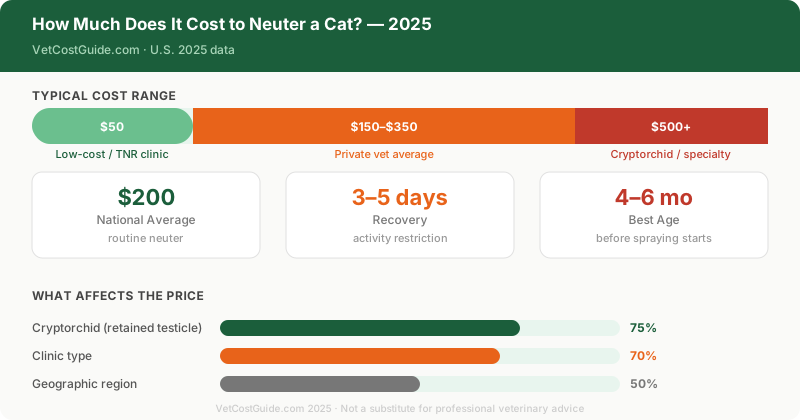
Neutering a male cat is among the most affordable surgeries in veterinary medicine — and one of the most impactful decisions you can make for his long-term health and your household’s sanity. At a private veterinary clinic, neuter surgery costs $150–$400 in 2025. Low-cost and nonprofit clinics regularly perform the same procedure for $40–$100. The procedure takes less than 15 minutes in most cases, requires no sutures, and has cats back to themselves within 24–48 hours. Here’s exactly what you’ll pay and why.
- Private clinic neuters average $200–$300 in most US cities in 2025.
- Low-cost clinics charge $40–$100 and are a safe option for healthy cats.
- Neutering eliminates the risk of testicular cancer and dramatically reduces the likelihood of spraying — saving potential hundreds in cleaning costs.
- Cryptorchid cats (one or both testicles undescended) require more complex surgery costing $300–$600 at a general practice.
What Does It Cost to Neuter a Cat?
Neutering (orchiectomy) is simpler than a spay because no abdominal incision is required in most cases. The testicles are accessed through two small scrotal incisions and removed. This makes it faster, less invasive, and less expensive.
| Clinic Type | Low | Average | High |
|---|---|---|---|
| Low-Cost/Nonprofit Clinic | $40 | $70 | $100 |
| Humane Society Program | $35 | $65 | $95 |
| General Practice Vet | $150 | $230 | $400 |
| Specialty/Boutique Clinic | $300 | $400 | $550 |
| Cryptorchid Neuter (1 testicle) | $250 | $375 | $550 |
| Cryptorchid Neuter (2 testicles) | $350 | $500 | $700 |
As with all veterinary procedures, prices in urban coastal areas (New York, Los Angeles, Seattle) tend to run 20–35% higher than the national average, while rural and Midwest practices are often at or below the low end.
What’s Included in the Price?
A standard neuter fee at a full-service clinic generally includes:
Pre-anesthetic physical exam. Your vet confirms both testicles are descended and checks your cat’s overall health before administering anesthesia. For cryptorchid cats, the location of undescended testicles is assessed, sometimes with ultrasound.
Anesthesia and monitoring. General anesthesia is required. A technician monitors vital signs throughout — heart rate, oxygen saturation, blood pressure, and temperature.
The surgery. Two small incisions are made in the scrotal skin. The testicles are exteriorized, the spermatic cord is ligated or tied, and the testicles are removed. The entire procedure takes 5–15 minutes in a routine case. Incisions are small enough that sutures are usually not required.
Recovery monitoring. Your cat wakes up in a warm, supervised recovery area. Most clinics keep cats for 2–4 hours post-surgery before discharge.
Take-home instructions and pain medication. A 1–2 day supply of pain medication is standard. Neuter recovery is typically less painful than spay recovery, so some clinics provide only a single dose of injectable pain medication administered before discharge.
What Affects the Cost?
1. Whether the cat is cryptorchid. If one or both testicles failed to descend into the scrotum, the surgeon must locate them in the inguinal canal or abdomen. An abdominal cryptorchid neuter requires a full abdominal incision and is priced similarly to a spay — typically $350–$700 depending on complexity.
2. Clinic type and geographic location. High-volume low-cost clinics streamline their processes to keep costs down. Full-service private practices charge more because of their higher overhead and more individualized care.
3. Cat’s age and weight. Older or heavier cats may require higher anesthesia doses. Some clinics charge a weight-based fee; others have a flat rate up to a certain threshold.
4. Add-on services. Pre-anesthetic bloodwork ($50–$120), IV catheter and fluids ($40–$80), microchipping ($30–$60), and feline leukemia/FIV testing ($45–$90) are common add-ons. These are optional for young, healthy cats but worth considering at the same visit to minimize future trips.
5. Emergency or after-hours timing. If your cat sustains a testicular injury or infection requiring urgent care, the after-hours surcharge at an emergency clinic will significantly increase the total.
- Skipping the cryptorchid check. If your vet doesn’t confirm both testicles are present before quoting a standard neuter price, ask explicitly. Discovering cryptorchidism on the table adds unexpected cost.
- “Free neuter” programs with hidden fees. Some programs advertise free surgery but charge for required bloodwork, rabies vaccines, or microchipping. Get an itemized list before the appointment.
- Not neutering intact males. An intact male cat sprays urine with a distinctive, extremely difficult-to-remove odor. Professional carpet or furniture cleaning runs $150–$400 per incident — far more than the neuter itself.
Is Pet Insurance Worth It for This?
Standard accident and illness pet insurance does not cover elective neuter surgery. It is considered a routine preventive procedure, not a medical treatment.
Some insurers offer wellness riders that reimburse a fixed amount ($50–$150) toward spay/neuter costs. If you already have a wellness rider, claim it. If you’re shopping for insurance purely to offset the neuter cost, the math rarely works out in your favor — even with a $300 neuter, you’d pay more in premiums and waiting periods than you’d recoup.
The real insurance argument for intact male cats is this: unneutered males are at risk for testicular cancer, prostate disease, and cat fight injuries (bite wounds, abscesses). These conditions can cost $500–$3,000 to treat. Neutering eliminates some of those risks entirely.
How to Save Money
Use a low-cost or nonprofit clinic. For a healthy cat, a high-volume low-cost spay/neuter clinic is an excellent and safe choice. The ASPCA maintains a searchable database of low-cost providers by ZIP code at aspca.org.
Neuter early. Vets typically recommend neutering at 4–6 months. Some shelters neuter at 8 weeks (pediatric neutering). Early neutering is the simplest, safest, and least expensive version of the procedure.
Bundle services. Many clinics offer bundled pricing for neuter + vaccines + microchip. Booking everything at once saves individual visit fees and is more convenient.
Check municipal and rescue programs. Many city and county animal control agencies offer subsidized neuter vouchers to reduce overpopulation. TNR (Trap-Neuter-Return) programs often provide free neutering for feral or community cats and sometimes for owned cats with financial need.
Ask about payment plans. Most veterinary practices accept CareCredit, Scratchpay, or in-house payment plans. Even a $300 neuter broken into monthly installments becomes trivially manageable.
Frequently Asked Questions
What’s the best age to neuter a male cat? Most veterinarians recommend neutering between 4 and 6 months, before sexual maturity and the onset of spraying behavior. Neutering can be done later — there’s no upper age limit if your cat is healthy — but behavioral benefits (reduced spraying, roaming, aggression) are stronger when neutered before puberty.
Will neutering change my cat’s personality? Neutering reduces testosterone-driven behaviors: spraying, roaming, fighting, and yowling. It does not change core personality traits. Friendly cats stay friendly; playful cats stay playful. Many owners report their cats become calmer and more affectionate after neutering.
How long is recovery? Most male cats act nearly normal within 24–48 hours. Keep your cat calm and confined for 2–3 days, and monitor the small incision sites for swelling, redness, or discharge. No sutures means no suture removal appointment needed. A brief recheck visit at 7–10 days is sometimes recommended, typically free or $30–$50 if not included.
Can a neutered cat still spray? Yes, though much less commonly. About 10% of neutered males continue some spraying behavior, especially if the habit was established before neutering or is stress-related. Neutering reduces — but does not entirely eliminate — the biological drive to spray.