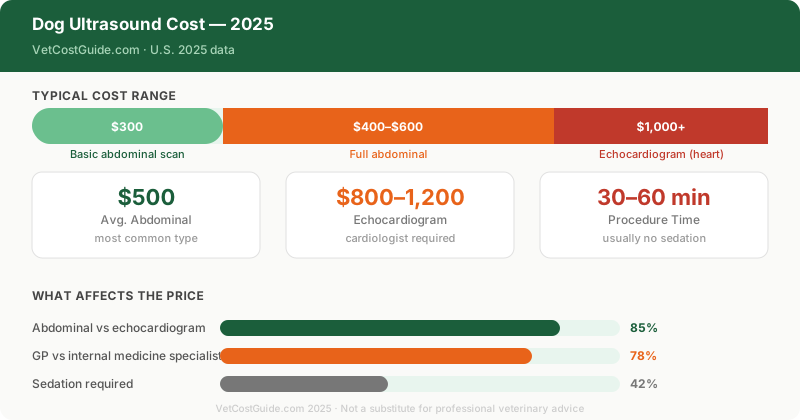
X-rays show structure; ultrasound shows function and fine detail. When your vet finds an abdominal mass on X-ray, hears a heart murmur, or suspects organ disease that bloodwork alone can’t confirm, ultrasound is the logical next step. It’s painless, radiation-free, and performed in real time — but the bill, ranging from $300 to $800 depending on type, catches many pet owners off guard. Here’s exactly what you’re paying for.
- A standard abdominal ultrasound costs $300–$600 at most US veterinary practices in 2025.
- A cardiac echocardiogram (echo) runs $400–$800 and should be performed by a cardiologist.
- Ultrasound-guided fine needle aspirate (FNA) or biopsy adds $150–$400 to the procedure.
- Mobile ultrasound services visit general practices and often charge $250–$450 for abdominal scans.
- Sedation is required in less than 20% of ultrasound cases — most dogs tolerate the exam awake.
What Does a Dog Ultrasound Cost?
Prices vary by scan type, facility, and whether a specialist performs the exam versus a general practitioner with ultrasound training.
| Ultrasound Type | Low | Average | High |
|---|---|---|---|
| Abdominal ultrasound (GP) | $250 | $380 | $550 |
| Abdominal ultrasound (specialist) | $350 | $500 | $700 |
| Echocardiogram (cardiologist) | $400 | $600 | $850 |
| Focused FAST scan (emergency) | $150 | $220 | $320 |
| Ultrasound-guided FNA | $150 | $250 | $380 |
| Ultrasound-guided biopsy | $200 | $350 | $500 |
| Mobile/visiting sonographer | $250 | $380 | $500 |
| Sedation add-on (if needed) | $80 | $150 | $250 |
What Each Ultrasound Type Involves
Abdominal Ultrasound is the most commonly ordered veterinary ultrasound. A handheld transducer is placed against the shaved or alcohol-dampened skin of the abdomen, and sound waves bounce off internal organs to create real-time images on a monitor. The sonographer systematically evaluates the liver, spleen, kidneys, bladder, intestines, adrenal glands, and lymph nodes. The scan takes 30–60 minutes for a thorough evaluation.
Shaving the belly fur is standard practice because air trapped in hair disrupts the ultrasound signal. Most owners are surprised by this — warn yourself ahead of time so the post-visit stubble isn’t a shock.
Cardiac Echocardiogram (Echo) uses a specialized cardiac transducer and software to measure heart chamber dimensions, valve function, wall thickness, and blood flow patterns using Doppler technology. This is a significantly more technical examination than an abdominal scan. A board-certified veterinary cardiologist can distinguish between dilated cardiomyopathy, mitral valve disease, pericardial effusion, and congenital defects — diagnoses that require both the right equipment and years of training.
FAST Scan (Focused Assessment with Sonography for Trauma) is a rapid emergency protocol that checks for free fluid in the chest and abdomen after trauma or in shock patients. It takes 5–10 minutes and answers one question: is there abnormal fluid where there shouldn’t be? It’s an emergency triage tool, not a complete organ assessment.
Ultrasound-Guided Aspirates and Biopsies allow your vet to sample masses, enlarged lymph nodes, or abnormal organ tissue in real time, watching the needle enter the target on screen. An FNA collects cells for cytology; a core biopsy takes a tissue core for histopathology. Both are far less invasive than exploratory surgery and provide a diagnosis in 48–72 hours.
What Factors Affect the Cost?
Who performs the scan. A general practitioner with ultrasound training can evaluate obvious abnormalities competently, but their equipment and experience varies widely. A board-certified veterinary internist or cardiologist charges more ($400–$800) but has advanced equipment, specialized training, and the ability to perform guided procedures and provide definitive diagnoses.
Scope of the examination. A focused scan looking for a specific finding (checking the bladder for stones) is faster and cheaper than a complete abdominal survey. Some practices offer tiered pricing based on whether you need a targeted or comprehensive scan.
Mobile vs. in-clinic. Visiting sonographer services contract with general practices to provide specialist-level ultrasound on scheduled days. They charge $250–$500 for the scan itself, with the practice adding an exam fee. This is an excellent middle ground between GP pricing and full specialist referral.
Add-on procedures. If a mass or abnormal lymph node is found, the sonographer may recommend an immediate aspirate or biopsy while the needle is guided by ultrasound. This adds time, materials, and a laboratory fee for cytology ($80–$200) or histopathology ($150–$350).
Geographic location. Coastal metro areas and high cost-of-living regions run 30–50% above the national average for specialist procedures.
- Cardiologist vs. GP for heart disease. A general practitioner can hear a murmur, but grading it accurately and determining whether it’s causing heart enlargement requires an echocardiogram by a cardiologist. Incorrect grading leads to missed treatment windows — particularly critical for Cavalier King Charles Spaniels and Dobermans, where early intervention changes outcomes.
- Cytology is not histopathology. An FNA gives cellular information (benign vs. malignant, inflammation vs. tumor type) but cannot assess tissue architecture. Some masses require a core biopsy for a definitive diagnosis. Ask your vet which is appropriate.
- Empty bladder affects abdominal quality. A full bladder is actually helpful for bladder ultrasound — but your dog urinating right before the scan makes evaluation difficult. If bladder assessment is the goal, withhold an opportunity to urinate for 2–3 hours before the appointment.
When Is It Necessary vs. Optional?
Necessary: Unexplained weight loss or vomiting with abnormal X-rays. Heart murmur requiring grading and treatment planning. Suspected abdominal mass, organ enlargement, or lymphadenopathy. Ascites (fluid in the abdomen) requiring cause determination. Trauma cases with suspected internal bleeding.
Strongly recommended: Dogs with elevated liver enzymes to characterize hepatic disease. Adrenal masses (Cushing’s disease evaluation). Bladder stones or recurrent UTIs. Any suspected splenic mass — the spleen cannot be fully evaluated on X-ray alone.
Optional: Routine wellness scans without clinical signs are rarely indicated. Monitoring a known benign mass (lipoma) that is stable and non-concerning does not require serial ultrasound.
How to Reduce the Cost
Ask about mobile sonographer days. Many general practices bring in a visiting ultrasonographer one or two days a month. Scheduling on those days gets you specialist-level imaging at a lower total cost than a formal internal medicine referral appointment.
Combine with bloodwork. If your dog is coming in for a suspected liver issue, scheduling blood work and ultrasound on the same day consolidates visit fees and can reduce total billing.
Ask whether cytology is essential before biopsy. For obvious benign findings (a simple splenic nodule in a young dog), your vet may defer the biopsy and recommend monitoring instead of immediate tissue sampling. This saves $150–$400.
Compare university clinic pricing. Veterinary school internal medicine departments perform high-quality echocardiograms and abdominal ultrasounds at 30–50% less than private specialty hospitals.
Frequently Asked Questions
Does my dog need to be shaved for an ultrasound? For abdominal ultrasound, yes — a small area of the belly is clipped to allow good transducer contact. It grows back within a few weeks. For cardiac ultrasound, the technician typically works through the rib spaces from the side; shaving is minimal or avoided.
Is sedation required for a dog ultrasound? Most dogs tolerate abdominal ultrasound awake with gentle restraint. Sedation is occasionally needed for very anxious or painful dogs or when precise needle guidance for biopsy is required. Fewer than 20% of routine scans require any sedation.
How long does a dog ultrasound take? A complete abdominal survey takes 30–60 minutes. A focused scan targeting one organ takes 15–20 minutes. An echocardiogram takes 45–75 minutes including Doppler measurements. Plan for an hour at the clinic when scheduling.
What’s the difference between ultrasound and X-ray for abdominal issues? X-rays are better for detecting gas patterns (obstruction, bloat), large masses that displace organs, and gross size abnormalities. Ultrasound is better for organ texture and architecture, small masses, lymph nodes, vascular flow, fluid pockets, and real-time guided sampling. The two are complementary — many cases require both.