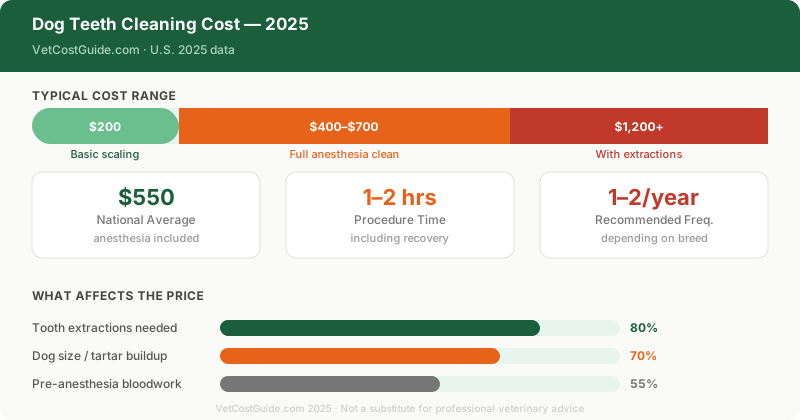
More than 80% of dogs over age three have some form of periodontal disease, yet teeth cleanings are one of the most commonly skipped preventive veterinary services — largely because of price confusion. A professional dental cleaning under anesthesia costs $300–$900 at most US clinics. You’ve probably also seen ads for “anesthesia-free” cleanings at $100–$300. Understanding why those two numbers exist — and what each actually delivers — is the most important dental health decision you’ll make for your dog.
- Professional veterinary dental cleaning costs $300–$900 and requires anesthesia.
- Anesthesia-free cleanings cost $100–$300 but only remove visible surface tartar — they don’t treat disease.
- Tooth extractions add $10–$25 per tooth for simple pulls, $100–$300+ per tooth for surgical extractions.
- Pre-anesthetic bloodwork adds $80–$200 and is typically required for dogs over age 7.
- Annual cleanings cost less than treating advanced periodontal disease, which can require $1,000–$3,000 in extractions.
What Does a Dog Teeth Cleaning Cost?
The wide range depends primarily on your dog’s current oral health (how many extractions are needed) and whether pre-anesthetic testing is required.
| Service | Low | Average | High |
|---|---|---|---|
| Dental cleaning (anesthesia included) | $300 | $550 | $900 |
| Pre-anesthetic bloodwork | $80 | $150 | $200 |
| Dental X-rays (full mouth) | $75 | $150 | $300 |
| Simple tooth extraction (per tooth) | $10 | $20 | $50 |
| Surgical tooth extraction (per tooth) | $100 | $200 | $350 |
| Advanced periodontal treatment | $200 | $500 | $1,200 |
| Anesthesia-free cleaning (cosmetic only) | $100 | $175 | $300 |
| Specialist dental clinic | $500 | $900 | $1,800 |
What’s Included in the Price?
A proper veterinary dental cleaning includes pre-operative examination, inhalant anesthesia with intubation (protecting the airway from dental debris and bacteria), ultrasonic scaling above and below the gumline, hand scaling of difficult spots, polishing to smooth enamel surfaces, and a post-cleaning examination. Dental radiographs — now considered the standard of care — reveal bone loss and root damage invisible to the naked eye and are either included or offered as an add-on.
The anesthesia is not just for your dog’s comfort — it’s necessary for safe, thorough cleaning. A conscious dog cannot hold perfectly still while instruments work under the gumline, and even gentle cleaning creates aerosolized bacteria. Anesthesia also allows proper X-ray positioning and makes extractions possible in the same appointment.
Inhalant anesthesia with isoflurane or sevoflurane, maintained by a trained veterinary technician with pulse oximetry and blood pressure monitoring, is now extremely safe in healthy dogs. Anesthesia-related mortality in healthy patients is less than 0.1% — lower risk than the health consequences of untreated periodontal disease.
Pre-anesthetic bloodwork (CBC and chemistry panel) checks organ function before anesthesia is administered. Most vets require this for dogs over 7 years old and recommend it for any dog with health concerns. It’s a safety measure, not an upsell.
What Affects the Cost?
Oral health at the time of cleaning. A young dog with mild tartar and no extractions needed is a $300–$450 procedure. A 10-year-old with advanced disease, multiple loose teeth, and bone loss can run $800–$2,000+ when extractions are factored in. Your vet cannot give you an exact extraction count until the dog is anesthetized and fully examined.
Dental radiographs. Full-mouth dental X-rays add $75–$300 but are clinically essential. Without them, your vet is working blind — up to 40% of dental disease is detected only on radiographs. Some clinics include them in the quoted price; others bill separately.
Dog size. Larger dogs have more teeth, require more anesthetic agent, and the procedure takes longer. A large dog with significant tartar buildup will cost more than a small dog with healthy gums.
Geographic location and clinic type. Corporate veterinary practices (Banfield, VCA) sometimes offer dental packages at flat rates ($400–$700). Independent specialty dental clinics charge more ($800–$1,800) but offer board-certified veterinary dental expertise.
Frequency of cleanings. Dogs whose owners brush teeth daily and come in for annual cleanings have minimal tartar, faster procedures, and lower bills. A dog that hasn’t had a cleaning in 5 years will cost significantly more.
- Anesthesia-free cleanings marketed as equivalent. The American Veterinary Dental College explicitly states that non-anesthetic cleanings are cosmetic and do not treat periodontal disease. Tartar below the gumline — where disease actually progresses — cannot be safely removed in a conscious dog. This isn’t a cost-cutting alternative; it’s a different (and ineffective) service.
- Open-ended extraction estimates. Clinics may give you a base cleaning price but can’t guarantee extraction costs until surgery. Ask for a worst-case estimate and authorize a spending limit — your vet should call you intraoperatively if extractions will exceed that amount.
- Skipping dental X-rays to save money. Teeth that look normal above the gumline may have severe root disease detectable only on radiograph. Skipping X-rays now often means a more expensive, painful problem later.
Is Pet Insurance Worth It for This?
Most pet insurance plans do not cover routine or preventive dental cleanings — they’re classified as wellness care. However, dental illness coverage (periodontal disease treatment, extractions, dental infections) is included in many comprehensive illness plans. If your dog develops advanced periodontal disease requiring multiple surgical extractions ($500–$1,500+), an illness plan with dental coverage can pay significant benefits.
Wellness add-on riders from insurers like Nationwide, Embrace, and ASPCA Pet Health Insurance often do cover one annual cleaning per year, reimbursing $75–$150 toward the procedure. It won’t cover the full cost, but it offsets annual maintenance expenses.
How to Save Money
Brush your dog’s teeth daily. This is not a platitude — daily brushing with a veterinary enzymatic toothpaste is the single most effective way to reduce tartar accumulation, extend time between professional cleanings, and reduce the complexity (and cost) of each cleaning. Start this week.
Book before disease progresses. A dog with mild tartar and no periodontal disease costs $300–$500 to clean. The same dog three years later with moderate disease and several extractions needed can cost $900–$1,800. Annual cleanings are an investment in avoiding expensive future procedures.
Ask about dental health month promotions. February is National Pet Dental Health Month. Many clinics offer 10–20% discounts on dental procedures during February. It’s worth asking in January to schedule ahead.
Use a veterinary dental chew. VOHC-accepted (Veterinary Oral Health Council) dental chews and water additives reduce tartar accumulation between cleanings. Products like Greenies, OraVet chews, and CET chews are clinically tested and cost $20–$40/month.
Ask your vet for a pre-dental examination. A simple oral exam at a regular wellness visit can give you a heads-up on disease severity before you schedule a cleaning, allowing you to budget appropriately.
Frequently Asked Questions
How often does my dog need a professional teeth cleaning? Most dogs need a professional cleaning every 1–3 years. Small breeds (Chihuahuas, Yorkies, Pugs) are prone to accelerated tartar and periodontal disease and may need annual or even twice-yearly cleanings. Large breeds with good home care may go 2–3 years between cleanings. Your vet will assess your individual dog.
Is anesthesia dangerous for my dog? For healthy dogs, anesthesia risk is very low (under 0.1% mortality). For senior dogs or those with heart or kidney disease, pre-anesthetic bloodwork and careful monitoring reduce risk substantially. The risk of untreated periodontal disease — including heart, kidney, and liver complications from chronic oral bacteria — typically exceeds the anesthesia risk.
My dog had teeth pulled last cleaning. Will it hurt them? Dogs tolerate tooth extractions remarkably well. Most are eating normally within 24–48 hours after extraction, often with significantly better comfort than before — because they’re no longer in chronic dental pain. Dogs with no teeth at all can eat dry food using their gums.
What’s the difference between a dental cleaning and a dental procedure? A “cleaning” refers to prophylactic scaling and polishing in a mouth with mild to moderate tartar. A “dental procedure” or “dental surgery” implies extractions, treatment of significant periodontal pockets, or management of a dental infection. The latter is meaningfully more expensive due to time, materials, and complexity.