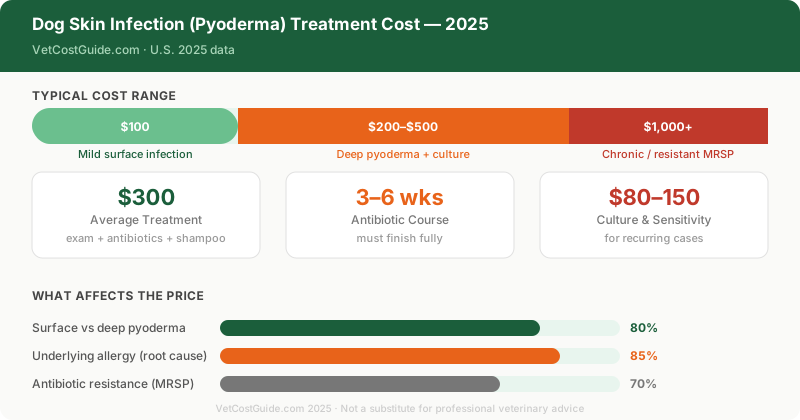
A dog with a skin infection—medically called pyoderma—is one of the most common reasons for a vet visit in the U.S., and it’s also one of the most commonly mismanaged. A mild, surface-level skin infection in a healthy dog can be cleared with $150–$300 in total treatment. But the same infection in a dog with undiagnosed allergies will come back 8–12 weeks after every treatment, generating $400–$800 in costs per recurrence and escalating over years to resistant MRSP (methicillin-resistant Staphylococcus pseudintermedius) infections that require $150–$400 per month in specialized antibiotics. The dogs generating the highest pyoderma treatment costs are almost universally those whose underlying allergy was never diagnosed and managed—turning a $200 problem into a multi-thousand-dollar annual expense.
- Mild to moderate pyoderma costs $150–$400 to treat: exam, skin cytology, a 3–4 week antibiotic course, and medicated shampoo.
- Deep pyoderma (infection reaching the hair follicles and dermis) requires 8–12 weeks of antibiotics and costs $300–$700 per episode.
- MRSP (methicillin-resistant) infections require culture-guided specialized antibiotics that run $150–$400/month and are a direct consequence of repeated antibiotic exposure without resolving the underlying cause.
- Allergy testing to identify and treat the underlying trigger costs $200–$600 but eliminates the root cause—saving far more than it costs over a dog’s lifetime of recurrent pyoderma.
Dog Pyoderma Treatment Cost Breakdown
| Type | Low | Average | High |
|---|---|---|---|
| Vet exam fee | $50 | $65 | $80 |
| Skin cytology (impression smear) | $40 | $60 | $80 |
| Culture & sensitivity test | $80 | $115 | $150 |
| Oral antibiotics (3–6 week course) | $40 | $80 | $120 |
| Medicated shampoo (chlorhexidine) | $20 | $32 | $45 |
| Topical spray or wipes | $20 | $30 | $40 |
| Deep pyoderma antibiotics (8–12 weeks) | $100 | $175 | $250 |
| MRSP specialized antibiotics (monthly) | $150 | $275 | $400 |
| Allergy blood or skin testing | $200 | $400 | $600 |
| Total: mild first-time pyoderma | $150 | $240 | $360 |
| Total: recurring or resistant pyoderma | $400 | $700 | $1,200 |
What’s Included in the Price
Diagnosis of pyoderma begins with visual examination—pustules, papules, epidermal collarettes (the characteristic circular crusts left when pustules rupture), and focal hair loss are the classic signs of surface and superficial pyoderma. Skin cytology involves pressing a glass slide against a skin lesion, staining it with Diff-Quik, and examining it under a microscope. The vet looks for cocci (spherical bacteria, typically Staphylococcus pseudintermedius) and inflammatory cells. Cytology takes 5–10 minutes in clinic and costs $40–$80—it is the single most important diagnostic step and should be performed before every antibiotic prescription.
A culture and sensitivity (C&S) test sends a skin swab to an outside laboratory (results in 3–5 days) and reports exactly which bacteria are present and which antibiotics will kill them. C&S testing is essential for recurrent pyoderma, any infection that did not respond to the first antibiotic course, and any dog suspected of having an antibiotic-resistant infection. Many vets defer C&S testing to reduce cost on first presentations—but for a dog with two prior treatment failures, performing it promptly prevents months of additional empirical antibiotic trials.
Standard antibiotic therapy for Staphylococcus pyoderma typically uses amoxicillin-clavulanate, cephalexin, or trimethoprim-sulfamethoxazole. A 3–4 week course for mild pyoderma costs $40–$80 for medium-sized dogs. Deep pyoderma requires 8–12 weeks of treatment—longer because the bacteria are protected deeper in the follicle and dermis, where antibiotic penetration takes more time to achieve therapeutic levels.
Medicated shampoos and topicals containing chlorhexidine (2–4%) or benzoyl peroxide are essential adjunct therapy. They reduce surface bacterial load, speed resolution, and help prevent recurrence. A bath 2–3 times weekly with medicated shampoo during treatment is standard recommendation. Chlorhexidine wipes and mousses are useful for focal lesions or dogs resistant to bathing.
Allergy management is the final and often most important component for dogs with recurrent infections. Allergies (environmental atopy or food allergy) disrupt the skin barrier, allowing Staphylococcus to colonize and cause infection. Without treating the allergy—with Apoquel ($50–$80/month), Cytopoint ($80–$180 per injection), allergen-specific immunotherapy ($150–$250/month), or prescription elimination diet—infections will reliably recur every 6–12 weeks.
What Affects the Cost
Depth of infection. Surface pyoderma (affecting only the stratum corneum) resolves quickest with topical treatment alone. Superficial pyoderma (affecting the hair follicles and epidermis) requires oral antibiotics. Deep pyoderma (extending into the dermis and subcutaneous tissue) requires the longest antibiotic courses, often combined with systemic anti-inflammatories and drain flushing for furunculosis (ruptured follicles). Cost scales proportionally with depth.
Whether a culture is performed. Empirical antibiotic therapy (picking an antibiotic without a culture) for a first-time infection is reasonable and usually works—Staphylococcus pseudintermedius has predictable sensitivity to first-line antibiotics in naive (never previously treated) dogs. However, empirical therapy for a dog that has already received multiple antibiotic courses is guesswork with the wrong organism or the wrong drug. Culture-guided therapy resolves infections faster and costs less per resolved infection than repeated empirical failures.
Presence of antibiotic resistance. MRSP has become common in dogs that have received multiple antibiotic courses over months to years, particularly repeated fluoroquinolone exposure. MRSP requires treatment with specialized antibiotics—rifampicin, linezolid, chloramphenicol, or fusidic acid—that are significantly more expensive than standard antibiotics and carry their own side effect profiles requiring monitoring. Preventing MRSP through judicious antibiotic use and addressing the underlying cause is far cheaper than treating it.
Presence and control of underlying allergies. A dog whose allergy is well-controlled on Apoquel or Cytopoint may get pyoderma once per year or less. The same dog uncontrolled may get it every 6–8 weeks. The cost difference over a year—2 vs. 8 pyoderma episodes at $200–$300 each—is $400–$600 vs. $1,600–$2,400 in treatment costs alone, plus the reduced skin comfort and quality of life for the dog.
Breed and skin anatomy. Dogs with excessive facial skin folds (English Bulldogs, Pugs, Shar-Peis), lip folds, or vulvar folds develop fold pyoderma from moisture and friction within those folds. In severe cases, surgical fold reduction is required ($500–$1,500 per site) to provide a lasting cure. Cocker Spaniels, Labrador Retrievers, and Golden Retrievers are among the breeds with highest pyoderma rates overall.
- Treating recurrent pyoderma without investigating the underlying cause. If a dog has had two or more pyoderma episodes within 12 months, treating each one in isolation without pursuing an allergy diagnosis is clinically and financially counterproductive. Each treated-but-recurred infection adds to antibiotic exposure (increasing resistance risk) and delays the diagnosis that would actually solve the problem.
- Using antibiotics without skin cytology. Prescribing antibiotics for skin lesions that turn out to be fungal (Malassezia dermatitis), yeast overgrowth, or demodicosis (mite infestation) is ineffective and adds unnecessary antibiotic exposure. Cytology is essential before antibiotics—it’s fast, cheap, and changes treatment decisions in a meaningful percentage of cases.
- Stopping antibiotics when the skin “looks better.” Superficial pyoderma typically looks much better after 1–2 weeks, but requires a full 3–4 week course for complete bacterial elimination. Deep pyoderma needs 8–12 weeks. Stopping early almost always means treatment failure and recurrence within 4–6 weeks, restarting the treatment cycle and increasing resistance risk.
Is Pet Insurance Worth It?
Pet insurance covers pyoderma under illness policies, but the value depends on whether the condition is classified as a first-time acute episode or a chronic recurring condition. For dogs with documented recurring skin infections, insurance companies may classify skin disease as a pre-existing or chronic condition with limited coverage or a sublimit after the first claim year.
For dogs enrolled before any skin disease history, recurring pyoderma covered at 80% with a $200 deductible can save $1,500–$4,000 per year for dogs with frequent episodes. Skin disease is consistently among the top three most common pet insurance claims—insurance companies are well aware of this, so some policies have specific dermatology sublimits or exclusions worth reading carefully before purchasing.
Dermatology specialist consultation ($200–$400 initial visit) is often covered and is one of the highest-ROI uses of specialty care for dogs with complex skin disease—getting to a definitive allergy diagnosis reduces total annual claim costs significantly.
How to Save Money
Request skin cytology at every pyoderma appointment. This $40–$80 test prevents paying for the wrong antibiotic. It also identifies when an infection is yeast-predominant (requiring antifungal shampoo rather than oral antibiotics) or mixed bacterial-and-yeast (requiring combined treatment). Skipping cytology to save $60 and getting the wrong treatment costs $200–$400 more over the following weeks.
Use prescription medicated shampoo throughout and between infections. Chlorhexidine 2–4% shampoo used twice weekly in allergy-prone dogs reduces bacterial skin load and can extend the interval between pyoderma episodes from 8 weeks to 4–6 months in some dogs. A $25 bottle used preventively is meaningfully cheaper than a $300 infection treatment.
Pursue allergy diagnosis after the second episode. Intradermal allergy testing ($300–$500) or serum allergy testing ($200–$400) followed by allergen-specific immunotherapy ($150–$250/month for shots) or Apoquel ($50–$80/month) as a long-term controller addresses the root cause. If allergy treatment prevents 4 pyoderma episodes per year at $250 each, it pays for itself within 4–8 months.
Ask for generic antibiotics. Generic cephalexin and amoxicillin-clavulanate are available at significant discounts below brand-name equivalents. GoodRx at retail pharmacies often prices a 30-day cephalexin supply for a 50-pound dog at $20–$40 vs. $60–$100 at veterinary clinic retail. Ask for a written prescription to fill at a retail pharmacy.
Consider a veterinary dermatologist for complex cases. Dermatologists see the most complex skin cases daily and frequently resolve in one or two visits what general practitioners have been managing unsuccessfully for months. The $250–$400 consultation fee is consistently recovered in reduced failed treatment costs within the first year for dogs with recurring disease.
Frequently Asked Questions
What does pyoderma look like on a dog? Classic surface and superficial pyoderma presents as red bumps (papules) or pus-filled bumps (pustules) that resemble acne, often on the abdomen, groin, or armpits where the skin is hairless or sparsely haired. As pustules rupture, they leave behind circular rings of crust called epidermal collarettes—these ring-like lesions are highly characteristic of pyoderma. Affected areas may be itchy, and some dogs develop patchy hair loss in infected areas.
Can I treat a dog’s skin infection at home without a vet? Medicated chlorhexidine shampoos and wipes can reduce surface bacterial load and may help mild cases, but they are not reliable substitutes for prescription antibiotics for established infections. Over-the-counter antibiotic ointments (like Neosporin) are not appropriate for skin infections covering larger areas or involving multiple lesions. A vet visit for cytology and appropriate antibiotic selection is necessary for any infection beyond very mild localized irritation.
How long does it take for pyoderma to clear up? Mild superficial pyoderma typically shows visible improvement in 7–10 days but requires a full 3–4 week antibiotic course for complete resolution. Deep pyoderma requires 8–12 weeks of treatment. Treatment should continue for 2 weeks past the point of apparent clinical resolution to eliminate residual bacterial populations.
What is MRSP and how does it happen? MRSP (methicillin-resistant Staphylococcus pseudintermedius) is a strain of the bacterium that causes most dog pyoderma that has developed resistance to beta-lactam antibiotics and commonly cross-resists multiple other antibiotic classes. It develops primarily through repeated, prolonged antibiotic exposure—particularly in dogs who receive multiple antibiotic courses without ever resolving the underlying cause of their recurring infections. MRSP cannot be treated with standard first-line antibiotics and requires expensive specialized agents.