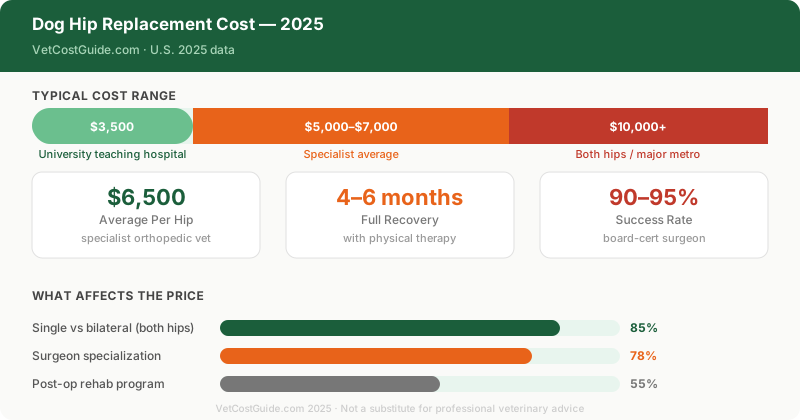
Your vet says your dog has severe hip dysplasia and total hip replacement is on the table. The estimate lands at $6,000 per hip. Before you panic, let’s look at what you actually get for that money — and whether it’s worth it compared to long-term pain management.
- Per-hip cost: $3,500–$7,000 at a board-certified orthopedic surgeon
- Both hips: $7,000–$14,000 total, often done 3–6 months apart
- University teaching hospitals: 20–35% less, same quality of care
- Success rate: 90–95% with excellent long-term function when performed by a specialist
What Does Dog Hip Replacement Cost?
| Option | Per Hip | Both Hips | Recovery Time |
|---|---|---|---|
| Board-cert. orthopedic vet | $4,500–$7,000 | $9,000–$14,000 | 4–6 months |
| University teaching hospital | $3,500–$5,500 | $7,000–$11,000 | 4–6 months |
| Lifetime pain management (alt.) | $1,200–$2,500/yr | $12,000–$25,000 (10 yrs) | Ongoing |
The comparison row matters: if your dog lives 10 more years on NSAIDs, joint supplements, and periodic specialist visits, total lifetime costs can exceed replacement surgery costs — with lower quality of life.
What’s Included in the Price?
Pre-surgical workup: Hip radiographs, blood panel, cardiology clearance for larger breeds. Typically $400–$700, sometimes bundled.
The implant system: Most surgeons use BioMedtrix or Zurich Cementless systems. The implant hardware alone costs $1,500–$2,500 per hip.
Surgery and anesthesia: 2–3 hours of OR time with a surgical team, continuous anesthesia monitoring.
Hospitalization: 1–3 nights of post-op care, IV pain management, physical therapy initiation.
Follow-up radiographs: At 6 weeks, 3 months, and 1 year post-surgery.
What Affects the Cost?
Surgeon certification: Only board-certified veterinary surgeons (DACVS) should perform total hip replacement. Their fees are higher, but outcomes are significantly better.
Geographic location: Specialty centers in Los Angeles, New York, and Boston charge 30–50% more than those in the Southeast or Midwest.
Dog size: Larger dogs require larger (more expensive) implants and longer OR time. A 120-lb Rottweiler costs more than a 55-lb Border Collie.
Bilateral vs. unilateral: Doing both hips at once is occasionally considered but most surgeons prefer staging them 2–6 months apart to allow full recovery before operating on the second side.
Post-op rehabilitation: Canine physical therapy adds $100–$200 per session. A full rehab course runs $800–$2,000 but significantly improves outcomes.
- Non-specialist surgeons: Total hip replacement requires specialized training and implant systems. A general practice vet performing this procedure is a significant red flag.
- Skipping rehab: Dogs that skip post-op physical therapy have higher complication rates and slower recovery. Budget for it upfront.
- Bilateral same-day surgery: Some owners request both hips at once to save a second anesthesia. Most specialists advise against it — staged surgeries have better outcomes.
Is Pet Insurance Worth It for Hip Replacement?
Yes — if you enrolled before symptoms appeared. Pet insurance can cover 70–90% of replacement costs after your deductible, turning a $6,000 bill into $800–$1,800 out of pocket.
The critical caveat: hip dysplasia is often considered a hereditary/congenital condition. Many insurers exclude it unless symptoms appeared after enrollment and after the waiting period. Trupanion and Embrace are generally more lenient on hereditary conditions. Read the policy language carefully before purchasing.
How to Save Money
University veterinary hospitals: Schools like Cornell, UC Davis, Colorado State, and Tufts offer the same quality of surgery at 25–35% lower prices. They’re teaching hospitals supervised by faculty specialists — not student experiments.
Get two specialist consultations: Prices vary significantly between practices. A second opinion costs $150–$300 and could save $1,500.
Consider FHO as an alternative: Femoral head and neck ostectomy (FHO) is a simpler, cheaper procedure ($1,200–$2,500 per hip) that removes the femoral head entirely. It doesn’t restore normal joint function but reliably eliminates pain. Works best in dogs under 50 lbs.
CareCredit: Many specialty practices accept it. The 12–18 month 0% promotional period can help manage a large bill.
Frequently Asked Questions
At what age should a dog have hip replacement? Most surgeons prefer dogs between 9 months and 8 years. Older dogs can still be candidates if they’re otherwise healthy. Bone density and overall health matter more than age alone.
How long does the implant last? Modern total hip replacements are designed to last the dog’s lifetime. Revision rates are under 5% at 10 years in studies of board-certified surgeon outcomes.
What happens without surgery? Dogs with severe hip dysplasia managed only with medications typically have declining mobility over 3–5 years. Pain control becomes increasingly difficult. Quality of life suffers.
Can both hips fail at once? Hip dysplasia is bilateral in about 60% of affected dogs, but severity differs between sides. Most vets replace the worse hip first and reassess.