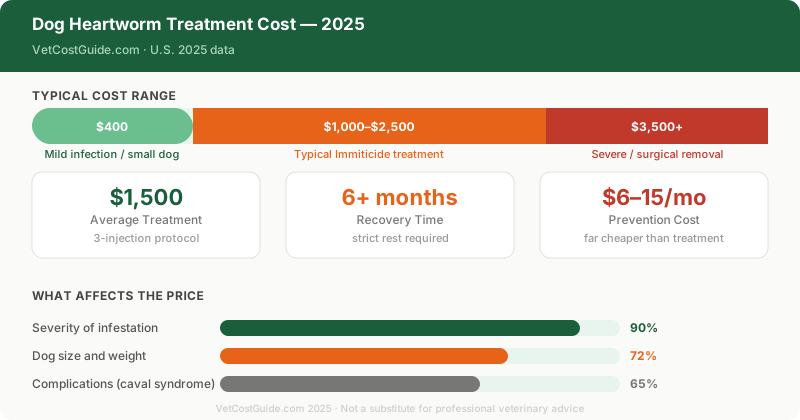
Heartworm disease is preventable for $6–$15 a month. Treatment, when prevention is skipped, costs $500 to $3,500—and that’s before accounting for the six months of strict cage rest that follows the injection series, the risk of pulmonary thromboembolism during treatment, and the possibility that severe cases require months of stabilization before treatment can even begin. The American Heartworm Society reports that over 1 million dogs in the U.S. test positive for heartworm disease annually. The cost gap between a $100 annual prevention investment and a $2,000 treatment bill represents one of the most preventable financial shocks in pet ownership.
- The standard melarsomine (Immiticide) treatment protocol costs $500–$3,500 depending on heartworm severity class and geographic location.
- Diagnosis and staging before treatment—antigen test, chest x-rays, bloodwork—adds $150–$400 to the total cost.
- Treatment for class 4 (caval syndrome) heartworm disease may require surgical removal of adult worms before melarsomine can be used, pushing total costs to $3,000–$6,000+.
- Monthly prevention (Heartgard Plus, Sentinel, Interceptor Plus) costs $6–$15/month—roughly 10–20× cheaper than the average treatment.
Heartworm Treatment Cost by Severity Class
The American Heartworm Society classifies heartworm disease in four classes (1–4) based on worm burden and cardiac involvement. Treatment protocol and cost differ substantially by class.
| Heartworm Class | Description | Staging Cost | Treatment Cost | Total Estimated Cost |
|---|---|---|---|---|
| Class 1 (mild) | Few worms, minimal symptoms | $150–$250 | $400–$800 | $550–$1,050 |
| Class 2 (moderate) | Moderate worm burden, mild cardiac changes | $200–$350 | $600–$1,200 | $800–$1,550 |
| Class 3 (severe) | Heavy burden, significant cardiac/pulmonary involvement | $250–$400 | $800–$2,000 | $1,050–$2,400 |
| Class 4 (caval syndrome) | Mass worm obstruction, requires surgical removal first | $300–$500 | $1,500–$4,000+ | $1,800–$4,500+ |
How Heartworm Treatment Works
The standard treatment protocol recommended by the American Heartworm Society uses melarsomine dihydrochloride (brand name Immiticide), an arsenic compound that kills adult heartworms. The protocol proceeds in phases:
Phase 1: Stabilization (4–8 weeks) Before melarsomine can be administered, the dog must be stabilized. This involves a 4-week course of doxycycline (antibiotic, $30–$80) to kill Wolbachia bacteria that live in heartworms and trigger dangerous inflammatory responses when worms die. Exercise is severely restricted during this phase. Prednisone ($20–$50) is typically added to reduce inflammation.
Some vets also administer a single dose of ivermectin-based preventive during this phase to kill any microfilariae (larval heartworms). Dogs with high microfilariae counts may require hospitalization for this step due to rare but severe hypersensitivity reactions.
Phase 2: Melarsomine injections The “split-dose” protocol involves three intramuscular injections into the lumbar muscles:
- Injection 1: administered and dog monitored for 8–12 hours
- 30-day rest period
- Injections 2 and 3: given 24 hours apart (completing the full protocol)
Each injection visit typically includes hospitalization monitoring and professional administration—the injection itself is painful and technique-dependent. This phase accounts for the majority of the treatment cost.
Phase 3: Post-treatment monitoring (6 months) Strict rest for 6–8 weeks after the final injection is non-negotiable. Dead worms are reabsorbed by the body, but during this process, worm fragments can lodge in pulmonary vessels causing thromboembolism—a potentially fatal complication that is significantly worsened by exercise. Crate rest is the standard recommendation. Monthly preventive medication continues. Antigen testing at 6 months confirms treatment success.
Full Cost Breakdown for a Typical Case
The following represents a typical Class 2 (moderate) heartworm-positive dog, 30–50 lbs, in a mid-market U.S. location:
| Service | Cost |
|---|---|
| Initial antigen test | $35–$55 |
| Chest x-rays (2 views) | $150–$300 |
| CBC + chemistry panel | $80–$150 |
| Staging total | $265–$505 |
| Doxycycline (4-week course) | $30–$80 |
| Prednisone | $20–$50 |
| Ivermectin preventive during stabilization | $10–$20 |
| Melarsomine injection series (3 injections + monitoring) | $500–$900 |
| Post-treatment prednisone/anti-inflammatories | $30–$60 |
| 6-month confirmatory antigen test | $35–$55 |
| Heartworm preventive (6 months post-treatment) | $40–$90 |
| Total estimated cost | $930–$1,815 |
Prevention vs. Treatment: The Real Math
The cost comparison between prevention and treatment is one of the starkest in veterinary medicine.
Annual prevention cost per dog: Heartgard Plus (ivermectin/pyrantel): $6–$12/month = $72–$144/year Sentinel Spectrum (milbemycin/praziquantel): $10–$15/month = $120–$180/year Interceptor Plus: $8–$13/month = $96–$156/year
Average heartworm treatment cost: $1,200–$2,000 for a moderate case
Prevention vs. treatment ratio: Prevention costs approximately 1/10th to 1/20th the cost of treatment, every single year. A 10-year dog that received prevention every year costs $720–$1,800 in prevention vs. $1,200–$2,000 for a single treatment event.
Geographic risk also affects the urgency of prevention. The Mississippi Valley, Gulf Coast states, and Atlantic Seaboard have the highest heartworm prevalence—in some counties of Louisiana and Mississippi, heartworm positivity rates exceed 10% in unprotected dogs.
- Skipping monthly prevention because the dog is “mostly indoor” or “it’s winter”—heartworm transmission occurs in most of the continental U.S. during spring through fall and year-round in warm climates.
- Purchasing prevention without annual testing—American Heartworm Society guidelines require annual testing even for dogs on prevention, since no product is 100% effective and missed doses create gaps in coverage.
- Allowing exercise during the 6–8 week post-injection rest period—pulmonary thromboembolism from dead worms is a genuine life-threatening risk, not a precautionary suggestion.
- Attempting “slow kill” treatment with monthly ivermectin alone (without melarsomine) to reduce cost—this approach keeps the dog infected with adult worms for 1–2 years, increasing cardiac damage, and is not recommended by the American Heartworm Society.
How to Get Started with Prevention
If your dog is not currently on prevention, start here:
Step 1: Annual heartworm test. Before starting prevention for the first time or after a lapse, test your dog. Starting preventive medication on a heartworm-positive dog without testing can cause a severe hypersensitivity reaction to dying microfilariae.
Step 2: Choose a prevention product. Heartgard Plus and Interceptor Plus are the most widely used. Combination products like Sentinel Spectrum also cover intestinal parasites. Trifexis (oral) and Revolution Plus (topical) combine heartworm prevention with flea/tick control.
Step 3: Get a 12-month supply at once. Most manufacturers offer rebates on 12-month purchases ($15–$25 back). Online veterinary pharmacies (Chewy, PetMeds, Vetsource) typically price 15–25% below clinic pricing for the same products.
FAQ
Can a dog survive heartworm disease without treatment? Some dogs with light worm burdens survive for years without specific treatment, but the worms cause ongoing cardiac and pulmonary damage throughout. Untreated heartworm disease is the leading cause of right-sided heart failure in dogs in endemic regions.
Is the treatment painful for my dog? The melarsomine injection is administered deep into the lumbar muscles and is moderately painful. Most dogs require pain management for 24–48 hours after each injection. The total 3-injection protocol is uncomfortable but well-tolerated by the majority of dogs.
Does pet insurance cover heartworm treatment? It depends on the insurer and whether the condition predated enrollment. If your dog was on active coverage before diagnosis and heartworm disease is not listed as a pre-existing condition, most comprehensive plans cover treatment at 70–90% after the deductible.
Can my dog get heartworms again after treatment? Yes. Successful treatment eliminates the current infection but provides no immunity against future infections. Continuous monthly prevention is required for life after treatment.