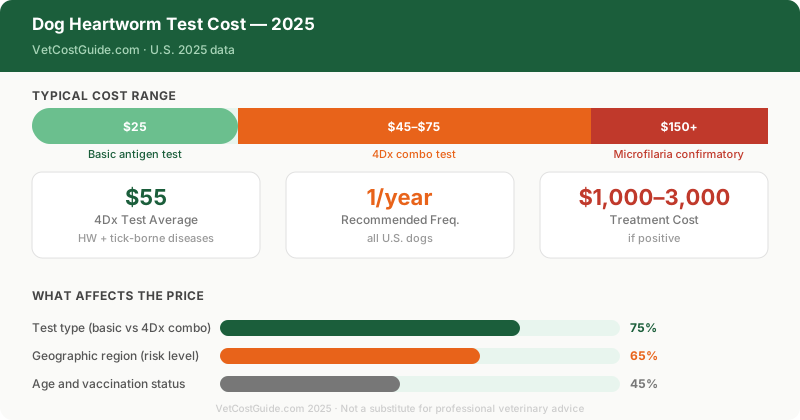
Heartworm testing is one of the most low-cost, high-value diagnostics in veterinary medicine — and one of the most commonly skipped by cost-conscious owners. The test itself runs just $25–$75 depending on type. What it protects against is catastrophic: a heartworm-positive dog that receives macrolide prevention without prior testing can suffer a sudden, severe reaction as the drug rapidly kills circulating microfilariae. And if heartworm disease progresses untreated to a severe stage, treatment costs $1,500–$3,500 — plus strict 6-month activity restriction that’s hard on dogs and owners alike. Annual testing isn’t optional care; it’s the foundation of safe prevention.
- A basic heartworm antigen test costs $25–$45 at most US veterinary clinics in 2025.
- The 4Dx combo test — screening for heartworm plus Lyme disease, Ehrlichiosis, and Anaplasmosis — costs $45–$75 and is the standard of care in tick-endemic regions.
- Heartworm treatment for a positive dog costs $500–$1,500 for mild cases and $1,500–$3,500 for severe disease.
- Monthly prevention costs just $6–$15/month (Heartgard, Sentinel, Trifexis) — making prevention the single most cost-effective investment in your dog’s health.
Cost Breakdown
| Service | Low | Average | High |
|---|---|---|---|
| Basic Heartworm Antigen Test | $25 | $35 | $45 |
| 4Dx Combo Test (HW + tick diseases) | $45 | $60 | $75 |
| Microfilaria Confirmatory Test | $30 | $45 | $60 |
| Monthly Prevention — Heartgard Plus | $6 | $9 | $12 |
| Monthly Prevention — Trifexis (HW+fleas+intestinal) | $10 | $13 | $15 |
| Heartworm Treatment — Mild (Class 1–2) | $500 | $1,000 | $1,500 |
| Heartworm Treatment — Severe (Class 3–4) | $1,500 | $2,500 | $3,500 |
The cost differential between a $60 annual test + $120/year in prevention ($180 total) versus treating a positive dog ($500–$3,500) makes the ROI on annual testing self-evident.
What’s Included
Basic heartworm antigen test. This in-clinic ELISA blood test detects proteins (antigens) released by adult female heartworms. Results are available in 10 minutes. The test is highly sensitive and specific for adult worm infections of 5+ months. It does not detect early (immature) infections — which is why dogs who lapse in prevention for several months should be retested 6–7 months after the lapse, not immediately.
4Dx (or similar combo) test. The Idexx SNAP 4Dx Plus and Zoetis Witness tests simultaneously screen for heartworm antigen plus antibodies to three tick-borne diseases: Lyme disease (Borrelia burgdorferi), Ehrlichiosis (E. canis/ewingii), and Anaplasmosis (A. phagocytophilum/platys). This is the recommended annual screen for all dogs in the US, particularly in tick-endemic areas. The marginal additional cost ($15–$30 over a basic HW test) screens for diseases that are as dangerous as heartworm but often more geographically widespread. Cost: $45–$75.
Microfilaria (Knott’s/filter) test. If the antigen test is positive, a microfilaria test confirms the presence of circulating baby heartworms (microfilariae) in the bloodstream. This is critical before starting treatment because it affects treatment planning — and directly informs the risk of giving macrolide drugs. Cost: $30–$60 as an add-on.
Heartworm treatment protocol. American Heartworm Society guidelines recommend a “slow kill” pre-treatment protocol before the definitive Immiticide (melarsomine) injections. Treatment involves doxycycline (antibiotic, kills Wolbachia bacteria inside worms), prednisone (reduces inflammation), 60 days of exercise restriction, and then 2–3 melarsomine injections administered by your vet. The entire protocol spans 3–4 months and requires strict rest — no running, jumping, or vigorous play, because dead worms embolize in the lungs.
What Affects the Cost
1. Disease class at diagnosis. Heartworm disease is classified Class 1–4 based on severity. Class 1 (asymptomatic, few worms) has a low treatment cost and excellent prognosis. Class 4 (severe lung disease, heart changes, vena cava syndrome) requires intensive hospitalization, surgical worm removal, and aggressive supportive care — and still carries meaningful mortality risk.
2. Body size. Melarsomine (Immiticide) is dosed by weight. Large breeds receiving treatment pay more for medication than small dogs.
3. Pre-treatment stabilization. Severely affected dogs often require pre-treatment cardiac workup (chest X-rays, echocardiography), anti-failure medications, and stabilization before they’re safe for treatment. These add $200–$600 to the total.
4. Geographic region. Heartworm prevalence varies by state. The Southeast (particularly Mississippi River basin states), Gulf Coast, and Atlantic Seaboard have the highest prevalence. Even in lower-prevalence states, annual testing remains recommended because prevention failures happen and newly adopted dogs may have unknown history.
5. Whether you use a vet clinic or low-cost alternative for testing. Some local humane societies, shelters, and mobile vet clinics offer 4Dx testing at $20–$35 — a legitimate cost-saving option for the test itself, provided you also maintain a relationship with a full-service vet for treatment if needed.
- Giving prevention to an untested positive dog. Macrolide heartworm preventives (ivermectin, milbemycin oxime) rapidly kill microfilariae in the bloodstream. In a dog with heavy microfilaria loads, this mass die-off can trigger a systemic shock response. This is why the American Heartworm Society and every preventive manufacturer require a negative heartworm test before starting or restarting prevention after a lapse.
- “Slow kill” as a substitute for proper treatment. Some owners ask about using high-dose monthly ivermectin to “slowly kill” adult heartworms instead of the melarsomine protocol. This is not recommended — it prolongs the period of worm-mediated lung damage and does not reliably clear adult worms. The proper Immiticide protocol, though expensive, provides the best outcome.
- Skipping the test to save $45 and unknowingly giving prevention. This is the most common and most dangerous false economy in canine preventive care. The test is not optional.
Is Pet Insurance Worth It?
Heartworm treatment is specifically excluded as a pre-existing condition if a dog tests positive before enrollment. However, for a dog enrolled while testing negative, heartworm disease contracted after enrollment is typically covered as a new illness.
The stronger insurance case for heartworm-related costs is actually prevention-adjacent: most insurers cover the complications of heartworm disease (respiratory distress, cor pulmonale, thromboembolism) that can require emergency hospitalization. A dog in heart failure from chronic heartworm disease can incur $2,000–$8,000 in emergency and specialist costs that an illness policy would cover.
How to Save Money
Never skip the annual test. Counterintuitively, annual testing saves money by catching disease early (Class 1 treatment = $500–$1,000) instead of late (Class 3–4 treatment = $2,000–$3,500). It also ensures you’re never accidentally dosing a positive dog.
Buy prevention through online veterinary pharmacies. With a prescription, you can purchase Heartgard Plus, Sentinel, or Trifexis through Chewy Pharmacy, 1-800-PetMeds, or Costco Pharmacy at 20–35% below typical clinic prices. Six-month packs are cheaper per dose than monthly purchases.
Ask about manufacturer rebates. Heartgard, Sentinel, Interceptor, and other manufacturers regularly run annual rebate programs. Buying a 6- or 12-month supply in the spring (heartworm season) often comes with a $15–$30 mail-in rebate.
Use low-cost clinics for testing. The heartworm test itself can be done at low-cost vaccine clinics, humane society events, or mobile vet units for $20–$40. This is entirely appropriate for an otherwise healthy dog whose regular vet relationship is maintained for treatment if ever needed.
Bundle testing with annual wellness. Most veterinary wellness visits include the 4Dx test as part of the annual package. Having the test done at the same appointment as vaccines and the physical exam avoids a separate office visit fee.
Frequently Asked Questions
Does my dog need a heartworm test every year if they’ve never missed a dose of prevention? Yes. The American Heartworm Society recommends annual testing for all dogs, even those on uninterrupted prevention. No preventive is 100% effective — administration errors, vomiting of a chewed tablet, or product failure can create a gap. Annual testing catches any breakthrough infections before they become severe.
What happens if my dog tests positive for Lyme on the 4Dx test? A positive Lyme antibody result means exposure to the bacteria, not necessarily active disease. Your vet will likely recommend a follow-up quantitative Lyme C6 antibody titer (Quant C6 test, ~$60–$100) to determine exposure level and whether treatment is warranted. Many dogs with Lyme antibodies never develop clinical illness and don’t require treatment.
How long does heartworm treatment take? The full American Heartworm Society protocol takes approximately 3–4 months from start to final injection. It includes 60 days of doxycycline, a first melarsomine injection, a 30-day rest period, and then two final injections 24 hours apart. During the entire treatment period, dogs must be strictly exercise-restricted to prevent pulmonary thromboembolism from dead worms.
Can heartworm disease be completely cured? In Class 1–2 dogs, the proper treatment protocol clears adult worms with a 95%+ success rate and most dogs return to normal health. Class 3–4 dogs may have some permanent lung or cardiac damage despite successful worm clearance. This is another reason early detection (via annual testing) significantly improves outcomes.