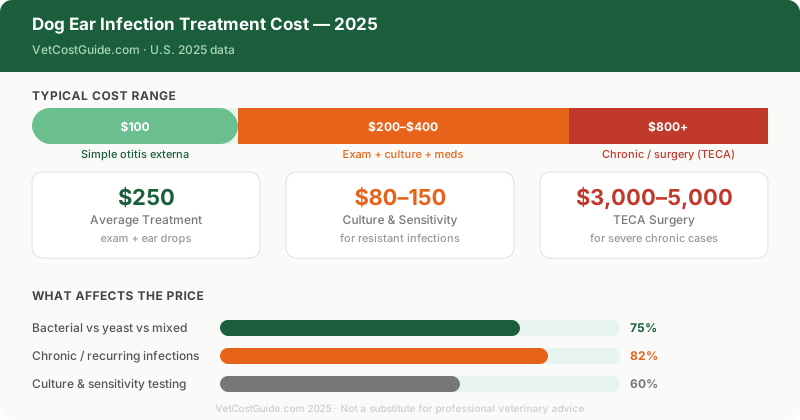
A first-time dog ear infection typically costs $150 to $350 to treat at a general practice vet: exam fee, ear cytology to identify the organism, and a bottle of prescription ear drops. That’s the easy scenario. The harder scenario—which is more common than most owners realize—is the dog that gets ear infections two, three, four times a year, eventually developing a resistant bacterial infection that requires culture-guided antibiotics, sedated ear flushes, and potentially a $3,000–$5,000 per ear surgery called a total ear canal ablation. The cost gap between a simple first ear infection and a chronic, unmanaged one is not a matter of bad luck; it’s almost always traceable to whether the underlying cause (usually allergies) was identified and treated or ignored.
- A first-time acute ear infection costs $150–$400 including exam, cytology, and prescription ear drops.
- Chronic recurring infections that require culture testing, sedated ear flushes, and oral antibiotics run $400–$1,200 per episode.
- Total ear canal ablation and lateral bulla osteotomy (TECA-LBO) surgery for end-stage chronic ears costs $3,000–$5,000 per ear at a surgical specialist.
- Treating the underlying allergy—which drives 85–90% of chronic ear disease—is the only way to break the recurrence cycle and reduce long-term costs.
Dog Ear Infection Treatment Cost Breakdown
| Type | Low | Average | High |
|---|---|---|---|
| Vet exam fee | $50 | $65 | $75 |
| Ear cytology (microscopy) | $40 | $60 | $80 |
| Culture & sensitivity test | $80 | $115 | $150 |
| Prescription ear drops (2–3 weeks) | $30 | $55 | $80 |
| Oral antibiotics (2–4 weeks) | $25 | $42 | $60 |
| Ear flush under sedation | $150 | $225 | $300 |
| Allergy testing (intradermal or blood) | $200 | $400 | $600 |
| TECA-LBO surgery (per ear) | $3,000 | $4,000 | $5,000 |
| Total: first-time acute infection | $120 | $235 | $390 |
| Total: chronic resistant infection | $400 | $750 | $1,200 |
What’s Included in the Price
A standard first-time ear infection appointment includes a physical and otoscopic exam of the ear canal, cytology—where the vet takes a swab of the discharge, stains it, and examines it under a microscope to identify yeast (Malassezia), bacteria (typically Staphylococcus or Pseudomonas), or both—and a prescription ear medication. Common ear drops like Posatex, Claro, and Otomax are combination products containing an antibiotic, antifungal, and steroid. Claro, a single-dose long-acting medication, costs $80–$120 but eliminates the twice-daily application that many owners struggle with.
For dogs with recurring infections, a culture and sensitivity test is essential. This involves sending an ear swab to an outside lab, with results in 3–5 days, showing exactly which organism is present and which antibiotics will kill it. Without this test, vets are guessing with empirical antibiotic choices—and Pseudomonas, in particular, is notorious for antibiotic resistance that standard empirical choices completely miss.
A sedated ear flush is indicated when the ear canal is severely inflamed, packed with debris, or when drops cannot penetrate to the eardrum. Under light sedation, the vet uses an otoscope and lavage to thoroughly clean the canal. This is necessary for medication to reach the infection and is often a turning point in chronic cases.
TECA-LBO surgery is a salvage procedure for dogs with severe chronic otitis where the ear canal is irreversibly scarred, calcified, or destroyed. The entire ear canal is surgically removed. While it results in deafness in that ear (or both if bilateral), it eliminates the infection source and is considered the most humane option for dogs with end-stage ear disease.
What Affects the Cost
Whether it’s a first infection or chronic disease. A first-time, yeast-only infection in a dog with otherwise no health issues is the cheapest and fastest to resolve. A dog that’s had six infections in three years and now has a resistant Pseudomonas biofilm infection is an entirely different clinical and financial situation.
Organism type. Yeast infections respond reliably and quickly to antifungal ear drops. Bacterial infections, especially gram-negative rods like Pseudomonas, may require culture-guided treatment with medications like fluoroquinolone ear drops, which cost $80–$150 per bottle and require weeks of treatment.
Ear anatomy. Cocker Spaniels and Basset Hounds have narrow, L-shaped ear canals with poor airflow. Labrador and Golden Retrievers have floppy ears that trap moisture. These anatomical factors make infections harder to treat and easier to recur, increasing the likelihood of needing sedated flushes and extended treatment courses.
Underlying allergies. Environmental allergies (atopy) drive approximately 85% of chronic ear disease in dogs. Without diagnosing and managing the allergy through immunotherapy, Apoquel, Cytopoint, or prescription diets (for food allergy), infections will recur regardless of how well each individual episode is treated.
Specialist involvement. Veterinary dermatologists ($250–$500 initial consultation) manage the most complex chronic ear cases, performing video otoscopy, deep canal flushes, and allergy workups that general practitioners are less equipped for. Their involvement often reduces total long-term cost despite higher per-visit fees.
- Treating each ear infection as an isolated event without investigating why it keeps coming back. Recurrent ear infections in dogs are almost never bad luck—they’re a sign of an unmanaged underlying condition, almost always allergies. Each treated-but-not-investigated episode adds cost without addressing the root cause.
- Using over-the-counter ear cleaners as treatment rather than diagnosis. OTC products may mask symptoms temporarily but do not resolve bacterial or yeast infections. A dog showing signs of ear pain, odor, or dark discharge needs cytology before treatment, not just cleaning.
- Skipping follow-up appointments. Ear infections, particularly bacterial ones, need a recheck cytology after treatment to confirm resolution. Stopping medication when a dog “seems better” without confirming clearance on a slide is one of the most common causes of resistance developing.
Is Pet Insurance Worth It?
Pet insurance covers ear infections under most accident and illness policies, but the value depends heavily on whether the condition is classified as chronic or pre-existing. A dog enrolled in insurance before the first ear infection is diagnosed has good coverage. A dog with documented recurring ear infections at enrollment will likely have ear disease excluded or limited.
For high-risk breeds—Cocker Spaniels, Basset Hounds, Goldendoodles, Labrador Retrievers—enrolling before any ear-related entries appear in the medical record is especially important. Annual premiums of $400–$800 for medium-sized dogs can offset one or two chronic infection episodes per year. If TECA-LBO surgery is ever needed, insurance that covers 80% of a $4,000 procedure saves $3,200 in a single claim.
Allergy management—Apoquel ($2–$4/day), Cytopoint ($80–$180 per injection every 4–8 weeks), or allergen-specific immunotherapy ($150–$250/month for injections)—may or may not be covered depending on the policy. Review policy language for chronic condition management and dermatology coverage limits.
How to Save Money
Ask your vet to do cytology before prescribing ear drops. Cytology takes 10 minutes and costs $40–$80 but prevents paying for antifungal drops when the infection is bacterial, or bacterial drops when it’s yeast. Treating the wrong organism extends the infection and leads to additional appointments.
Request culture and sensitivity testing early for recurring infections. Owners often spend $300–$500 over two or three empirical antibiotic rounds before a culture is ordered. Skipping to the culture at the second recurrence often saves money and resolves the infection faster.
Address allergies proactively. Apoquel ($50–$80/month) or a Cytopoint injection ($100–$180 every 4–8 weeks) that prevents allergic ear inflammation often costs less than two ear infection treatments per year. Talk to your vet about whether an allergy medication trial makes sense for your dog.
Learn to properly clean ears at home between vet visits. Your vet can teach you the correct technique using a veterinary ear cleaner ($15–$25 per bottle). Regular cleaning in ear-infection-prone dogs removes debris before it becomes infected and reduces appointment frequency.
Compare specialist vs. general practice for TECA surgery. While specialist surgeons charge more per hour, their familiarity with the procedure typically means fewer complications, faster surgeries, and better outcomes. Getting one specialist quote may prevent a failed or complicated surgery at a less experienced facility.
Frequently Asked Questions
How do I know if my dog has an ear infection vs. just dirty ears? Dirty ears have minimal odor and a small amount of dark waxy buildup. An infected ear typically has noticeable odor (yeasty, sweet, or foul), visible redness or swelling of the ear flap or canal opening, and causes the dog to scratch, shake the head, or tilt the head. Pain when you touch the ear base is another indicator. Cytology at the vet is the only way to confirm and identify the organism.
Can I use human ear infection drops on my dog? No. Human antibiotic ear drops (like Ciprodex) are not FDA-approved for dogs, are dosed differently, and some formulations contain compounds that can be toxic if the eardrum is ruptured. Using any ear drops without confirming the eardrum is intact can cause permanent hearing damage. Always use veterinary-prescribed ear medications.
How long does a dog ear infection take to clear up? With appropriate treatment, a first-time yeast infection typically shows improvement in 3–5 days and resolves completely in 1–2 weeks. Bacterial infections, especially those caused by Pseudomonas, may require 4–8 weeks of treatment. Recheck cytology is the only reliable confirmation of resolution.
What breeds are most prone to ear infections? Cocker Spaniels and Basset Hounds top the list due to heavy ear flaps and narrow canals. Labrador Retrievers, Golden Retrievers, and Poodles get frequent moisture-related infections. Bulldogs, Shar-Peis, and other dogs with very narrow or stenotic ear canals also have elevated rates of chronic ear disease.