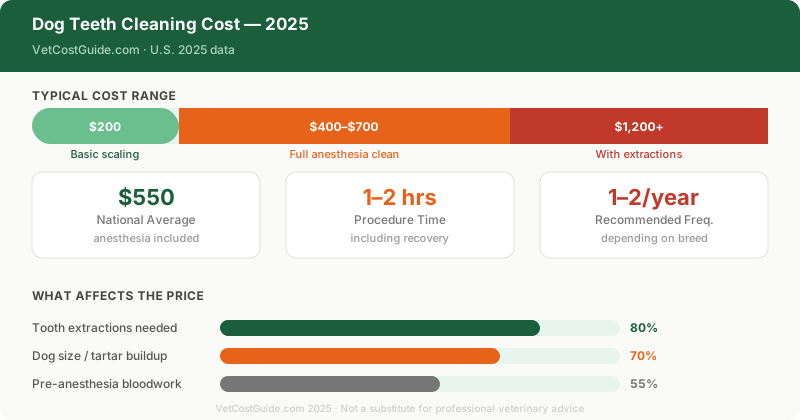
Dental disease is the most common health condition in adult dogs — affecting an estimated 80% of dogs by age three — and one of the most consistently under-treated. The problem isn’t that owners don’t care; it’s that dental disease is invisible until it’s severe. By the time a dog shows obvious signs like drooling or refusing food, they often have multiple loose or infected teeth requiring extraction. A cleaning that would have cost $300–$700 a year ago now costs $700–$1,500 with extractions added. The math on prevention is compelling.
- Professional dental cleaning under anesthesia costs $300–$700 at most private vet practices.
- Each tooth extraction adds $150–$500 per tooth — advanced disease can mean 3–8 teeth needing removal.
- Daily tooth brushing is the most effective prevention; dental chews and water additives cost $15–$30/month.
- Annual prevention spending of $180–$360 can defer or eliminate the need for $800–$2,000 dental procedures.
Dog Dental Disease Cost Breakdown
| Service | Low Estimate | High Estimate |
|---|---|---|
| Professional dental cleaning (no extractions) | $300 | $700 |
| Dental cleaning with 1–2 simple extractions | $500 | $1,000 |
| Dental cleaning with multiple extractions (advanced disease) | $800 | $2,000 |
| Single tooth extraction (simple, no root elevation needed) | $150 | $300 |
| Single tooth extraction (surgical, multi-rooted or retained root) | $250 | $500 |
| Dental radiographs (full-mouth series) | $150 | $300 |
| Tooth resorption treatment | $200 | $400 |
| Root canal (specialist) | $1,500 | $3,000 |
| Daily dental chews (e.g. Greenies, Virbac CET) | $15 | $30 |
| Water additive (monthly supply) | $15 | $25 |
| Enzymatic toothpaste and toothbrush | $10 | $20 |
What’s Included in Professional Dental Care
Professional cleaning under anesthesia is the only way to adequately clean below the gum line where periodontal disease actually develops. “Anesthesia-free” dental cleanings remove visible tartar but do not address subgingival disease — the American Veterinary Dental College calls them inadequate and potentially misleading. A proper cleaning includes:
- Scaling: Ultrasonic and hand scaling to remove calculus above and below the gum line
- Probing: Each tooth pocket is measured to detect periodontal disease depth
- Dental radiographs: Essential for evaluating tooth root health, bone loss, and whether extraction is needed (often included in premium cleaning packages; billed separately at $150–$300 otherwise)
- Polishing: Smooths enamel after scaling to slow future tartar buildup
- Irrigation: Antibacterial rinse of all pockets
- Anesthesia and monitoring: General anesthesia with intubation, IV fluids, and continuous monitoring throughout
Extractions are performed during the cleaning appointment when teeth are determined to be unsaveable. Simple extractions (single-rooted teeth like incisors) cost $150–$300. Surgical extractions (multi-rooted teeth requiring section and individual root removal, like carnassials and molars) cost $250–$500 each due to surgical complexity.
Dental radiographs are standard of care in modern veterinary dentistry. Studies show that radiographs change the treatment plan in approximately 50% of dogs — revealing diseased roots, bone loss, or tooth resorption not visible on surface exam. Many practices include them in their cleaning price; others bill separately.
The Progression of Dental Disease
Dental disease progresses in four stages, and cost escalates dramatically at each stage:
Stage 1 (Gingivitis): Redness and mild swelling of gums. Reversible with a professional cleaning. No bone loss. Cost to treat: $300–$500.
Stage 2 (Early periodontal disease): Up to 25% bone loss around some teeth. Professional cleaning plus possibly 1–2 extractions. Cost: $400–$700.
Stage 3 (Moderate periodontal disease): 25–50% bone loss. Multiple extractions likely. Cost: $700–$1,200.
Stage 4 (Advanced periodontal disease): Over 50% bone loss, teeth mobile or abscessed, systemic infection possible. Multiple surgical extractions, potentially specialist referral. Cost: $1,200–$2,500+.
Bacteria from severe dental disease have been linked to endocarditis, kidney damage, and liver disease in dogs — though causation vs. correlation is still debated in the literature. The local pain and infection impact on quality of life is not.
What Affects the Cost
Dog size and number of teeth: Large breeds have larger teeth with more complex root systems. Extracting a lower first molar in a 90-lb Labrador is substantially more work than in a 10-lb Chihuahua. That said, small breeds are genetically predisposed to severe dental crowding and periodontal disease, meaning they often require more extractions despite smaller individual tooth size.
Geographic location: As with all veterinary services, urban coastal practices charge 30–60% more than rural or mid-America practices for equivalent dental procedures.
Stage of disease at first treatment: This is the biggest financial variable. A dog seen annually with clean-ups at Stage 1 may only ever need routine cleanings. A dog who goes 4–5 years without dental care may present at Stage 3–4 with a $1,500–$2,500 treatment bill.
Brachycephalic breeds: Bulldogs, Pugs, French Bulldogs, Shih Tzus, and Boxers have more teeth than jaw space — severe crowding causes accelerated periodontal disease and more frequent dental interventions.
- Anesthesia-free dental cleanings: These remove surface tartar cosmetically but do not treat subgingival periodontal disease where infection actually lives. The AVDC considers them inadequate and potentially harmful if they delay proper treatment while disease worsens invisibly below the gum line.
- Skipping dental radiographs to save money: X-rays are not optional extras — they change the treatment plan in roughly half of all dental cleanings. Skipping them means extracting some teeth that could be saved, and leaving diseased roots behind in others.
- Waiting for visible signs before seeking care: Dogs are stoic. A dog drooling, dropping food, or pawing at their mouth already has severe, painful dental disease. Annual exams with dental assessment catch disease at Stage 1–2 when treatment is simpler and cheaper.
- Discounting the systemic effects: Oral bacteria that enter the bloodstream have been associated with cardiac valve disease and kidney damage. Prevention isn’t just about teeth — it’s about whole-body health.
Prevention: The Real Cost Math
Daily tooth brushing is the gold standard for dental prevention. Using a dog-appropriate enzymatic toothpaste ($8–$15) and finger brush or toothbrush ($5–$10), brushing 5 out of 7 days per week removes plaque before it mineralizes into tartar. Starter kit cost: $15–$25. Ongoing cost: toothpaste replacement every 2–3 months at $8–$15.
VOHC-accepted dental chews (Greenies, Virbac CET chews, Purina DentaLife) carry the Veterinary Oral Health Council seal indicating proven plaque/tartar reduction in controlled studies. Cost: $15–$30/month depending on dog size and product.
Water additives (Healthymouth, TropiClean) reduce oral bacteria via daily water supplementation. No brushing required. Cost: $15–$25/month. Less effective than brushing but significantly better than nothing.
Dental diet food (Hill’s t/d, Royal Canin Dental) uses a specific kibble size and texture to mechanically clean teeth during chewing. Cost: $40–$80/month. Most practical for dogs who won’t tolerate brushing.
The cost comparison: $200/year in prevention (daily brushing + monthly dental chews) versus $1,000–$2,000 for advanced dental treatment every 1–2 years. Annual professional cleanings at Stage 1 ($300–$500) combined with home prevention are far more economical than treating advanced disease.
Is Pet Insurance Worth It for Dental?
Standard pet insurance often excludes dental cleanings as routine preventive care. However, dental disease complications — tooth root abscesses, oral masses, jaw fractures from severe bone loss — are typically covered as illness or injury. Dental illness coverage specifically is available as an add-on from some carriers (Healthy Paws, Embrace, Nationwide).
If your dog is already showing dental disease, pre-existing exclusions likely apply to dental conditions. Enroll when young and healthy if dental coverage is a priority.
How to Save Money
Start prevention early and stay consistent. A dog whose teeth are brushed regularly from puppyhood may need professional cleanings only every 2–3 years rather than annually. The lifetime savings compound significantly.
Ask for full-mouth radiographs to be included in your cleaning quote. Many practices include them; others add them at the time of procedure. Knowing upfront avoids sticker shock.
Get a dental estimate before scheduling. Your vet can assess your dog’s mouth during a routine exam and give you a realistic estimate of what a cleaning will likely involve. This lets you plan financially rather than authorize unlimited extractions on the day.
Consider veterinary dental schools. Major vet schools have dental specialty programs where board-certified veterinary dentists and residents perform procedures at significantly reduced cost. Wait times may be longer.
FAQ
Why does my dog need anesthesia for a dental cleaning? Dogs cannot understand “hold still while I work below your gum line with sharp instruments.” Anesthesia ensures the procedure is thorough (subgingival scaling is only possible in a motionless patient), painless, and safe for both the dog and the veterinary team. Modern veterinary anesthesia is extremely safe in healthy patients; the risk of serious complications from anesthesia in a healthy adult dog is less than 0.1%.
How often should my dog get a professional dental cleaning? It depends on the individual dog. Small breeds and brachycephalic breeds often need annual cleanings starting at age 3. Larger breeds with good dental genetics who receive consistent home care may need cleaning every 2–3 years. Your vet’s exam guides the schedule.
Can I clean my dog’s teeth at home without ever going to the vet for a cleaning? Daily brushing dramatically slows tartar accumulation, but most dogs will still benefit from occasional professional cleanings to address any buildup that does occur, and to probe for periodontal pockets that home care cannot address. Think of it like flossing vs. professional cleanings in humans — both matter.
What happens if I skip dental care entirely? Advanced periodontal disease is painful. Dogs hide pain well, but diseased teeth cause chronic discomfort that affects quality of life — reduced activity, reluctance to play with toys, and behavioral changes. Beyond quality of life, abscessed teeth can spread infection. The financial cost of Stage 4 disease is $1,200–$2,500 or more in a single visit.