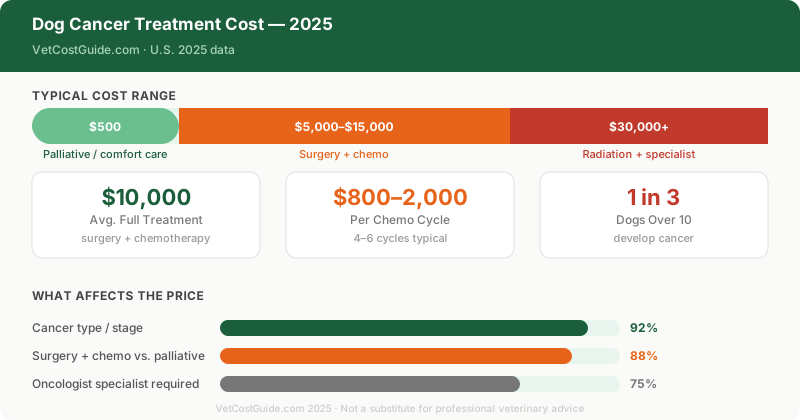
A cancer diagnosis in a dog is one of the most emotionally and financially challenging situations a pet owner faces. The cost of treatment spans an enormous range—from $500 for palliative care management to over $30,000 for aggressive multimodal treatment of certain cancers—and the right path depends on cancer type, stage, the dog’s overall health, and what the owner can realistically sustain. Understanding what each treatment option actually costs, and what it’s realistically expected to achieve in terms of survival time and quality of life, allows families to make decisions that are right for their situation rather than guessing in a veterinary oncologist’s office.
- Chemotherapy runs $800–$2,000 per cycle depending on the protocol; the standard CHOP protocol for lymphoma involves 4–6 cycles over 19–25 weeks, totaling $4,000–$12,000.
- Radiation therapy for localized tumors costs $6,000–$15,000 for a full course of 15–20 fractions.
- Tumor removal surgery ranges from $1,500 for simple mass removals to $6,000+ for complex soft-tissue sarcoma excisions with wide margins.
- Pet insurance that was enrolled before any cancer-related symptoms or diagnoses can cover 70–90% of oncology costs, representing potential savings of $5,000–$20,000.
Dog Cancer Treatment Cost Breakdown
| Type | Low | Average | High |
|---|---|---|---|
| Diagnostics (biopsy + staging) | $500 | $1,000 | $1,500 |
| Tumor removal surgery | $1,500 | $3,500 | $6,000 |
| Chemotherapy (per cycle) | $800 | $1,400 | $2,000 |
| CHOP protocol (full course) | $4,000 | $8,000 | $12,000 |
| Radiation therapy (full course) | $6,000 | $10,500 | $15,000 |
| Immunotherapy (Stelfonta) | $1,500 | $2,250 | $3,000 |
| Palliative care (per month) | $100 | $200 | $300 |
| Total (aggressive multimodal) | $8,000 | $18,000 | $30,000 |
What’s Included in the Price
Diagnostics and staging come first and are necessary before any treatment decision is made. A fine-needle aspirate ($150–$300) gives preliminary cytology results. A biopsy with histopathology ($300–$600) provides definitive diagnosis and grade. Staging—determining how far the cancer has spread—includes chest x-rays, abdominal ultrasound, and lymph node aspiration, adding $400–$800. Some cancers require bone marrow sampling or CT imaging ($600–$1,200) for complete staging.
Surgery is the primary treatment for solid tumors and is curative when clean margins are achieved. Cost varies enormously based on tumor location and size. A simple subcutaneous mast cell tumor excision with adequate margins may cost $1,500–$2,500. A soft-tissue sarcoma on a limb requiring wide surgical margins, or a splenic mass requiring splenectomy, runs $3,000–$6,000 including anesthesia, monitoring, and hospitalization.
Chemotherapy is dosed by body weight, meaning large dogs are more expensive to treat than small dogs. The CHOP protocol (cyclophosphamide, doxorubicin, vincristine, and prednisone) is the gold-standard treatment for canine lymphoma and involves weekly or biweekly appointments over approximately 19–25 weeks. Each infusion visit typically costs $800–$2,000. CHOP achieves complete remission in 80–90% of dogs with multicentric lymphoma, with a median first remission of 12–14 months.
Radiation therapy is used for tumors that are incompletely resected, in locations where surgery is not feasible (nasal tumors, brain tumors, certain oral tumors), or as adjuvant therapy after surgery. A definitive course involves 15–20 daily fractions over 3–4 weeks. Palliative radiation—fewer fractions aimed at pain control rather than cure—costs $2,000–$5,000 for 4–6 treatments.
What Affects the Cost
Cancer type and location. Lymphoma, mast cell tumors, osteosarcoma, and hemangiosarcoma are the four most common canine cancers, and each has a dramatically different treatment approach and cost profile. Osteosarcoma treated with limb amputation plus chemotherapy runs $8,000–$15,000. Hemangiosarcoma of the spleen, requiring emergency splenectomy plus chemotherapy, commonly totals $5,000–$10,000.
Cancer stage. Early-stage, localized disease that is surgically curable costs far less than late-stage, disseminated disease requiring systemic chemotherapy. Stage I mast cell tumor may resolve with one surgery; Stage III lymphoma requires months of chemotherapy.
Dog size and weight. Chemotherapy drugs are dosed per square meter of body surface area. A 10-pound dog receives roughly one-fifth the drug dose of an 80-pound dog, proportionally reducing per-cycle costs.
Oncology specialist vs. general practice. Veterinary oncology specialists typically charge $250–$500 for an initial consultation and command higher procedure fees than general practitioners. However, their expertise in protocol selection, side effect management, and access to clinical trials frequently improves outcomes.
Geographic location. Veterinary oncology centers in major metro areas charge 30–50% more than similar facilities in smaller markets. Academic veterinary teaching hospitals (University of Florida, Ohio State, UC Davis) often offer specialist care at reduced rates through resident training programs.
- Beginning cancer diagnostics without first confirming whether your pet insurance policy covers the workup. A single call to your insurer before the first biopsy can clarify coverage and prevent surprises. Policies enrolled before any symptoms or abnormal findings are the only ones that will cover oncology costs.
- Comparing cost without comparing realistic outcomes. A $2,000 palliative approach that provides 4–6 comfortable months may align better with a family’s values than a $15,000 aggressive protocol with a similar median survival. Veterinary oncologists can help frame expectations clearly.
- Skipping the histopathology grade. The grade of a mast cell tumor, for example, determines whether surgery alone is sufficient or whether adjuvant chemotherapy is necessary. Skipping biopsy to save $300 can mean missing the need for additional treatment—or paying for chemotherapy that a low-grade tumor didn’t require.
Is Pet Insurance Worth It?
For cancer specifically, pet insurance is one of the highest-ROI financial tools available to pet owners—provided it was enrolled before any cancer-related signs or diagnoses. A policy covering 80% of a $15,000 lymphoma treatment course with a $500 deductible returns $11,600 net. Annual premiums for a mid-aged, large-breed dog run $600–$1,200 per year.
The critical caveat: any lump, bump, or mass that was noted before policy enrollment may be excluded as a pre-existing condition. This is why oncology vets consistently recommend enrolling in insurance before any veterinary abnormalities are documented—ideally in puppyhood. Once a mass is noted in a medical record, it is typically excluded.
Policies to compare include Trupanion (unlimited annual coverage), Healthy Paws (no per-incident caps), and ASPCA Pet Health Insurance. All three cover chemotherapy, radiation, and surgery when enrolled before diagnosis.
How to Save Money
Pursue diagnostics in order of invasiveness and cost. Fine-needle aspirate before biopsy, chest x-rays before CT, ultrasound before MRI. Each escalation in diagnostic sophistication adds $400–$1,200. An oncologist can guide the minimum necessary workup for each cancer type.
Ask about clinical trials. Veterinary academic hospitals regularly conduct clinical trials for canine cancers that provide cutting-edge treatment at reduced or no cost in exchange for data collection. The Comparative Oncology Trials Consortium (COTC) maintains a registry at the National Cancer Institute.
Consider palliative care as a primary plan. For dogs where owners cannot pursue aggressive treatment, palliative protocols using NSAIDs, steroids, and metronomic (low-dose oral) chemotherapy can provide meaningful quality of life for $100–$300/month—a fraction of full oncology care.
Get an oncology consultation before committing. Initial consultations at $250–$500 provide a complete picture of all treatment options, expected outcomes, and costs before you commit to a path. Making decisions based only on a general practitioner’s referral can lead to under- or over-treatment.
Use veterinary school teaching hospitals. University-affiliated oncology departments provide specialist-level care at discounts of 20–40% compared to private specialty practices. Wait times may be longer, but the clinical quality is equivalent.
Frequently Asked Questions
What is the most common cancer in dogs? Lymphoma, mast cell tumors, osteosarcoma, and hemangiosarcoma are the four most frequently diagnosed canine cancers. Lymphoma accounts for approximately 7–24% of all canine tumors and is the most common cancer to receive chemotherapy treatment.
How long can a dog live with chemotherapy? For lymphoma treated with the CHOP protocol, approximately 80–90% of dogs achieve remission, with a median first remission of 12–14 months and median overall survival of 12–14 months. Without treatment, median survival for high-grade lymphoma is 4–6 weeks. Results vary significantly by cancer type.
Does pet insurance cover pre-existing cancer? No. Any cancer or lump that was diagnosed, treated, or noted in the medical record before policy enrollment is excluded as a pre-existing condition. This is one of the primary reasons vets recommend enrolling in insurance when pets are young and healthy.
Is chemotherapy hard on dogs? Dogs generally tolerate chemotherapy better than humans because veterinary protocols use lower doses prioritizing quality of life over maximum tumor kill. Approximately 25–30% of dogs experience mild side effects (lethargy, decreased appetite, mild GI upset) that resolve within 2–3 days. Severe reactions requiring hospitalization occur in roughly 5% of cases.