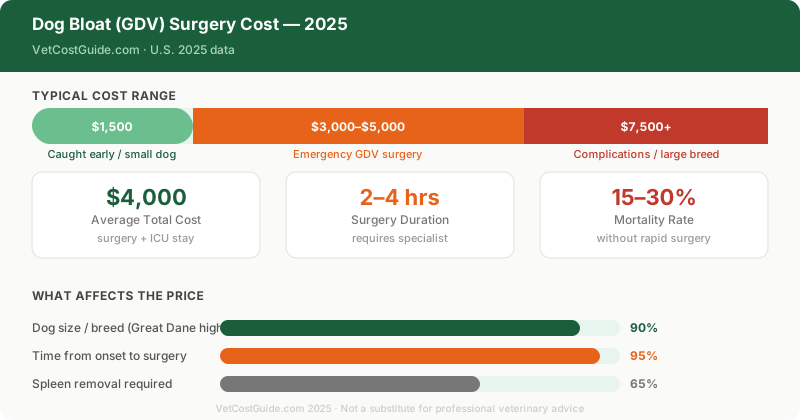
Gastric dilatation-volvulus (GDV), commonly called bloat, is one of the most expensive and time-critical emergencies in veterinary medicine. When a dog presents with a twisted, gas-filled stomach, the owner is typically facing a total bill between $2,000 and $7,500—and that number arrives at the worst possible moment, alongside a prognosis that drops dramatically with every hour of delay. The average uncomplicated GDV surgery at an emergency specialty hospital runs approximately $3,500 to $5,000 all-in, including stabilization, surgery, a two-to-three-day ICU stay, and discharge medications. Knowing this number in advance—and ideally having insurance or a savings plan in place—is the difference between a dog that goes home and a decision made entirely on finances.
- Total GDV treatment cost ranges from $2,000 for uncomplicated cases to $7,500 for dogs requiring intensive stabilization and complications management.
- Emergency surgery itself costs $1,500–$4,500; ICU hospitalization for 2–3 days adds $800–$1,500 on top of that.
- Adding a prophylactic gastropexy (stomach-tacking surgery) costs $300–$500 extra during the GDV procedure and prevents recurrence in the other 80% of at-risk dogs.
- Without surgery within 6 hours of symptom onset, mortality exceeds 50%; even with surgery, overall survival rates run 75–85% depending on how quickly treatment begins.
GDV Surgery Cost Breakdown
| Type | Low | Average | High |
|---|---|---|---|
| ER exam + initial stabilization | $300 | $450 | $600 |
| IV fluids + decompression | $200 | $325 | $450 |
| GDV surgery (gastropexy incl.) | $1,500 | $3,000 | $4,500 |
| Anesthesia + monitoring | $300 | $500 | $800 |
| ICU hospitalization (2–3 days) | $800 | $1,150 | $1,500 |
| Post-op medications + discharge | $100 | $175 | $250 |
| Gastropexy add-on (if not already included) | $300 | $400 | $500 |
| Total estimated cost | $2,000 | $4,500 | $7,500 |
What’s Included in the Price
A GDV treatment bill covers several distinct phases. The first is emergency stabilization: IV catheter placement, aggressive fluid resuscitation for shock, and gastric decompression via a stomach tube or needle trocarization to release trapped gas and relieve pressure on surrounding blood vessels. Pre-surgical bloodwork—a complete blood count and chemistry panel—is standard and necessary to assess organ function before anesthesia.
The surgery itself involves repositioning and decompressing the stomach, then suturing it permanently to the body wall (a procedure called a gastropexy) to prevent the stomach from twisting again. If portions of the stomach wall or spleen are necrotic due to vascular compromise, resection of those tissues adds time, complexity, and cost. Post-surgical ICU monitoring includes continuous cardiac monitoring (arrhythmias are common in the 12–48 hours post-GDV), pain management, IV antibiotics, and nutritional support.
Discharge medications typically include an antibiotic, proton pump inhibitor, and pain medication for 5–7 days at home.
What Affects the Cost
Geographic location and hospital type. Emergency specialty hospitals in major metro areas (New York, Los Angeles, Chicago, Seattle) charge 40–60% more than similar facilities in mid-sized or rural markets. A surgery that costs $3,200 in rural Ohio might run $5,500 in Boston.
How quickly the dog is treated. Dogs that arrive early—before significant shock, arrhythmia, or tissue necrosis has developed—require less stabilization time, shorter surgeries, and fewer ICU days. Each hour of delay increases both the biological complexity and the financial cost of treatment.
Spleen involvement. In approximately 10–15% of GDV cases, the spleen also twists with the stomach (splenic torsion) or becomes necrotic and must be removed (splenectomy). This adds $500–$1,000 to the surgical cost.
Stomach wall necrosis. If the gastric wall has lost blood supply long enough that tissue has died, partial gastrectomy (removal of dead stomach tissue) is required. This dramatically increases anesthesia time and surgical complexity, adding $800–$2,000 to the total.
Dog size and breed. Large and giant breeds require more anesthesia, larger IV volumes, and longer surgical times. Anesthesia costs scale with weight, so a 120-pound Great Dane costs meaningfully more to maintain under anesthesia than a 60-pound Labrador.
- Waiting to see if symptoms resolve on their own. GDV symptoms—distended abdomen, unproductive retching, restlessness, pale gums—will not resolve without intervention. Every hour of waiting increases the chance of necrosis, arrhythmia, and death. Drive to an emergency hospital immediately.
- Forgoing the gastropexy to reduce costs. Without stomach tacking, recurrence risk for GDV is approximately 70–80%. A second GDV surgery costs the same as the first. The $300–$500 gastropexy add-on during the initial surgery is almost always the right financial and medical decision.
- Assuming your regular vet can handle this. GDV surgery requires general anesthesia, surgical experience, and 24-hour post-operative monitoring. Most general practice vets appropriately refer these cases to emergency or surgical specialists.
Is Pet Insurance Worth It?
For GDV-prone breeds, pet insurance is one of the clearest financial arguments in veterinary medicine. Great Danes have a lifetime GDV incidence estimated at 42%. German Shepherds, Standard Poodles, Weimaraners, Doberman Pinschers, and Boxers are all at significantly elevated risk compared to the general dog population.
A typical accident and illness policy costs $45–$90 per month for a large-breed dog, with $200–$500 deductibles and 70–90% reimbursement. Against a $4,500 GDV bill, a policy with an $250 deductible and 80% reimbursement would cover $3,400—more than the annual premium cost. Policies must be in place before any symptoms develop; GDV cannot be covered retroactively or if the stomach is already noted as a pre-existing condition.
Prophylactic gastropexy—stomach tacking done electively when the dog is young and healthy, often at the time of a spay or neuter—costs $300–$500 added to a routine procedure, or $800–$1,500 as a standalone laparoscopic surgery. For high-risk breeds, this preventive surgery is strongly recommended by most veterinary surgeons.
How to Save Money
Enroll in pet insurance before 12 months of age. The younger the dog at enrollment, the lower the premium and the fewer potential exclusions. Waiting until a dog develops symptoms means coverage for the most likely emergencies is unavailable.
Ask about prophylactic gastropexy at spay or neuter time. Adding this procedure when the dog is already under anesthesia is the most cost-effective window—adding $300–$500 to an existing procedure rather than scheduling a $1,000–$1,500 standalone surgery later.
Know your nearest 24-hour emergency hospital in advance. Time spent searching during an emergency is time the dog doesn’t have. Knowing the route and having the phone number saved can mean the difference between treatment at 1 a.m. and a 45-minute delay that shifts outcomes.
Ask about payment plans. Most emergency hospitals offer CareCredit, Scratchpay, or internal payment plans. Asking about financing at intake—not after the procedure—gives you time to set it up without delaying care.
Compare regional emergency hospitals. In markets with multiple 24-hour emergency facilities, prices can vary $800–$1,500 for the same surgery. If the dog is stable enough for a 15-minute additional drive, it’s worth a quick call to compare.
Frequently Asked Questions
What are the first signs of bloat in dogs? The classic signs are a visibly distended or hard abdomen, repeated unproductive retching (trying to vomit without producing anything), restlessness or inability to get comfortable, drooling, and pale or white gums in advanced cases. Any dog exhibiting unproductive retching with an enlarged belly should be treated as a GDV emergency immediately.
Can a dog survive GDV without surgery? No. GDV is fatal without surgical correction. Gastric decompression can temporarily relieve gas pressure, but the twisted stomach cannot untwist on its own and will continue cutting off blood supply to surrounding tissue. Survival without surgery is not documented in the veterinary literature.
How long does GDV surgery take? The surgery itself typically takes 1.5 to 2.5 hours depending on complexity. Pre-surgical stabilization adds 30–60 minutes. Post-operative ICU monitoring continues for 48–72 hours in most cases.
Which dog breeds are most at risk for GDV? Deep-chested, large and giant breeds carry the highest risk: Great Danes (up to 42% lifetime risk), Standard Poodles, German Shepherds, Weimaraners, Doberman Pinschers, Irish Setters, Gordon Setters, and Basset Hounds. Risk factors include once-daily large-meal feeding, rapid eating, exercise immediately after meals, and first-degree relatives who have had GDV.