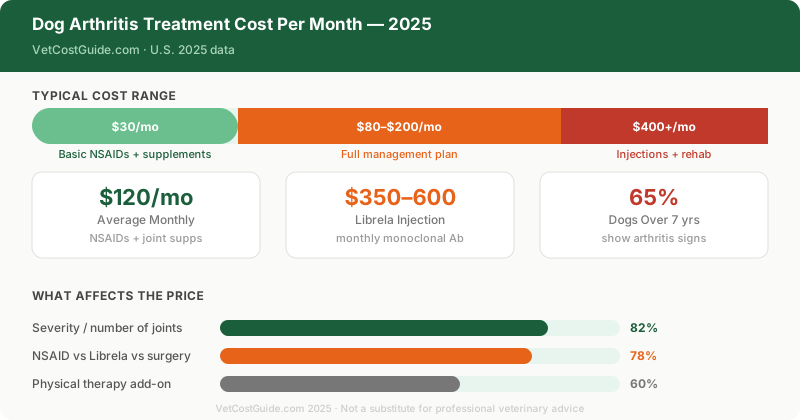
Canine arthritis is a permanent, progressive condition affecting an estimated 65% of dogs over age seven—and managing it properly is one of the most sustained veterinary expenses an owner will face. Monthly costs range from $30 for basic joint supplements to $500 or more per month for dogs on Librela injections, physical therapy, and laser treatments. The good news is that the treatment spectrum is genuinely broad, and meaningful pain relief is achievable at nearly every budget level. Understanding what each option costs and what it delivers allows owners to build the right protocol for their dog’s severity and their financial situation.
- NSAIDs like Carprofen and Galliprant cost $40–$80/month and remain the most effective and cost-efficient first-line arthritis treatments for most dogs.
- Librela (bedinvetmab), the new monthly monoclonal antibody injection, costs $150–$350/month and offers a steroid-free, NSAID-free option for dogs who can’t tolerate traditional pain medications.
- Physical therapy, acupuncture, and laser therapy each provide meaningful benefit at $50–$200 per session, and monthly regimens can run $200–$500 on top of medications.
- Initial diagnosis with X-rays costs $200–$400 and is necessary to confirm arthritis severity, rule out other causes of limping, and guide treatment decisions.
Dog Arthritis Treatment Cost Breakdown
| Type | Low | Average | High |
|---|---|---|---|
| Initial X-rays (2–4 views) | $200 | $300 | $400 |
| NSAIDs (Carprofen/Galliprant/month) | $40 | $60 | $80 |
| Joint supplements (Cosequin/Dasuquin/month) | $25 | $42 | $60 |
| Librela injection (monthly) | $150 | $250 | $350 |
| Physical therapy (per session) | $100 | $150 | $200 |
| Acupuncture (per session) | $60 | $90 | $120 |
| Laser therapy (per session) | $50 | $75 | $100 |
| Monthly cost: mild arthritis | $50 | $75 | $100 |
| Monthly cost: moderate arthritis | $100 | $150 | $200 |
| Monthly cost: severe arthritis | $200 | $350 | $500 |
What’s Included in the Price
Diagnosis begins with a physical orthopedic exam and radiographs. X-rays reveal the degree of joint space narrowing, the presence of bone spurs (osteophytes), and subchondral bone changes that confirm osteoarthritis. X-rays also rule out other causes of lameness—fractures, tumors, hip dysplasia requiring surgery—that would need a different treatment plan. In some cases, your vet may recommend a CT scan ($400–$800) for more detailed joint imaging, particularly for elbow or shoulder arthritis.
NSAIDs (non-steroidal anti-inflammatory drugs) are the pharmacological cornerstone of arthritis management. Carprofen (generic Rimadyl) at $40–$60/month for a 50-pound dog is effective and inexpensive. Galliprant (grapiprant), a newer prostaglandin receptor antagonist, costs $60–$80/month and may have a more favorable gastrointestinal and kidney safety profile for some dogs. Both require annual bloodwork ($80–$150) to monitor liver and kidney values.
Librela is a monthly subcutaneous injection of bedinvetmab, a monoclonal antibody that targets nerve growth factor to interrupt the pain signaling pathway in arthritic joints. It contains no NSAID and no steroid, making it suitable for dogs with kidney disease, GI sensitivity, or those who have failed traditional medications. It must be given at a vet clinic monthly. Results in clinical trials showed statistically significant pain reduction in 80% of dogs within 4 weeks.
Physical therapy for dogs includes underwater treadmill (hydrotherapy), therapeutic exercises, massage, and manual joint mobilization. A typical session runs 45–60 minutes and costs $100–$200. Most arthritis patients benefit from 1–2 sessions per week initially, tapering to every 2–4 weeks for maintenance.
Acupuncture and laser therapy are considered complementary therapies with growing evidence bases. Class IV laser therapy stimulates cellular repair and reduces inflammation at $50–$100 per session. Acupuncture at $60–$120 per session can reduce pain and improve mobility in some arthritic dogs, particularly when combined with conventional treatment.
What Affects the Cost
Dog size and weight. NSAID and Librela dosing scales with body weight. A 100-pound Labrador costs 3–4 times more per month for the same medications as a 25-pound Beagle. Large breeds are also more prone to severe hip and elbow arthritis requiring multimodal therapy.
Severity of disease. Mild arthritis in a younger dog may be fully managed on joint supplements plus an NSAID at $70–$100/month. Advanced arthritis in a geriatric dog may require Librela plus physical therapy plus acupuncture for adequate pain control—easily $400–$600/month.
Failure of first-line medications. Some dogs develop GI intolerance to NSAIDs (vomiting, diarrhea, ulcers) or have pre-existing kidney or liver disease that makes NSAIDs unsafe. These dogs shift to more expensive alternatives: Librela, gabapentin ($20–$40/month), amantadine ($20–$35/month), or physical therapy as the primary pain management strategy.
Joint surgery for underlying conditions. Some arthritis is secondary to conditions like hip dysplasia, cruciate ligament disease, or elbow dysplasia that can be surgically addressed. Total hip replacement ($4,000–$7,000 per hip) or TPLO surgery ($3,500–$5,500) can dramatically reduce arthritis progression when performed early enough. These are large upfront costs but can reduce long-term monthly management costs.
Geographic variation. Physical therapy, acupuncture, and laser services at specialty rehabilitation centers in urban markets charge 40–60% more than the same services in rural or suburban practices. The gap in monthly medication costs is smaller but still notable.
- Giving human NSAIDs (ibuprofen, Advil, naproxen, Aleve) to arthritic dogs. These are toxic to dogs even at low doses and cause GI ulceration and kidney failure. Only use veterinarian-prescribed NSAIDs formulated for dogs at the correct weight-based dose.
- Assuming joint supplements alone are sufficient for moderate to severe pain. Glucosamine and chondroitin have good evidence for joint support and slowing progression, but they have weak analgesic effect. A dog wincing when lying down or refusing to climb stairs needs prescription pain management, not just supplements.
- Stopping medication abruptly when costs become burdensome without talking to your vet first. NSAIDs can be dose-reduced or switched to more affordable alternatives. Gabapentin is inexpensive and effective for nerve pain component. There are almost always options before reaching a point of no treatment.
Is Pet Insurance Worth It?
Pet insurance covers arthritis as an illness under most comprehensive accident and illness policies—provided the condition was not present or noted in the medical record before policy enrollment. Arthritis developing in a dog enrolled as a puppy is typically a covered chronic condition, with annual or lifetime limits applying depending on the policy.
For large-breed dogs prone to early-onset arthritis (Labrador Retrievers, Golden Retrievers, German Shepherds, Rottweilers), enrolling before any joint-related symptoms or orthopedic diagnoses is important. Monthly premiums of $40–$80 for a young, medium-large breed can cover the ongoing cost of Librela, physical therapy, and annual monitoring bloodwork.
Note that some policies have chronic condition caps—once a condition is claimed, subsequent years may have sublimits. Review policy language on orthopedic conditions and whether they have separate orthopedic deductibles.
How to Save Money
Use generic NSAIDs. Generic carprofen is bioequivalent to brand-name Rimadyl and costs $40–$60/month vs. $70–$100 for the brand. Your vet can prescribe the generic, and some online pharmacies (Costco Pharmacy, Chewy’s vet-connected pharmacy) offer competitive pricing.
Order long-term medications from online pet pharmacies. Medications for chronic conditions like arthritis can be filled via written prescription at Chewy, 1-800-PetMeds, or similar online pharmacies at 20–40% below in-clinic retail prices. Ask your vet for a written prescription if they don’t price-match.
Combine physical therapy session types. Some rehabilitation facilities bundle underwater treadmill, laser, and manual therapy into a single longer session at a lower per-service cost than paying for each separately. Ask about package pricing—many clinics offer 6 or 10-session bundles at a 10–20% discount.
Implement free home modifications. Orthopedic dog beds ($40–$80), non-slip rugs on hardwood floors, raised food and water bowls, and ramps to furniture and cars have documented benefits for arthritic dogs and cost nothing ongoing. Weight management—if the dog is overweight—is free and among the most evidence-supported arthritis interventions available.
Ask about compounded medications. Some dogs refuse pills or have difficulty swallowing them. Compounded transdermal gels or flavored liquids of gabapentin or other arthritis adjuncts can be prepared by veterinary compounding pharmacies, sometimes at lower cost than commercial formulations.
Frequently Asked Questions
What are the first signs of arthritis in dogs? Early signs include stiffness after rest that improves with movement (known as “warming up”), reluctance to climb stairs or jump into cars, subtle lameness that’s worse in cold weather, sleeping more, and irritability when touched near affected joints. Many dogs mask pain well—noticeable limping often indicates moderate to advanced disease.
What is Librela and is it better than NSAIDs? Librela (bedinvetmab) is a monthly monoclonal antibody injection targeting nerve growth factor, a key mediator of arthritis pain. It’s not “better” than NSAIDs in all cases—it’s an alternative for dogs who can’t tolerate NSAIDs due to kidney disease, GI sensitivity, or medication failure. For many dogs, NSAIDs provide equivalent or better pain control at lower cost.
How do I know if my dog’s arthritis pain is well-controlled? Signs of good pain control include returning interest in walks and play, ability to transition from lying to standing without difficulty, sleeping soundly, and normal appetite. Many veterinary clinics use validated pain scales (the Helsinki Chronic Pain Index or the Canine Brief Pain Inventory) to objectively track response to treatment.
Can weight loss help arthritis? Yes—significantly. Every extra pound of weight a dog carries adds approximately 4–5 pounds of pressure to arthritic joints. Studies show that reducing body weight by 6–8% in overweight arthritic dogs produces measurable improvements in pain scores and mobility, often reducing the amount of medication needed.