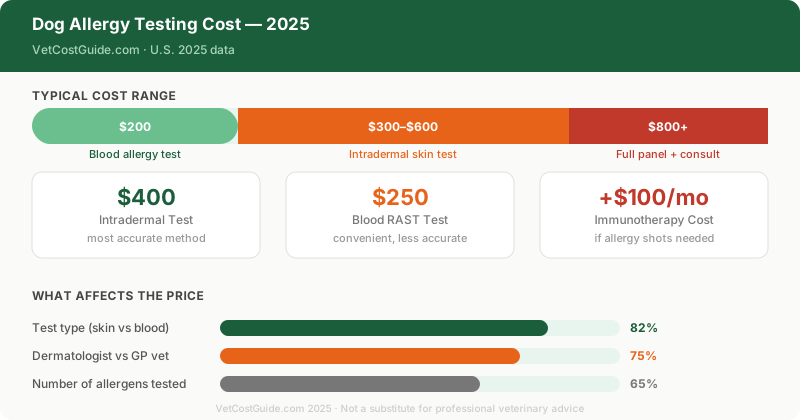
If your dog is scratching constantly, chewing their paws, or getting recurring skin and ear infections, allergies are high on the differential list — and eventually your vet will mention testing. Dog allergy testing in 2025 costs $200–$800 depending on the method, but that is only the beginning of the financial picture. The purpose of allergy testing is to formulate immunotherapy — a custom desensitization treatment that runs $80–$150 per month indefinitely. Understanding the full cost of the allergy management path before starting it helps you plan and set realistic expectations.
- Blood allergy testing (RAST/ELISA) costs $200–$400 and is available through most general practitioners, but is considered less accurate than skin testing.
- Intradermal skin testing costs $300–$800 and requires a board-certified veterinary dermatologist — it is the gold-standard method for formulating immunotherapy.
- A full dermatologist consultation, including history review and skin testing, typically costs $400–$1,000 total for the first visit.
- Allergen-specific immunotherapy (allergy shots or sublingual drops) costs $80–$150 per month ongoing and is the only treatment that modifies the underlying allergic disease rather than just controlling symptoms.
What Does Dog Allergy Testing Cost?
Costs vary significantly between blood testing at a general practitioner and intradermal skin testing at a dermatology specialist. Both are legitimate but serve different purposes and produce different quality results.
| Service | Low | Average | High |
|---|---|---|---|
| Blood allergy test (RAST/ELISA panel) | $200 | $300 | $400 |
| Dermatologist initial consultation | $150 | $200 | $250 |
| Intradermal skin test (with dermatologist) | $300 | $550 | $800 |
| Full first dermatology visit (consult + skin test) | $450 | $750 | $1,000 |
| Custom immunotherapy – injection vials (per set) | $200 | $350 | $500 |
| Immunotherapy injection supplies (syringes, etc.) | $15 | $25 | $40 |
| Monthly immunotherapy cost (ongoing injections) | $80 | $115 | $150 |
| Monthly sublingual drop therapy (alternative) | $80 | $100 | $120 |
What’s Included
A blood allergy test (typically a RAST or ELISA panel) involves drawing a blood sample at your vet’s office and sending it to an outside laboratory. The lab tests the serum against panels of environmental allergens — grasses, trees, molds, dust mites, storage mites, and sometimes food proteins — and returns a ranked report of reactivity scores. The test fee covers the blood draw, the laboratory analysis, and the report. Interpretation and immunotherapy formulation, if any, are handled by your vet or a dermatologist based on the results.
Intradermal skin testing is a more intensive procedure performed under light sedation at a veterinary dermatology practice. Small amounts of individual allergens are injected just under the skin in a grid pattern, and the dermatologist reads the resulting wheal (bump) sizes to assess reactivity. This method directly tests the skin’s immune cells — the mast cells responsible for allergic reactions — rather than circulating antibodies in the blood, which is why it is considered the gold standard for allergen identification. The consultation fee covers the appointment, history review, test administration, result interpretation, and immunotherapy formulation recommendations.
Custom immunotherapy vials are then compounded based on the identified allergens. These are administered either as injections (given by the owner at home after instruction) or as sublingual drops placed under the tongue daily.
What Affects the Cost
Blood test vs. skin test. The blood test is cheaper and accessible at any vet, but veterinary dermatologists note it has a higher rate of false positives and false negatives compared to intradermal testing. For dogs whose allergies are well enough controlled with symptomatic treatment and don’t require immunotherapy, a blood test may be adequate. For dogs where immunotherapy is the goal — especially those with severe, year-round disease — intradermal skin testing produces a more accurate allergen list and, consequently, a more effective immunotherapy formula.
Dermatologist vs. general practitioner. General practitioners can order blood allergy panels and sometimes formulate immunotherapy from blood test results. A board-certified veterinary dermatologist (DACVD) performs intradermal skin testing and is better positioned to interpret complex allergy presentations, rule out secondary infections, and optimize the full treatment plan. The dermatologist’s expertise costs more upfront but tends to reduce the number of failed treatment cycles over time.
Number of allergens tested. Blood panels test against fixed allergen panels (often 50–75 allergens). Intradermal testing typically uses 50–80 individual allergens injected in a grid. Regional panels (testing tree and grass species common to your geographic area) are standard; expanded panels that include additional molds, insects, or food allergens add cost.
Immunotherapy ongoing cost. This is the single most important financial factor in allergy management and the most frequently underestimated. Custom immunotherapy is not a short-term treatment — most dogs require it for life, or at minimum two to three years for durable desensitization. At $80–$150 per month, that represents $960–$1,800 per year. Families who test their dog but cannot afford ongoing immunotherapy get limited value from the testing investment.
Symptomatic medications alongside immunotherapy. Many dogs continue to need Apoquel ($60–$100/month), Cytopoint injections ($80–$150 every 4–8 weeks), or antifungal/antibiotic courses during the early immunotherapy period while desensitization is building. Budget for combination costs rather than assuming immunotherapy alone covers all expenses from day one.
- Testing before ruling out food allergy. Environmental allergy testing is not designed to diagnose food allergies. Food allergies require a strict 8–12 week hydrolyzed or novel protein diet trial — blood and skin tests for food are poorly validated in dogs and frequently mislead owners into buying expensive limited-ingredient diets based on inaccurate results. Ask your vet to confirm the allergy type before ordering an environmental panel.
- Buying over-the-counter “allergy tests” online. Hair or saliva tests marketed directly to pet owners online have no veterinary diagnostic validity. No peer-reviewed evidence supports their accuracy, and they frequently produce results that contradict legitimate serology. Save the $100–$200 and spend it on a consultation with your vet or a dermatologist instead.
- Starting immunotherapy without a realistic budget for continuation. Immunotherapy works gradually — most dogs show meaningful improvement in three to twelve months. Stopping early because of cost after two to three months means the investment in testing and initial vials is largely wasted. Confirm you can sustain the monthly ongoing cost before starting.
Is Pet Insurance Worth It?
Allergy testing and immunotherapy occupy a gray zone in pet insurance coverage. Some comprehensive policies cover dermatology workup and allergy testing under illness benefits; others exclude chronic conditions or cap dermatology coverage. The initial testing and consultation — a $500–$1,000 one-time cost — is the most likely component to be covered. Ongoing immunotherapy is more variable: some policies cover it under chronic disease management, others exclude it after a certain benefit limit per year.
Before purchasing a policy specifically to help with allergies, read the chronic condition and dermatology sections carefully. Ask the insurer directly: “If my dog is diagnosed with environmental allergies and started on immunotherapy, will monthly treatment costs be covered in subsequent policy years?” Get the answer in writing. For dogs with no allergy history, enrolling in a comprehensive policy before symptoms appear gives you the broadest coverage access.
How to Save Money
Ask for a dermatology referral for intradermal testing rather than relying on blood tests alone. This seems counterintuitive — the dermatologist costs more upfront — but owners who pursue accurate intradermal testing and receive a well-targeted immunotherapy formula often achieve better disease control than those who cycle through blood-test-based formulas with incomplete responses. Better results faster means fewer dollars spent on secondary infections, failed treatment cycles, and ongoing symptomatic medications.
Request a teaching hospital referral. Veterinary schools with dermatology residency programs offer intradermal skin testing and dermatology consultations at 25–35% reduced cost compared to private dermatology practices. If you are near a veterinary school, call and ask whether their dermatology department accepts new patients.
Administer immunotherapy injections yourself. Veterinary dermatologists teach owners to administer allergy injections at home within one or two visits. Self-administration eliminates the clinic visit cost associated with each injection. Most owners are comfortable with it within a few weeks; the injection itself is subcutaneous and minimally painful.
Compare sublingual vs. injection immunotherapy. Sublingual immunotherapy (drops under the tongue) is administered daily at home and costs $80–$120 per month compared to $80–$150 for injection vials plus supplies. Evidence suggests comparable efficacy in dogs. If the injection protocol seems financially or logistically burdensome, ask your dermatologist whether sublingual therapy is appropriate for your dog’s allergen profile.
Optimize symptomatic medications while immunotherapy builds. Apoquel and Cytopoint are effective but expensive for long-term use. Your dermatologist may be able to reduce or eliminate symptomatic medications as immunotherapy takes effect, lowering total monthly allergy spend over time.
Frequently Asked Questions
My vet recommended blood allergy testing but a dermatologist said skin testing is better. Who is right? Both are correct in context. Blood testing is a reasonable first step if you want a general idea of allergen reactivity, if your dog’s disease is mild, or if a dermatologist is not accessible. For formulating immunotherapy in a dog with moderate to severe allergies, most veterinary dermatologists prefer intradermal skin testing for its superior accuracy. If you are planning to invest in immunotherapy, starting with the more accurate test produces better results and is ultimately a better value.
How long does it take for immunotherapy to work? Most dogs show some improvement within three to six months of starting immunotherapy, with maximum benefit typically achieved at 12–24 months. About 60–70% of dogs on well-formulated immunotherapy achieve meaningful reduction in symptoms. The remaining 30–40% have partial or minimal response. There is no reliable way to predict in advance which group your dog will fall into.
Does my dog need to be off medications before allergy testing? Yes, for intradermal testing. Antihistamines should be stopped five to seven days before testing; steroids require a two to four week washout depending on duration of use; Apoquel should be discontinued two weeks prior. Cytopoint (oclacitinib monoclonal antibody) may require a longer washout — discuss the timeline with your dermatologist before scheduling. Blood testing is less affected by medications but steroids can still suppress results.
Can allergies in dogs be cured? Allergen-specific immunotherapy is the only treatment with the potential to modify the underlying immune response — essentially training the immune system to tolerate the allergen. Some dogs achieve long-term remission after two to three years of immunotherapy and can discontinue treatment. Most, however, require ongoing maintenance to sustain control. Symptomatic medications (Apoquel, Cytopoint, steroids) do not modify the disease and provide no lasting benefit after discontinuation.