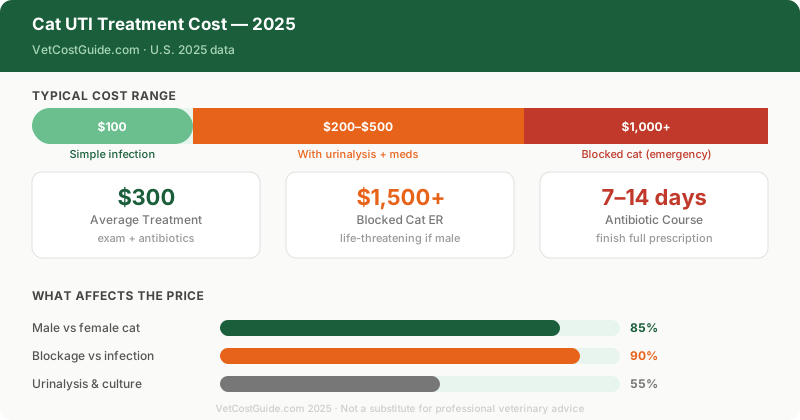
Cat urinary problems are one of the most common reasons owners rush to the vet — but not all feline urinary issues are the same, and the cost difference is staggering. A straightforward bacterial UTI treated with antibiotics costs $150–$400. A urinary blockage in a male cat is a life-threatening emergency costing $1,500–$3,000 or more. Even more common than either: feline idiopathic cystitis (FIC), which causes identical symptoms but has no bacterial cause and won’t respond to antibiotics at all. Understanding which condition you’re dealing with is the key to spending your treatment dollars effectively.
- A simple bacterial UTI (exam + urinalysis + antibiotics) costs $150–$400 at most vet clinics in 2025.
- A culture and sensitivity test to identify the exact bacteria adds $80–$150 and is essential for recurrent infections.
- A urinary blockage (male cat emergency) costs $1,500–$3,000 for catheterization and 2–3 days of hospitalization.
- Prescription urinary food for prevention costs $60–$80/month and reduces recurrence rates significantly.
Cost Breakdown
| Condition / Service | Low | Average | High |
|---|---|---|---|
| Exam + Urinalysis + Antibiotics (simple UTI) | $150 | $275 | $400 |
| Urine Culture & Sensitivity Test | $80 | $115 | $150 |
| Urethral Catheter Placement (blocked cat) | $500 | $650 | $800 |
| Hospitalization 2–3 Days (blocked cat) | $800 | $1,200 | $2,000 |
| Blocked Cat Total (ER treatment) | $1,500 | $2,200 | $3,000 |
| FIC Episode Management (per episode) | $100 | $200 | $300 |
| Prescription Urinary Food (monthly) | $60 | $70 | $80 |
| Perineal Urethrostomy Surgery (recurrent blocks) | $1,500 | $2,500 | $4,000 |
Note that blocked cats often present to emergency clinics after hours, where fees are 30–60% higher than daytime rates. A $2,200 average estimate can easily reach $3,000–$4,000 at an overnight emergency hospital.
What’s Included
Exam and urinalysis. Every urinary workup begins with a physical exam and urine analysis. The urinalysis examines pH, specific gravity, red and white blood cells, bacteria, and crystals. Your vet may collect urine via cystocentesis (a needle directly into the bladder) for an uncontaminated sample — this is the gold standard but adds a small amount to the cost. A basic urinalysis at most clinics costs $40–$80.
Urine culture and sensitivity. If bacteria are found, a urine culture identifies the specific organism and which antibiotics it’s sensitive to. This test costs $80–$150 and takes 3–5 days. For a first uncomplicated infection, many vets prescribe a broad-spectrum antibiotic empirically while awaiting results. For recurrent infections, a culture is essential — resistance patterns vary and using the wrong antibiotic wastes money and prolongs illness.
FIC (feline idiopathic cystitis) management. The most common cause of urinary symptoms in cats under age 10 is FIC — inflammation with no bacterial cause, strongly linked to stress and diet. Treatment focuses on environmental enrichment, stress reduction, increased water intake (switching to wet food), and sometimes medications like amitriptyline or gabapentin. An FIC episode typically costs $100–$300 in vet care, but recurrences are common.
Urinary blockage treatment. Male cats can develop life-threatening urethral blockages from mucus plugs, crystals, or spasm. Signs include straining in the litter box with no urine output, crying, restlessness, and eventually collapse. This is a medical emergency — a blocked cat can die within 24–48 hours from potassium toxicity and bladder rupture. Treatment requires IV fluids, sedation, urethral catheterization to clear the blockage, 2–3 days of hospitalization with the catheter in place, and pain management. Total cost: $1,500–$3,000 at a daytime clinic, more at an emergency hospital.
Perineal urethrostomy (PU surgery). Male cats who block repeatedly may benefit from this surgical procedure that permanently widens the urethral opening. It does not prevent FIC flare-ups but dramatically reduces the risk of re-blocking. Cost: $1,500–$4,000 depending on location and whether performed by a general practitioner or surgeon.
What Affects the Cost
1. Male vs. female cat. Female cats rarely block because of their shorter, wider urethra. A female cat with recurrent UTIs is a different diagnostic challenge than a male cat at risk for life-threatening obstruction. The stakes — and costs — are inherently higher for male cats.
2. Whether it’s truly bacterial. Only about 1–2% of cats under age 10 with urinary symptoms have a true bacterial infection. Most have FIC. Giving antibiotics for FIC is ineffective and contributes to resistance — a proper urinalysis before prescribing is money well spent.
3. Recurrence pattern. First-episode FIC or UTI is cheapest. Cats with recurrent episodes need deeper diagnostics (abdominal ultrasound at $200–$400, cystoscopy at specialty centers) to rule out bladder polyps, stones, or anatomic abnormalities.
4. Type of urinary crystals. Struvite crystals can be dissolved with prescription diet. Calcium oxalate crystals cannot and may require surgical removal (cystotomy, $1,000–$2,000). Knowing the crystal type matters for treatment planning.
5. Emergency vs. regular hours. After-hours emergency clinics typically add a $100–$200 emergency fee on top of treatment costs. A blocked cat that presents at midnight will cost substantially more than the same presentation during regular business hours.
- Straining in the litter box — know the difference. A cat straining to urinate with no output is a potential blockage (emergency). A cat straining but producing small amounts of urine is more likely FIC (urgent but not immediately life-threatening). When in doubt, call your vet — the risk of mistaking a blockage for constipation or FIC is too high to wait and see.
- Re-blocking after treatment. About 30–40% of cats who block once will block again within 6–12 months. Prescription urinary diet, increased water intake (water fountain, wet food), stress reduction, and environmental enrichment are all evidence-based strategies to reduce re-blocking risk. A second hospitalization is just as expensive as the first.
- Antibiotics for FIC. Because FIC and bacterial cystitis are clinically indistinguishable without a urinalysis, some owners request (or some vets reflexively prescribe) antibiotics for all urinary symptoms. This is ineffective for FIC, creates resistance, and wastes your money. Insist on a urinalysis first.
Is Pet Insurance Worth It?
Urinary issues are extremely common in cats, and many insurers treat recurrent FIC as a chronic condition after the first episode — meaning subsequent claims may fall under a chronic condition clause. Review policy language carefully around “related condition” definitions.
That said, a single urinary blockage hospitalization costing $2,000–$3,000 easily exceeds a full year of insurance premiums plus deductible. Male cats, overweight cats, and indoor-only cats (all higher-risk categories for urinary disease) are particularly good candidates for comprehensive illness coverage. Look for policies that don’t exclude urinary/bladder conditions as a category and that cover both emergency care and prescription food when prescribed therapeutically.
How to Save Money
Switch to wet food as a long-term preventive. Increased water intake through a high-moisture diet (wet/canned food) is the single most effective preventive strategy for both FIC and crystal formation. Transitioning to an all-wet-food diet costs roughly the same as dry food per month — sometimes less — and meaningfully reduces recurrence risk.
Add a water fountain. Cats preferentially drink from moving water sources. A pet water fountain ($25–$50 upfront) promotes hydration and is far cheaper than a recurrence episode.
Reduce environmental stress. FIC is strongly stress-related. Consistent feeding times, adequate litter boxes (one per cat plus one extra), vertical space to escape, and low-stress environments reduce FIC frequency. These interventions are free.
Buy prescription urinary food through online pharmacies. With a prescription, urinary diets (Hill’s c/d, Royal Canin Urinary SO) are available at Chewy Pharmacy and 1-800-PetMeds at 15–25% less than clinic pricing.
Recognize the signs early. Catching a blockage at 8 AM during regular hours versus midnight at an emergency clinic can save $500–$1,000 in emergency fees alone.
Frequently Asked Questions
How do I know if my cat has a UTI or FIC? You can’t tell without a urinalysis. Both conditions cause straining, frequent trips to the litter box, vocalization during urination, and blood in the urine. FIC is far more common in cats under 10; bacterial UTIs are more common in older cats, cats with diabetes or CKD, or those on steroids. Your vet’s urinalysis will detect bacteria and guide treatment.
How long does a blocked cat stay in the hospital? Typically 2–3 days. The urinary catheter is kept in place for 24–48 hours to allow the urethra to recover and ensure the blockage doesn’t immediately recur. The cat is monitored for potassium normalization, bladder function return, and urine output before discharge.
Can I prevent urinary crystals with diet? Yes, partially. Struvite crystals (the most common type) are strongly diet-responsive — a prescription urinary diet targeting urine pH and mineral content can prevent and even dissolve struvite crystals. Calcium oxalate crystals are less diet-responsive; hydration and urine dilution are the primary preventive strategies.
Are some cats more prone to urinary problems? Yes. Overweight cats, indoor-only cats, male cats with narrow urethras, cats on dry food diets, and cats in multi-pet or high-stress households all have higher risk for FIC and urinary disease. Persian and Himalayan breeds have higher rates of calcium oxalate stones. Addressing modifiable risk factors (weight, diet, stress, hydration) reduces recurrence meaningfully.