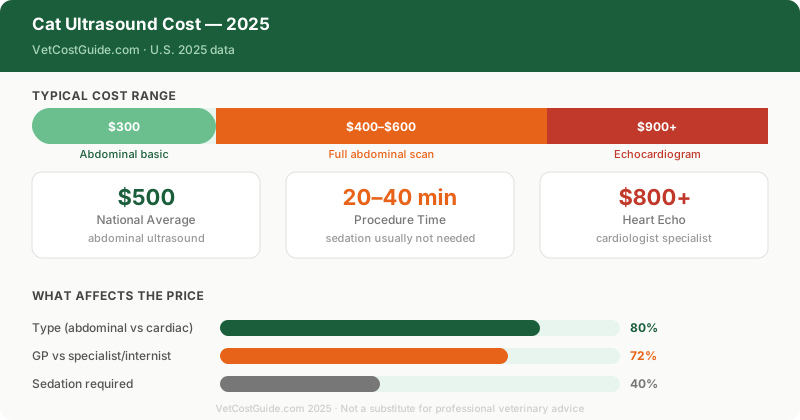
When your vet says your cat needs an ultrasound, the first question most owners ask is the same: “How much is this going to cost?” For a routine abdominal ultrasound you can expect to pay $250–$500 at a general practice, while a cardiac echocardiogram performed by an internal medicine specialist or cardiologist typically runs $400–$800 — and that’s before adding the consultation fee. Understanding what you’re paying for, and why prices vary so dramatically by location and facility, can help you make confident decisions for your cat’s care.
- Abdominal ultrasounds average $300–$450 at most US veterinary clinics in 2025.
- Cardiac echocardiograms average $500–$700 and nearly always require a specialist.
- Specialty or university hospitals add a $150–$350 consultation fee on top of the scan itself.
- Pet insurance with diagnostics coverage typically covers 70–90% of ultrasound costs after the deductible.
What Does a Cat Ultrasound Cost?
Prices depend heavily on the type of ultrasound, who performs it, and where you live. Here’s a realistic breakdown based on 2024–2025 US veterinary data.
| Scan Type | Low | Average | High |
|---|---|---|---|
| Abdominal Ultrasound (GP) | $200 | $325 | $500 |
| Abdominal Ultrasound (Specialist) | $350 | $475 | $700 |
| Cardiac Echo (Cardiologist) | $400 | $575 | $800 |
| Echocardiogram + Consult | $550 | $750 | $1,100 |
| Focused/Limited Scan (FAST) | $150 | $225 | $350 |
Prices in large metro areas (New York City, Los Angeles, San Francisco) skew toward the high end. Rural clinics and Midwest practices are often 20–30% lower than the national average.
What’s Included in the Price?
A standard abdominal ultrasound fee generally covers the following:
Equipment use and setup. Veterinary ultrasound machines cost $30,000–$80,000, and that capital expense factors into every scan. The fee also covers the gel, draping, and clip if your cat’s fur needs to be shaved over the scan area.
Sonographer or veterinarian time. A thorough abdominal scan takes 20–40 minutes for a trained practitioner. At a specialty clinic, a board-certified internal medicine specialist (DACVIM) interprets the images in real time and provides a written report.
Image archiving and report. Most clinics generate a formal written report and store digital images. If your cat is referred to a specialist later, having those archived images can save you a repeat scan.
Sedation (if needed). Many cats tolerate ultrasound without sedation, but anxious or painful cats may require light sedation. If sedation is used, expect an additional $50–$150 on the final bill.
Cardiac echocardiograms include all of the above plus Doppler flow measurements, wall-thickness calculations, and a detailed cardiology report — which is why they cost more and take longer (45–60 minutes is typical).
What Affects the Cost?
1. Type of scan. A focused “FAST scan” (Focused Assessment with Sonography for Trauma) checking for fluid is quick and inexpensive. A complete abdominal survey evaluating every organ is more involved. A full cardiac echo with Doppler is the most time-intensive.
2. Who performs it. A general practice vet with ultrasound training will charge less than a board-certified radiologist or internal medicine specialist. The specialist brings deeper expertise — important if your cat has a complex condition — but costs more.
3. Geographic location. Ultrasound fees in New York City or Seattle can be double those in rural Tennessee or Iowa. Cost-of-living, real estate, and staff wages all drive clinic overhead.
4. Whether sedation is needed. Some cats need mild sedation to stay still. Sedation adds anesthesia monitoring time and drugs to the bill.
5. Add-on diagnostics. If the ultrasound reveals a suspicious mass, your vet may recommend a fine-needle aspirate (FNA) during the same session — typically an additional $75–$200 for the procedure plus cytology fees.
- “Interpretation fee” billed separately. Some specialty hospitals charge a reading fee of $75–$150 on top of the imaging fee. Always ask if the report is included.
- Emergency or after-hours surcharges. An ultrasound performed at an emergency clinic overnight can carry a 20–50% surcharge, pushing a $350 scan past $500.
- Repeat scans without explanation. If a GP clinic says they couldn’t get adequate images and refers you to a specialist — costing you twice — ask whether a direct referral from the start would have saved money.
Is Pet Insurance Worth It for This?
Yes — especially if your cat has a chronic condition like inflammatory bowel disease, hypertrophic cardiomyopathy (HCM), or kidney disease, where ultrasounds become a recurring monitoring tool rather than a one-time event.
Most comprehensive pet insurance plans (Trupanion, Healthy Paws, Embrace) classify ultrasounds as a diagnostic procedure covered under illness benefits. After your annual deductible ($200–$500 depending on your plan), reimbursement is typically 70–90% of eligible costs. A cat with HCM that needs cardiac monitoring every 6–12 months will easily recoup premium costs in imaging fees alone.
If your cat is young and healthy, a wellness add-on plan that covers routine diagnostics may not pencil out — but accident and illness coverage is worth strongly considering before your cat needs it, since pre-existing conditions are excluded.
How to Save Money
Ask your GP vet first. If your primary vet has ultrasound capability and the case isn’t highly complex, starting there can save $100–$250 versus going straight to a specialty center.
Request a bundled diagnostic workup. Ultrasound performed on the same day as bloodwork, urinalysis, or X-rays sometimes comes with a slight discount at practices that bundle diagnostics. Ask upfront.
Compare specialty clinics. If you’re being referred out, it’s entirely reasonable to call two or three specialty centers and compare consultation + imaging fees. Quality is usually consistent between board-certified specialists.
Consider a teaching hospital. Veterinary school teaching hospitals (such as those at Cornell, Colorado State, or UC Davis) offer specialist-level care at fees that are often 15–30% below private specialty clinics. Wait times can be longer, but the cost savings are real.
Use CareCredit or a payment plan. Many clinics accept CareCredit (0% interest promotional periods up to 24 months), which keeps a $600 ultrasound workup manageable without dipping into savings.
Frequently Asked Questions
Does my cat need to fast before an ultrasound? For abdominal ultrasounds, most vets recommend withholding food for 6–8 hours beforehand. A full stomach can obscure views of the liver, pancreas, and intestines. Water is generally fine. Cardiac echos typically don’t require fasting.
Can my regular vet do an ultrasound or do I need a specialist? Many general practice vets have ultrasound equipment and training for basic abdominal scans. For cardiac echocardiograms, assessment of complex masses, or any scan requiring Doppler analysis, a board-certified specialist provides more reliable results. Your vet will tell you if a referral makes sense.
How long does a cat ultrasound take? A focused FAST scan takes 5–10 minutes. A complete abdominal survey is 20–40 minutes. A full cardiac echocardiogram with Doppler runs 45–60 minutes. Add 15–30 minutes for sedation induction and recovery if your cat needs it.
Will my cat need to be shaved? Usually yes, at least partially. A small patch of fur over the scan area is clipped to improve gel contact and image quality. The fur grows back in 4–6 weeks, so this is purely cosmetic and temporary.