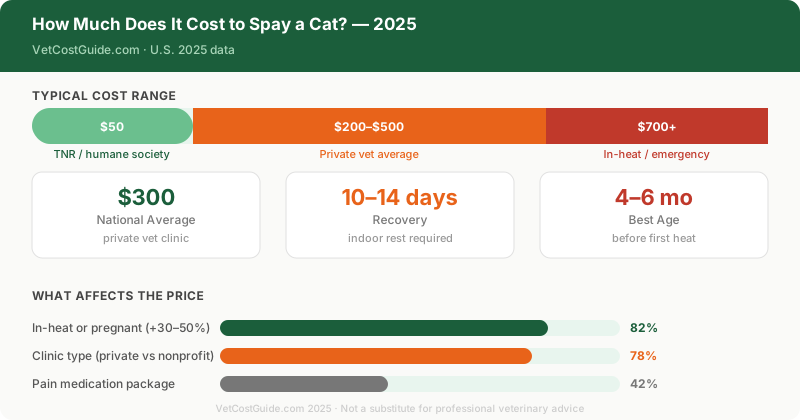
The price difference between a cat spay and a cat neuter isn’t arbitrary — it reflects a real difference in surgical complexity and time. A neuter (orchiectomy) is a 5–10 minute scrotal procedure. A spay (ovariohysterectomy) is a 20–40 minute abdominal surgery with three ligatures and incision closure. At a private vet, spays cost $200–$500 while neuters run $150–$350. At a low-cost clinic, both procedures become dramatically more accessible at $50–$150. Here’s exactly what each includes and what drives the price.
- Cat spay at a private vet costs $200–$500; low-cost spay/neuter clinics charge $50–$150.
- Cat neuter at a private vet costs $150–$350; low-cost clinics charge $50–$100.
- In-heat or pregnant spay adds $50–$100 due to increased bleeding risk and surgical time.
- Cryptorchid neuter (undescended testicle) adds $200–$400 because it requires abdominal surgery.
Cat Spay vs. Neuter Cost Comparison
| Procedure | Private Vet | Low-Cost Clinic | Humane Society |
|---|---|---|---|
| Spay (female, standard) | $200–$500 | $75–$150 | $50–$100 |
| Neuter (male, standard) | $150–$350 | $50–$100 | $50–$75 |
| Spay (in-heat or pregnant, add-on) | $50–$100 | $25–$50 | Varies |
| Cryptorchid neuter (1 undescended testicle) | $300–$600 | $150–$300 | $100–$200 |
| Pre-surgical bloodwork (optional but recommended) | $80–$150 | Not offered | Not offered |
| Take-home pain medication | $20–$40 | Included | Included |
| E-collar (cone) | $10–$25 | Sometimes included | Sometimes included |
What’s Included in Each Procedure
Cat spay (ovariohysterectomy) is an abdominal surgery performed under general anesthesia. The surgeon makes a small midline incision, ligates the ovarian pedicles and uterine body with suture, and removes both ovaries and the uterus entirely. The procedure takes 20–40 minutes at a private practice performing the surgery with careful technique. The abdomen is closed in three layers: muscle, subcutaneous tissue, and skin.
Private practices include pre-anesthetic assessment, IV catheter placement (varies by facility), gas anesthesia and continuous monitoring, and typically a follow-up call the next day. Some include a recheck exam 10–14 days post-surgery.
Low-cost spay/neuter clinics use the same core technique — some use slightly different anesthetic protocols (injectable rather than gas induction, lighter monitoring). Medical quality is regulated and safe; the difference is primarily in the level of individualized care and monitoring intensity.
Cat neuter (orchiectomy) is significantly simpler. Two small scrotal incisions are made, the testicles are exteriorized, the spermatic cord is ligated or tied back on itself (depending on technique), and the testicles are removed. No sutures are typically needed in the skin — the incisions are left to heal by second intention. The procedure takes 5–10 minutes under anesthesia in experienced hands.
This simplicity is why neuter costs substantially less than a spay. Less anesthesia time, shorter procedure, no incision closure needed.
What’s Different About Each
The in-heat spay is slightly more complex. A female cat in estrus (heat) has engorged, highly vascular reproductive organs that bleed more readily. Most surgeons can manage this without difficulty, but it takes longer and adds to surgical risk slightly. The standard add-on charge is $50–$100 at private practices; many low-cost clinics charge a flat fee regardless.
Pregnant spay is the most complex scenario. Uterine vascularity during pregnancy is dramatically increased. Most vets are comfortable spaying a pregnant cat in early pregnancy; late-stage pregnancy may be referred to a more experienced surgeon or may require a more complex surgical approach. Cost premium: $50–$100 at most practices.
Cryptorchid neuter (one or both testicles not descended into the scrotum) requires locating and removing the retained testicle(s) from the inguinal canal or abdomen — essentially a small abdominal surgery. This adds $200–$400 to a standard neuter because it now requires a laparotomy rather than two skin punctures. Cryptorchidism is a hereditary condition and affects roughly 1–3% of male cats.
What Affects the Cost
Facility type is the primary driver. Private general practice vets charge $200–$500 for spays because they’re running full-service clinics with higher overhead: monitoring equipment, trained staff ratios, client consultation time, and follow-up care. Low-cost spay/neuter clinics work on high-volume, standardized protocols that allow them to do the same surgery for a fraction of the cost.
Geographic location: Veterinary costs in urban areas on the coasts are 30–60% higher than in rural mid-America. A cat spay that costs $200 in rural Ohio costs $400–$500 in Seattle or New York City.
Age and weight: Older or heavier cats may have additional anesthetic risk that prompts your vet to recommend pre-surgical bloodwork or additional monitoring, adding $80–$150 to the total.
Inclusions: Ask what is actually included at your quoted price. Some practices include pain medication, e-collar, and a follow-up recheck in the stated price. Others bill everything separately.
- Assuming low-cost clinics are lower quality: State-licensed spay/neuter clinics are regulated and routinely inspected. Many have performed thousands of these procedures. The surgical technique is the same; the difference is volume-based efficiency, not care quality.
- Not budgeting for unexpected findings: If your vet opens the abdomen for a spay and discovers a severe uterine infection (pyometra), the procedure becomes significantly more complex and expensive. While rare in young cats being spayed electively, it can happen.
- Skipping pain medication: Some owners skip pain meds to save $20–$40. Post-operative pain in cats leads to reduced activity, decreased eating, and slower recovery. It’s not a meaningful cost cut.
- Male kittens with one or no visible testicles: Both testicles should be descended by 6 months. If one or both are retained, your vet needs to know before quoting a neuter price — the surgical approach changes entirely.
Benefits of Spaying and Neutering
For females (spay):
- Eliminates risk of uterine infection (pyometra) — a life-threatening, $1,500–$5,000 emergency surgery
- Dramatically reduces risk of mammary tumors if done before the first heat cycle
- Eliminates heat cycles and associated behavioral changes (yowling, restlessness, attracting intact males)
- Prevents unwanted pregnancy
For males (neuter):
- Eliminates risk of testicular cancer
- Reduces roaming, fighting, and injury risk
- Eliminates spraying behavior in most males (highly effective if done before spraying starts)
- Reduces aggression with other cats
The population-level benefit (reducing feral and shelter cat overpopulation) is well-documented, but the individual health benefits alone make the procedures medically justified regardless of any reproduction concerns.
Is Pet Insurance Worth It for Spay/Neuter?
Most pet insurance policies classify spay and neuter as elective procedures and do not cover them. Some policies with wellness add-ons reimburse a portion ($50–$150), but the wellness add-on typically costs as much per year as the reimbursement it provides.
The better framing: spay/neuter is a predictable, budgetable expense. The real insurance value is in covering the conditions these procedures prevent — pyometra ($1,500–$5,000) and mammary cancer — which would be covered as new illnesses by any standard accident-and-illness policy.
How to Save Money
Use a low-cost spay/neuter clinic. The ASPCA maintains a database at aspca.org/pet-care/animal-adoption/spayneuter-your-pet. Your local humane society can also refer you. These clinics routinely charge $50–$150 for spays and $50–$100 for neuters.
Adopt from a shelter that pre-spays/pre-neuters. Most shelters include this in their adoption fee ($75–$200). The all-in cost beats any private practice price by $100–$300.
Check for nonprofit assistance. Many cities have cat-specific organizations that offer vouchers for low- or no-cost spay/neuter. Search “[your city] cat spay voucher” or contact your local humane society.
FAQ
Why does spaying cost more than neutering? It’s a reflection of surgical complexity. Neutering a male cat involves two small external incisions and takes under 10 minutes. Spaying a female requires an abdominal incision, internal ligatures, organ removal, and multilayer closure — a 20–40 minute procedure with more technical demands and higher drug costs from longer anesthesia time.
What age should I have my cat spayed or neutered? Most vets recommend surgery between 4 and 6 months of age. Pediatric surgery at 8–12 weeks (done at some shelters) is safe. The critical priority for females is spaying before the first heat cycle to maximize mammary tumor protection. Cats can cycle as early as 4 months.
Is a spay at a low-cost clinic safe? Yes. State-licensed spay/neuter clinics use the same surgical techniques as private practices and are subject to the same state veterinary board oversight. The primary difference is that high-volume clinics offer less individualized care (shorter consultations, sometimes no IV catheter as standard). For a healthy young cat, this is an entirely appropriate trade-off.
What’s the recovery time after spay or neuter? Neuter recovery is very fast — most male cats are back to normal activity within 24–48 hours. Spay recovery takes slightly longer: 7–10 days for incision healing, with activity restriction recommended during that window. Most cats are eating and moving around normally within 12–24 hours post-surgery.