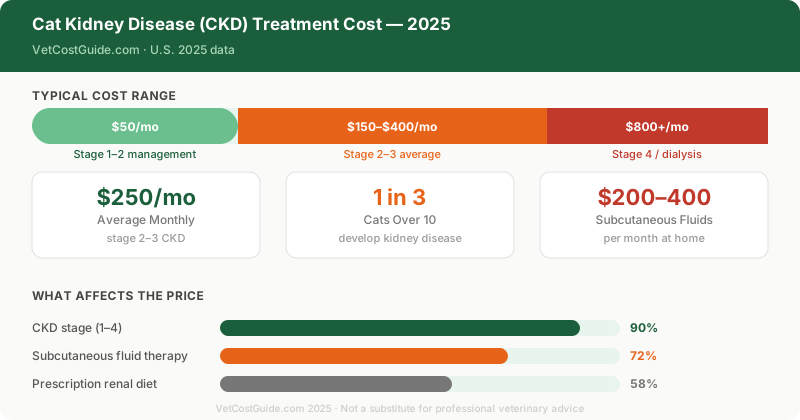
Chronic kidney disease (CKD) is the most common serious condition in cats over age 10, affecting an estimated 30–40% of senior felines. The encouraging news is that most cats can live comfortably for years after diagnosis with the right management — but the costs are real and escalate as the disease progresses. Early-stage management might cost $50–$150/month; late-stage intensive care runs $400–$800 or more per month. Knowing what to expect at each IRIS (International Renal Interest Society) stage helps you budget intelligently and prioritize the interventions with the most impact.
- Stage 1–2 CKD management typically costs $50–$150/month — mostly prescription diet and monitoring bloodwork.
- Stage 3 CKD costs $150–$350/month, adding phosphorus binders, blood pressure medication, and more frequent vet visits.
- Stage 4 CKD can reach $400–$800+/month with subcutaneous fluids, erythropoietin injections, and intensive monitoring.
- Subcutaneous fluids given at home cost $50–$100/month in supplies — one of the highest-value interventions for quality of life in advanced CKD.
Cost Breakdown
| Treatment | Low | Average | High |
|---|---|---|---|
| Prescription Renal Food (monthly) | $60 | $80 | $100 |
| Phosphorus Binders (monthly) | $30 | $45 | $60 |
| ACE Inhibitors / BP Medication (monthly) | $30 | $45 | $60 |
| Subcutaneous Fluids — Home Supplies (monthly) | $50 | $75 | $100 |
| IV Fluid Therapy at Vet (per visit) | $80 | $140 | $200 |
| Erythropoietin Injections (monthly) | $100 | $150 | $200 |
| Monitoring Bloodwork (per visit) | $100 | $150 | $200 |
| Stage 1–2 Total Monthly Estimate | $50 | $100 | $150 |
| Stage 3 Total Monthly Estimate | $150 | $250 | $350 |
| Stage 4 Total Monthly Estimate | $400 | $600 | $800 |
These estimates assume home subcutaneous fluid administration is established for Stage 3–4 cats. If relying entirely on in-clinic fluid therapy, Stage 3–4 costs increase by $200–$500/month depending on frequency.
What’s Included
Prescription renal diet. Low-phosphorus, controlled-protein renal diets (Hill’s Prescription Diet k/d, Royal Canin Renal Support, Purina NF) are the most evidence-supported intervention for slowing CKD progression. Limiting phosphorus reduces the rate of kidney function decline measurably. Both wet and dry renal diets are available; wet food is preferred because hydration is critical for CKD cats. Monthly cost: $60–$100.
Phosphorus binders. When diet alone doesn’t achieve target phosphorus levels (common in Stage 3–4), phosphorus binders (aluminum hydroxide, lanthanum carbonate, or calcium carbonate) are added to food to reduce intestinal phosphorus absorption. Monthly cost: $30–$60.
Blood pressure medication. Hypertension is common in CKD cats and accelerates kidney damage and causes retinal detachment (sudden blindness). ACE inhibitors like benazepril or amlodipine are the most commonly prescribed antihypertensives. Monthly medication cost: $30–$60. Blood pressure checks at each monitoring visit add to vet visit costs.
Subcutaneous (SQ) fluids. Home fluid therapy — injecting saline solution under the skin every 1–3 days — is one of the most impactful comfort and life-extension interventions available for CKD cats. Your vet will teach you the technique. The supplies (IV fluid bags, administration lines, and needles) cost $50–$100/month. Once learned, most cat owners find it takes 5–10 minutes per session and cats tolerate it well.
IV fluid therapy at the vet. For acute CKD crises or cats whose owners cannot administer home fluids, in-clinic IV or SQ fluid therapy costs $80–$200 per visit depending on duration and intensity.
Erythropoietin (EPO) injections. In late-stage CKD, the kidneys produce less erythropoietin, leading to anemia. Darbepoetin alfa (Aranesp) or epoetin alfa injections stimulate red blood cell production. These injections are given every 1–3 weeks and cost $100–$200/month in medication costs, plus injection visits if done in-clinic.
What Affects the Cost
1. Disease stage at diagnosis. Cats caught at Stage 1–2 on routine senior bloodwork have the best prognosis and lowest management costs. Unfortunately, cats often don’t show clinical symptoms until Stage 3 — making regular senior bloodwork (annually from age 10, every 6 months from age 12) the most cost-effective investment.
2. Home fluid administration. Learning to give SQ fluids at home is a significant cost reducer and quality-of-life improver. The investment in supplies is far lower than in-clinic visits, and cats receive fluids more frequently than would be practical with vet trips.
3. Concurrent conditions. Many CKD cats have hypertension, hyperthyroidism, anemia, or urinary tract infections simultaneously. Each adds to medication and monitoring costs.
4. Frequency of monitoring bloodwork. Stable CKD cats need bloodwork every 3–6 months; unstable cats or those being managed through a crisis may need monthly checks. Each panel costs $100–$200 at most practices.
5. Response to management. Some cats stabilize beautifully on diet and fluids for years. Others progress rapidly to Stage 4. Individual variation in progression speed is significant and difficult to predict.
- Dehydration as a hidden cost driver. CKD cats drink more water to compensate for the kidneys’ reduced concentrating ability. A cat that stops eating or vomiting can become critically dehydrated within 24–48 hours, triggering an emergency hospitalization ($500–$2,000). Learning to assess hydration at home (skin tent test, gum moisture) and having a plan for early intervention saves money and lives.
- Phosphorus creep in “senior” non-prescription foods. Many over-the-counter senior cat foods are not phosphorus-restricted. Feeding a CKD cat non-prescription food because it’s “close enough” is one of the most common mistakes that accelerates progression. True prescription renal diets have documented phosphorus restriction levels; OTC foods do not.
- Sudden blindness from hypertension. Untreated high blood pressure causes retinal detachment and sudden irreversible blindness — often the first visible symptom owners notice. Regular blood pressure screening at every vet visit is essential for CKD cats and is a low-cost preventive measure compared to the distress of a preventable outcome.
Is Pet Insurance Worth It?
CKD is virtually always classified as a pre-existing condition if signs (even subtle bloodwork changes) existed before enrollment. The practical takeaway: insure your cat when young and healthy, before any age-related organ changes appear on bloodwork.
For cats enrolled before diagnosis, CKD management is typically a covered chronic condition under most comprehensive illness policies. Given that Stage 3–4 management costs $2,000–$8,000 annually, a policy with a $500 deductible and 80% reimbursement provides substantial relief. Trupanion and Embrace are frequently cited for good chronic condition coverage without annual benefit caps that could run out during multi-year management.
How to Save Money
Master home subcutaneous fluids. The single highest-impact cost reduction for Stage 3–4 cats is learning to give fluids at home. Your vet’s team will train you during an appointment. Supplies cost $50–$100/month versus $80–$200 per in-clinic visit, and you can give fluids daily if needed.
Buy fluid supplies in bulk. A case of 1-liter saline bags typically costs 20–30% less than buying individually. Check whether your vet’s clinic sells supplies in bulk or ask for a prescription to purchase through a compounding or veterinary supply source.
Request monitoring visit bundles. Some practices offer a reduced-rate CKD management package that bundles exam, bloodwork, and blood pressure check at a lower combined price than itemized billing.
Enroll in a veterinary school CKD management program. Teaching hospitals often run CKD management clinics with senior residents providing oversight at reduced rates — ideal for stable cats in Stages 1–3.
Prioritize the highest-impact interventions first. If budget is tight, the hierarchy of evidence-based interventions is: (1) prescription renal diet, (2) phosphorus binders if needed, (3) blood pressure control, (4) SQ fluids. Stick to this order rather than spreading limited dollars thinly.
Frequently Asked Questions
How long do cats live after a CKD diagnosis? Survival varies enormously by stage at diagnosis. Stage 1–2 cats diagnosed early on routine bloodwork can live 3–5+ years with good management. Stage 3 cats have a median survival of approximately 1.5–3 years. Stage 4 cats typically survive weeks to months, though quality supportive care can extend comfortable life. Individual variation is high — some Stage 3 cats outlive expectations considerably.
Do I need to give my cat prescription food forever? Yes, for the rest of the cat’s life once CKD is diagnosed. Renal diets should be introduced gradually over 1–2 weeks. If your cat refuses the prescription diet, discuss alternatives with your vet — palatability matters because an anorexic CKD cat faces a worse prognosis than one eating a slightly less optimal diet. Appetite stimulants or different renal food flavors/textures may help.
What’s the difference between acute kidney injury and CKD? Acute kidney injury (AKI) comes on suddenly — from toxin ingestion (lilies are highly toxic to cats), infection, or obstruction — and may be fully or partially reversible with aggressive treatment. CKD is a chronic, irreversible progressive decline. Some cats survive AKI and are left with residual CKD. Treatment and costs differ significantly: AKI hospitalization often costs $1,500–$4,000, while CKD is managed long-term as described above.
Is dialysis an option for cats? Peritoneal dialysis and hemodialysis are available at a small number of veterinary referral centers for acute kidney injury. For chronic CKD, dialysis is not a standard treatment option in veterinary medicine. The focus is on maximizing quality of life with medical management rather than renal replacement therapy.