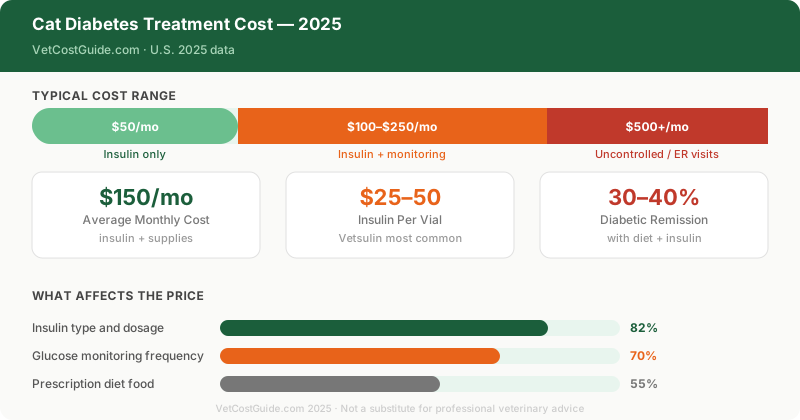
A diabetes diagnosis in your cat sounds overwhelming — and the daily routine of twice-daily insulin injections, glucose monitoring, and prescription food adds up faster than most owners expect. The typical monthly cost runs $100–$250, with the first month higher as you purchase equipment and establish a monitoring baseline. The silver lining: feline diabetes is uniquely treatable compared to other species. With rigorous glucose control, 30–40% of diabetic cats achieve remission — meaning insulin can be discontinued entirely, bringing ongoing costs back to near zero. That possibility makes the upfront investment of tight management very worthwhile.
- Insulin (Vetsulin or ProZinc) costs $25–$50 per vial, with most cats going through one vial every 2–4 weeks.
- Monthly recurring costs for a well-managed diabetic cat average $100–$250, including insulin, syringes, glucose strips, and prescription food.
- Vet monitoring visits every 3–6 months add $150–$250 per visit for exam, glucose curve, and bloodwork.
- 30–40% of cats achieve diabetic remission with tight glucose control in the first 1–6 months — making early diligence potentially cost-eliminating.
Cost Breakdown
| Item | Low | Average | High |
|---|---|---|---|
| Vetsulin or ProZinc Insulin (per vial) | $25 | $38 | $50 |
| Insulin Syringes (monthly) | $15 | $20 | $25 |
| Home Glucose Meter + Initial Strips | $30 | $45 | $60 |
| Glucose Test Strips (monthly ongoing) | $15 | $25 | $35 |
| Prescription Diabetic Food (monthly) | $60 | $80 | $100 |
| Vet Monitoring Visit (every 3–6 months) | $150 | $200 | $250 |
| Initial Diagnosis Workup | $250 | $375 | $500 |
A realistic first-month cost — including initial diagnosis, starting supplies, and first insulin vial — runs $400–$700. Subsequent months stabilize to $100–$250 for most well-controlled cats. If remission is achieved, ongoing costs drop to just prescription food and annual wellness care.
What’s Included
Insulin. The two most commonly prescribed insulins for cats in the US are Vetsulin (porcine insulin zinc suspension) and ProZinc (protamine zinc recombinant human insulin). Both are FDA-approved for cats. A single vial typically lasts 2–4 weeks depending on your cat’s dose. Vetsulin and ProZinc are available through your vet or with a prescription at most online pet pharmacies. Some cats do well on human NPH insulin as an off-label option at a lower cost.
Syringes. Insulin syringes are specific to insulin concentration — U-40 syringes for Vetsulin, U-100 for ProZinc and NPH. Using the wrong syringe results in dangerous dosing errors. A box of 100 syringes costs $15–$25 and typically lasts 6–8 weeks at twice-daily dosing.
Home glucose monitoring. Regular home glucose checks are the gold standard for feline diabetes management and dramatically improve the odds of remission. A human glucometer (the AlphaTrak 2 is calibrated specifically for cats and is the veterinary standard) costs $30–$60, and test strips run $15–$35/month. Blood is typically collected from the inner ear margin — a skill most owners master within a few days.
Prescription food. High-protein, low-carbohydrate diets are the cornerstone of feline diabetes management. Wet food (canned) is strongly preferred over dry — most dry foods, even prescription varieties, are too high in carbohydrates to optimize glucose control. Hill’s Prescription Diet m/d, Purina DM, and Royal Canin Glycobalance are common choices at $60–$100/month.
Veterinary monitoring visits. After initial stabilization, most stable diabetic cats need monitoring visits every 3–6 months. These include a physical exam, in-clinic glucose curve (multiple glucose readings over 8–12 hours), fructosamine level (a 2-week average glucose measure), and urinalysis. Cost per visit runs $150–$250 at most practices.
What Affects the Cost
1. Insulin dose and vial usage rate. Larger cats or cats with insulin resistance (common with concurrent obesity, infection, or steroid use) may require higher doses that burn through insulin faster — doubling monthly insulin costs in some cases.
2. Whether you do home glucose monitoring. Owners who monitor glucose at home provide better data for dose adjustments, improve remission rates, and reduce the number of in-clinic glucose curves needed — ultimately saving money while improving outcomes.
3. Concurrent conditions. Diabetes often occurs alongside other diseases: pancreatitis, urinary tract infections, hyperthyroidism, or skin infections. These cause insulin resistance and require treatment. Managing concurrent disease adds to the monthly total.
4. Whether remission is achieved. Cats that achieve diabetic remission stop needing insulin entirely — dropping monthly costs from $150–$250 to near zero for food and routine care. This is the best possible financial (and medical) outcome.
5. Diabetic crisis (hypoglycemia). If a cat receives too much insulin, dangerous low blood sugar can occur and require emergency care costing $500–$1,500. This risk is minimized with home glucose monitoring and careful dose management.
- Insulin stored improperly. Insulin is fragile — it must be refrigerated and never frozen or shaken. Degraded insulin loses potency unpredictably, causing dangerous glucose swings. Always inspect for cloudiness or clumping (Vetsulin should appear uniformly milky when gently rolled; ProZinc should be clear). Discard vials older than 60 days or per label instructions.
- Skipping glucose monitoring. Flying blind without regular glucose checks is the most common reason cats remain poorly controlled, miss remission, and develop complications. The small cost of test strips is the most impactful investment in your cat’s diabetes management.
- Diet non-compliance. Even a small amount of dry kibble or carbohydrate-rich treats significantly blunts glucose control. In multi-cat households, ensure your diabetic cat can’t access other cats’ food — separate feeding stations or timed feeders may be necessary.
Is Pet Insurance Worth It?
Like hyperthyroidism, diabetes is a pre-existing condition if it develops after your enrollment date — but if diagnosed after enrollment in a comprehensive illness policy, it’s typically covered. Policies from Trupanion, Embrace, and ASPCA Pet Health Insurance generally cover insulin, supplies, monitoring visits, and related complications after your deductible.
For an uninsured cat newly diagnosed with diabetes, the first year of expenses (diagnosis, equipment, insulin, monitoring) typically runs $1,800–$3,500. A policy with a $500 deductible and 80% reimbursement paying $300/month premium can break even within the first year if your cat requires consistent management without remission.
The strongest argument for insurance in diabetic cats is covering the cost of a diabetic emergency (hypoglycemia or ketoacidosis), which can run $1,500–$5,000 at an emergency clinic.
How to Save Money
Learn to give injections and do home glucose curves. The single biggest cost reduction strategy is home management. Your vet or a veterinary technician will train you at no extra charge. Mastering home monitoring reduces in-clinic visits and dramatically improves remission odds.
Use a human glucometer with cat-validated strips. The AlphaTrak 2 is the gold standard, but some owners successfully use human glucometers (confirmed accurate by their vet) with cheaper human test strip brands. Discuss this option with your vet before switching.
Buy insulin and syringes through online pet pharmacies. With a prescription, you can purchase Vetsulin or ProZinc through Chewy Pharmacy, 1-800-PetMeds, or Costco Pharmacy at 15–30% less than clinic pricing.
Feed a high-protein wet food diet aggressively. Transitioning to a low-carb wet food diet as soon as possible after diagnosis maximizes the chance of remission — potentially eliminating insulin costs entirely within 3–6 months.
Ask about glucose remission monitoring. Once glucose normalizes, your vet will guide you through careful insulin dose reduction. Many remission cats can be weaned off insulin entirely with close monitoring — the goal worth working toward from day one.
Frequently Asked Questions
How long will my cat need insulin? It depends entirely on glucose control and response to dietary management. Cats with tight control using a low-carb wet food diet have the best remission odds. Approximately 30–40% of diabetic cats achieve remission within 1–6 months. Others remain insulin-dependent long-term but can be well managed with a stable routine.
Can I use human insulin for my cat? Human NPH insulin (Humulin N, available at Walmart for ~$25/vial without a prescription) is used off-label by some veterinarians as a cost-saving alternative. It requires U-100 syringes and careful dose calibration. It works for some cats but is not FDA-approved for feline use. Discuss this option with your vet rather than switching independently.
What are the signs of low blood sugar (hypoglycemia) in cats? Warning signs include weakness, wobbling, confusion, trembling, and in severe cases, seizures or unconsciousness. If you observe these signs, rub a small amount of corn syrup or honey on your cat’s gums immediately and call your vet or emergency clinic. This is why having a home glucose meter and corn syrup on hand at all times is strongly recommended.
Is a diabetic cat’s life expectancy normal? Well-controlled diabetic cats that achieve remission have a normal life expectancy. Even cats that remain insulin-dependent can live comfortably for years with good glucose control. Poorly controlled diabetes leads to peripheral neuropathy (a characteristic hind-limb weakness), recurring infections, and a shortened lifespan — reinforcing why tight management from the start matters.