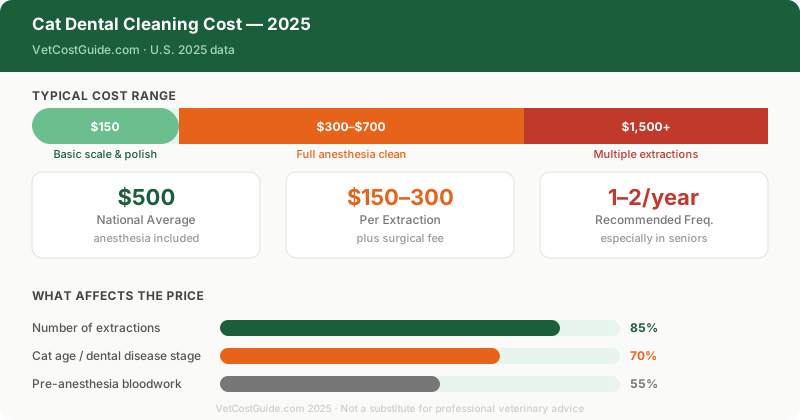
If your vet just quoted you $800 to clean your cat’s teeth and you nearly fell off your chair, you’re not alone. Cat dental cleanings cost significantly more than most owners expect — and for good reason. Unlike human dental cleanings, cat dentistry requires full general anesthesia, dental X-rays, and often tooth extractions. A straightforward cleaning with no extractions runs $300–$700. Once extractions are added — and in most cats over age 5, some extractions are typical — total costs of $800–$1,400 are the norm, not the exception.
- A cleaning-only dental (no extractions) averages $400–$600 at most US clinics in 2025.
- Each tooth extraction adds $75–$200 per tooth depending on complexity; multi-rooted teeth cost more.
- Dental X-rays (essential for proper care) add $150–$300 if not included in the base fee.
- By age 3, an estimated 70% of cats show signs of dental disease — making cleanings a health necessity, not a luxury.
What Does a Cat Dental Cleaning Cost?
The final bill depends on three main variables: baseline cleaning fee, dental radiology, and extractions. Here’s a realistic 2025 breakdown.
| Service | Low | Average | High |
|---|---|---|---|
| Dental Cleaning (no extractions) | $300 | $475 | $700 |
| Full-Mouth Dental X-Rays | $100 | $200 | $300 |
| Simple Extraction (per tooth) | $75 | $125 | $200 |
| Surgical Extraction (per tooth) | $150 | $250 | $400 |
| Full-Mouth Extraction (severe disease) | $800 | $1,200 | $2,000 |
| Pre-Anesthetic Bloodwork | $80 | $120 | $180 |
A realistic average for a middle-aged cat with moderate dental disease — cleaning + X-rays + 2–4 simple extractions — runs $700–$1,100 at most full-service veterinary clinics in 2025.
What’s Included in the Price?
Anesthesia induction and maintenance. This is the biggest cost driver that separates veterinary dentals from human ones. Your cat is fully anesthetized and intubated, with a licensed technician monitoring every vital sign throughout. Anesthesia time runs 45–90 minutes for a routine dental; longer for extensive extractions.
Ultrasonic scaling and polishing. The actual cleaning — removing tartar buildup above and below the gumline — is performed with ultrasonic scalers and hand instruments, identical in concept to human dental hygiene.
Dental radiographs. Full-mouth dental X-rays are now considered the standard of care for feline dentistry. They reveal tooth resorption lesions (a painful and common cat dental condition), root fractures, bone loss, and abscesses invisible to the naked eye. Without X-rays, vets are making treatment decisions in the dark.
Oral exam and charting. Each tooth is evaluated and findings recorded. This creates a baseline for tracking disease progression over time.
Post-procedure pain and antibiotics. Cats undergoing extractions go home with pain medication (typically 3–5 days). Antibiotics are prescribed if infection was present.
What Affects the Cost?
1. Number and type of extractions. This is the single biggest variable. Simple single-root extractions (incisors, canines) cost less than multi-root premolars and molars, which require surgical sectioning and bone removal.
2. Extent of dental disease. Severe periodontal disease, tooth resorption lesions, and jaw bone loss require more surgical time and complexity.
3. Cat’s age and anesthetic risk. Senior cats (10+) with concurrent conditions like kidney disease or heart disease need more intensive monitoring and potentially additional diagnostics before the procedure, increasing cost.
4. Whether dental X-rays are included. Some clinics bundle X-rays into the dental fee; others charge separately. Always ask whether radiology is included or additional.
5. Geographic location and clinic type. Specialty veterinary dentists (DAVDC) charge more than general practitioners but offer specialist-level expertise for complex cases.
- “Anesthesia-free dental cleanings.” These are marketed at groomers or low-cost facilities and involve scraping visible tartar from tooth surfaces on an awake cat. They are cosmetic only, miss disease below the gumline, cause significant stress to the cat, and are considered substandard care by the American Veterinary Dental College. They are not a substitute for a real dental cleaning.
- Getting a bill surprise at pickup. Many practices can’t give a firm quote until X-rays reveal what’s under the gumline. Ask your vet for a low/high estimate range and authorize a spending limit before surgery begins, so you can be called for approval if extractions exceed the estimate.
- Delaying indefinitely due to cost. Dental disease is progressive and painful. A cat with stage 2 periodontal disease today will develop stage 3 or 4 disease — requiring far more extensive (and expensive) extractions — within months to years.
Is Pet Insurance Worth It for This?
Dental coverage is where pet insurance policies diverge significantly. Many standard policies exclude dental illness (as opposed to dental accidents like a broken tooth from trauma). Before purchasing a policy, specifically ask whether periodontal disease, tooth resorption, and dental cleanings are covered.
Policies that do include dental illness — such as Healthy Paws (with limitations), Embrace, or ASPCA Pet Health Insurance — typically cover extractions and treatment for diagnosed dental disease after your deductible. Routine cleanings as preventive care are usually excluded from illness policies but may be reimbursed under a wellness add-on rider ($75–$150 per year).
For a cat with known dental disease requiring annual or biennial cleanings plus extractions, a policy with dental illness coverage can easily pay for itself.
How to Save Money
Start brushing your cat’s teeth now. Daily tooth brushing with a pet-safe enzymatic toothpaste is the single most effective way to slow tartar buildup and delay the need for professional cleanings. Even 3–4 times per week provides measurable benefit. Starting this habit with a kitten is far easier than with an adult cat.
Use VOHC-accepted dental products. The Veterinary Oral Health Council (VOHC) certifies dental chews, treats, and water additives that have been shown to reduce plaque or tartar. Products like Greenies Dental Treats and Hills t/d diet carry this seal.
Ask about bundling with annual wellness. Some clinics offer a discount when the dental is scheduled alongside an annual wellness exam, vaccines, and bloodwork.
Ask for a detailed estimate in advance. Request an itemized quote and ask your vet to explain the range. If the cleaning reveals only minimal disease, you’ll be closer to the low end. Going in with realistic expectations prevents sticker shock at pickup.
Consider a veterinary dental school. Schools with veterinary dentistry residency programs (UC Davis, University of Pennsylvania, Colorado State) offer specialist-level dental care at reduced rates. Cases take longer — residents work under supervision — but the quality is excellent.
Frequently Asked Questions
How often does my cat need a dental cleaning? It depends on your cat’s individual dental health, breed, and home care routine. Some cats need annual cleanings; others can go 2–3 years between cleanings with good home dental hygiene. Your vet will assess at each annual exam and recommend timing based on tartar accumulation and disease staging.
Is anesthesia safe for cats? Modern veterinary anesthesia is very safe for healthy cats. Pre-anesthetic bloodwork identifies organ function issues that affect anesthetic protocol. The risk of anesthetic complications in a healthy cat is less than 0.1%. The risk of untreated dental pain and infection is a much greater health concern over time.
My cat is 12 years old — is it too risky to do a dental cleaning? Age alone is not a contraindication. Senior cats absolutely can and do undergo safe dental procedures. Pre-anesthetic bloodwork and sometimes a cardiac workup help assess risk. A healthy 12-year-old cat with normal organ values is a reasonable anesthetic candidate. The pain and systemic inflammation from severe dental disease may pose a greater long-term risk than a carefully monitored anesthetic event.
What happens if I don’t get my cat’s teeth cleaned? Periodontal disease causes chronic pain, tooth root abscesses, and systemic inflammation linked to kidney and heart disease. Cats are stoic and rarely show obvious pain signals, so owners often don’t realize how much discomfort their cat is carrying. Untreated severe dental disease also leads to more extensive extractions when treatment eventually happens — increasing cost substantially.