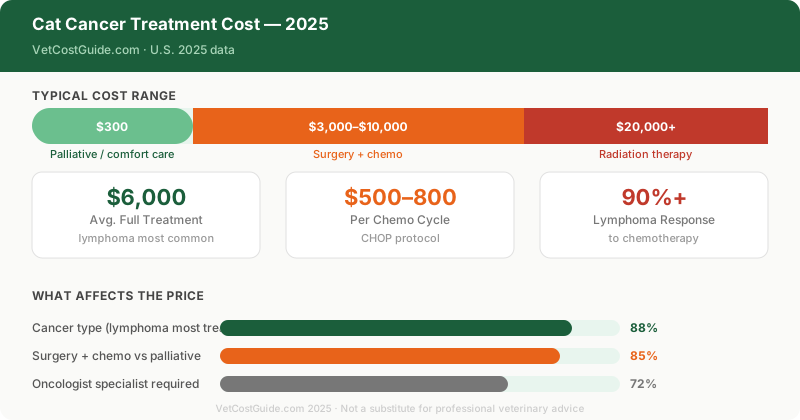
Cancer is the leading cause of death in cats over age 10, and the cost of treatment varies as widely as the disease itself. Feline lymphoma—the most common cat cancer—can be treated with chemotherapy for $500–$800 per cycle, providing 6–12 months of good-quality life at a total cost of $3,000–$6,000. A mammary tumor caught early costs $800–$2,500 for surgery and may be curable. Vaccine-associated sarcoma, a rare but aggressive tumor at injection sites, requires surgery plus radiation and runs $5,000–$15,000. Understanding what each cancer type costs and what the treatment realistically achieves gives cat owners the information they need to make decisions that match both their budget and their values.
- Feline lymphoma is the most common cat cancer and responds well to chemotherapy; the CHOP protocol costs $500–$800 per cycle for 6+ cycles, with 60–70% of cats achieving remission and a median survival of 6–12 months.
- Mammary tumor surgery costs $800–$2,500 and is potentially curative for small, early-stage tumors; unlike dogs, 85–90% of cat mammary tumors are malignant, making early detection and prompt treatment critical.
- Vaccine-associated sarcoma (FISS) requires aggressive wide-margin surgery plus radiation therapy, totaling $5,000–$15,000, due to extremely high local recurrence rates with surgery alone.
- Pet insurance enrolled before any mass is noted in a medical record can cover 70–90% of oncology costs—a potential saving of $3,000–$12,000 for major cancer cases.
Cat Cancer Treatment Cost Breakdown
| Type | Low | Average | High |
|---|---|---|---|
| Diagnostics (biopsy + staging) | $300 | $550 | $800 |
| Feline lymphoma chemo (per cycle) | $500 | $650 | $800 |
| CHOP protocol full course (6+ cycles) | $3,000 | $4,500 | $6,000 |
| Mammary tumor surgery | $800 | $1,650 | $2,500 |
| FISS surgery + radiation | $5,000 | $10,000 | $15,000 |
| Oral squamous cell carcinoma palliative (monthly) | $300 | $650 | $1,000 |
| Splenectomy (for splenic masses) | $1,500 | $2,250 | $3,000 |
| Palliative care only (monthly) | $100 | $250 | $400 |
| Total: curative intent (lymphoma) | $3,000 | $5,500 | $8,000 |
| Total: curative intent (FISS) | $5,000 | $10,500 | $15,000 |
What’s Included in the Price
Diagnostics and staging are the necessary first step before any treatment decision. Fine-needle aspirate ($100–$200) provides rapid cytology results within 24 hours and is appropriate for many masses. Biopsy with histopathology ($250–$500) is required for definitive diagnosis and tumor grading. Staging for lymphoma includes chest X-rays, abdominal ultrasound, lymph node aspiration, and bone marrow sampling in some cases—adding $400–$700 to the diagnostic workup.
Feline lymphoma chemotherapy most commonly uses a multi-agent CHOP protocol (cyclophosphamide, doxorubicin, vincristine, prednisone) with biweekly appointments over 6 months. Cats typically tolerate chemotherapy significantly better than humans—fewer than 15% experience side effects severe enough to require supportive care. Unlike the dog CHOP protocol, feline doses are often lower, making each cycle $500–$800 compared to $800–$2,000 in dogs. A COP protocol (omitting doxorubicin) is slightly less effective but costs $300–$500 per cycle and may be recommended for cats with cardiac concerns.
Mammary tumor surgery is the primary treatment for feline mammary carcinoma. Because feline mammary tumors are malignant in 85–90% of cases, aggressive surgical excision—typically unilateral or bilateral mastectomy (removal of the entire mammary chain) rather than lumpectomy—is recommended. The surgery costs $800–$2,500 depending on extent. Chemotherapy adjuvant treatment with doxorubicin is often recommended following surgery for aggressive tumors, adding $500–$700 per cycle for 4–6 cycles.
Feline injection-site sarcoma (FISS) is an aggressive soft-tissue sarcoma developing at vaccination sites, most commonly between the shoulder blades. These tumors invade locally and recur rapidly after incomplete excision—local recurrence after surgery alone exceeds 70% within 6 months. Treatment requires surgery with wide (3–5 cm) margins plus radiation therapy, often preceded by chemotherapy to reduce tumor size. The combination approach significantly improves local control but does not always prevent metastasis.
What Affects the Cost
Cancer type. The four most common feline cancers—lymphoma, squamous cell carcinoma, mammary carcinoma, and fibrosarcoma—have dramatically different treatment costs and expected outcomes. Intestinal lymphoma treated with oral chlorambucil and prednisone (a common, lower-cost option for small-cell lymphoma) costs only $50–$100/month and may produce remissions of 2+ years. Oral squamous cell carcinoma has a very poor prognosis with no curative treatment; costs are primarily palliative.
Stage at diagnosis. Early-stage mammary tumors smaller than 2 cm have a median survival of over 3 years with surgery. Tumors larger than 3 cm at diagnosis have a median survival of 6 months even with treatment. Early detection dramatically changes both outcomes and cost trajectories.
Oncology specialist access. Veterinary oncologists charge $250–$450 for initial consultations and command higher per-procedure fees than general practitioners. However, their expertise in protocol selection, toxicity monitoring, and supportive care management typically improves both remission rates and the cat’s quality of life during treatment. For lymphoma and FISS especially, specialist involvement is worth the additional cost.
Cat age and overall health. Cats over 14 or those with concurrent kidney disease, hyperthyroidism, or cardiac disease may not be candidates for full-dose CHOP chemotherapy due to organ function limitations. Dose reductions or protocol changes reduce efficacy somewhat but allow treatment to continue. Annual bloodwork ($80–$150) is essential throughout chemotherapy to catch early organ toxicity.
Geographic location. Oncology specialty centers in urban markets (Boston, Chicago, Denver, Atlanta) charge 30–50% more than similar facilities in mid-sized cities. Academic teaching hospitals (Tufts, Cornell, UC Davis, Colorado State) offer oncology services at 15–30% below private specialty practice rates.
- Delaying diagnosis of lumps or masses in senior cats. Any new lump in a cat over age 8 should be evaluated within 2–4 weeks of discovery, not monitored for months. Fine-needle aspirate is a 10-minute, minimally invasive, low-cost procedure that provides preliminary answers quickly. The cost of delayed diagnosis of a curable mammary tumor or resectable sarcoma is measured in lost survival time, not just dollars.
- Enrolling in pet insurance after a mass has already been noted in the medical record. Insurance companies review medical records at enrollment, and any documented mass, lump, or “monitor this area” notation becomes grounds for exclusion of cancer-related claims. Enroll before your cat has any documented abnormalities.
- Assuming palliative care means giving up on quality of life. For cats with cancers that have no curative options (oral squamous cell carcinoma, stage IV lymphoma), palliative care using pain management, appetite stimulants, anti-nausea medications, and prednisone at $100–$300/month can provide weeks to months of genuinely comfortable life. It’s not the same as aggressive treatment, but it’s not the same as doing nothing either.
Is Pet Insurance Worth It?
For cats, pet insurance is most clearly valuable for oncology costs—the single largest category of unexpected veterinary expense in cats over age 7. A policy enrolled before any cancer-related findings can cover 70–90% of chemotherapy, surgery, and staging costs after deductibles.
Annual premiums for cats run $200–$600 depending on age, breed, and coverage level. Against a $5,000 lymphoma treatment course, an 80% reimbursement policy with a $250 deductible returns $3,800—more than 5–10 years of premiums for a young cat enrolled early. Siamese, Burmese, and other Oriental breeds have elevated lymphoma risk; Persian and Himalayan cats have elevated nasal and facial cancer rates. Breed-specific risk increases the insurance value proposition for these populations.
The enrollment timing constraint is absolute: once any lymph node enlargement, abdominal mass, or unusual lump is noted in any medical record, those findings and anything related to them are typically excluded. There is no retroactive coverage.
How to Save Money
Learn to perform monthly home wellness checks on your cat. Gently palpating the mammary chain (two rows of nipples extending from chest to abdomen), feeling lymph nodes in the neck and armpits, and noting any new lumps monthly gives owners the best chance of catching tumors at the smallest, most treatable—and most affordable—size. This takes 2–3 minutes and costs nothing.
Explore oral metronomic chemotherapy protocols for maintenance. After achieving remission with CHOP, some oncologists transition cats to oral metronomic protocols (low-dose cyclophosphamide plus chlorambucil, sometimes with piroxicam) for maintenance therapy at $30–$80/month—dramatically lower cost than continued full CHOP treatment.
Ask about clinical trials at veterinary academic hospitals. The Comparative Oncology Trials Consortium maintains trials for feline cancers at multiple academic centers, providing cutting-edge treatment at reduced or no cost in exchange for research participation. Cornell, UC Davis, Colorado State, and other veterinary schools are worth contacting.
Consider COP instead of CHOP for lymphoma in cats with cardiac concerns. The COP protocol (omitting doxorubicin, which has cardiotoxic effects) is slightly less effective than CHOP but costs $300–$500 per cycle vs. $500–$800 for CHOP—meaningful savings over a 6-cycle course. For cats with pre-existing heart disease, COP is often medically indicated anyway.
Use compounding pharmacies for maintenance medications. Many palliative and maintenance oncology medications (prednisolone, chlorambucil, piroxicam) can be compounded into fish-flavored transdermal gels or liquids by veterinary compounding pharmacies at costs well below retail prescription pricing, and in forms cats are more willing to accept.
Frequently Asked Questions
What is the most common cancer in cats? Lymphoma is the most common cancer in cats, accounting for 30% of all feline tumors. It most commonly affects the intestinal tract (small intestinal lymphoma), but can also involve the mediastinum (chest), kidneys, and multicentric (lymph node) locations. Small-cell intestinal lymphoma has a very favorable prognosis with oral chemotherapy; high-grade lymphoma is treated more aggressively but carries a more guarded prognosis.
What is the survival time for cats with lymphoma on chemotherapy? Small-cell (low-grade) intestinal lymphoma treated with oral chlorambucil and prednisone has a median survival exceeding 2 years, with some cats living 3–4 years in remission. High-grade lymphoma treated with CHOP protocol has a median survival of 6–12 months, with 60–70% of cats achieving initial remission. Without treatment, high-grade lymphoma is fatal within 4–6 weeks.
Is chemotherapy in cats as hard as in humans? No. Veterinary chemotherapy protocols use lower doses than human oncology because the goal is quality of life rather than maximum tumor kill. Less than 15% of cats receiving chemotherapy experience side effects severe enough to require supportive treatment. Most cats undergoing chemo maintain normal appetite, weight, and activity levels throughout treatment.
Should I spay my cat to reduce cancer risk? Yes—spaying before the first heat cycle reduces lifetime mammary cancer risk by over 90%. After the first heat, the protective effect decreases significantly. Spaying after age 2 provides minimal reduction in mammary cancer risk. This is one of the clearest preventive interventions in veterinary medicine.