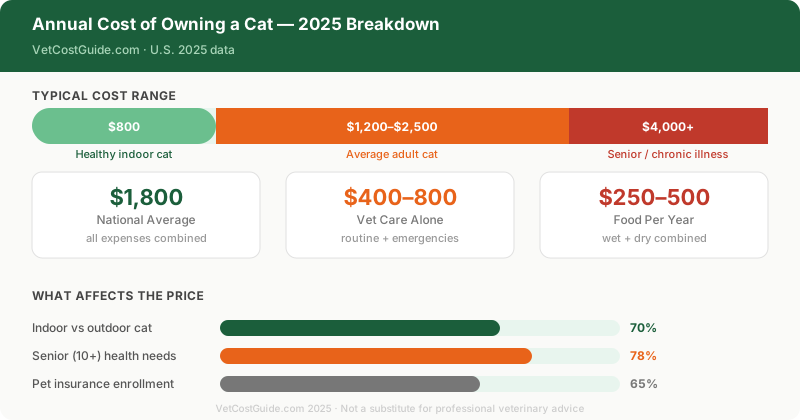
Cats have a well-earned reputation as low-maintenance pets — and compared to dogs, they genuinely are. No daily walks, no professional grooming for most short-haired cats, and generally lower boarding costs. But “low-maintenance” doesn’t mean free. In 2025, a typical indoor adult cat costs $1,000–$2,000 per year when you account for food, litter, veterinary care, and periodic boarding. Senior cats and long-haired breeds push that total meaningfully higher. Understanding the real cost before adopting is the most responsible financial decision you can make for your household.
- An indoor adult cat costs $1,000–$2,000/year in 2025 — the most budget-friendly cat ownership scenario.
- Litter is a frequently underestimated fixed cost at $150–$400/year depending on litter type and household size.
- Senior cats (age 10+) cost $1,500–$3,500/year as age-related health conditions accumulate.
- Dental cleaning every 1–3 years at $300–$700 is the largest single-year expense spike for most cat owners.
Cost Breakdown
| Expense Category | Indoor Cat | Indoor-Outdoor Cat | Senior Cat (10+) |
|---|---|---|---|
| Food (annual) | $300 | $400 | $500 |
| Litter (annual) | $150 | $200 | $200 |
| Vet Care (annual, wellness) | $400 | $500 | $900 |
| Grooming (long hair only, annual) | $0–$200 | $0–$200 | $0–$500 |
| Boarding/Pet Sitter (annual) | $200 | $300 | $300 |
| Toys & Supplies (annual) | $100 | $150 | $150 |
| Insurance (optional, annual) | $200 | $250 | $500 |
| Total (without insurance) | $1,000 | $1,500 | $2,500 |
Senior cat totals include the cost of more frequent bloodwork, a dental cleaning in some years, and occasional prescription food or medication — but assume no active chronic disease. Cats with CKD, hyperthyroidism, or diabetes add $500–$4,000/year in condition-specific management costs.
What’s Included
Food. Most cats eat 4–6 oz of canned food and/or 1/4–1/2 cup dry food daily. A mid-quality wet food diet (Purina Pro Plan, Hill’s Science Diet, Royal Canin) runs $1–$2/day — $360–$730/year. Premium or raw-food diets cost more. Prescription diets (dental, urinary, renal, diabetic) run $60–$120/month and represent a significant cost increase when medically necessary.
Litter. This is the biggest variable that new cat owners underestimate. Clay clumping litter costs $20–$35 for a 20–40 lb bag lasting 2–4 weeks per cat. Annual cost: $150–$250 for standard clumping litter. Premium litters (crystal silica, walnut shell, corn/wheat biodegradable) run $30–$60/month, or $360–$720/year. Multi-cat households multiply this cost proportionally.
Veterinary care. A healthy indoor adult cat’s annual vet bill includes a wellness exam ($45–$75), FVRCP booster (every 3 years; ~$35 when due), rabies vaccine ($20–$30), and flea/parasite prevention ($60–$120/year). A dental cleaning every 2–3 years at $400–$700 adds $130–$350 annually when amortized. Annual wellness total: $400–$600 for a young to middle-aged cat.
Grooming. Short-haired cats (the majority) are fully self-grooming and cost $0 in professional grooming. Long-haired breeds (Persian, Maine Coon, Ragdoll) need brushing several times weekly to prevent mats, and professional grooming or “lion cuts” every 6–12 months at $60–$150 per appointment. Annual grooming cost for long-haired cats: $200–$500.
Boarding and pet sitting. Unlike dogs, cats can often be managed for short trips with an automatic feeder, water fountain, and a daily or every-other-day pet sitter check-in at $20–$30/visit. Full cat boarding runs $20–$45/night. A household that travels 2 weeks per year spends $200–$600 in cat care.
Supplies and enrichment. Annual supply costs — replacing toys, litter boxes (recommended to replace annually), scratching posts, treats — average $100–$200 for most households. The first year is higher with initial purchases (carrier, litter box, bed, scratching post: $150–$400 setup).
What Affects the Cost
1. Indoor vs. outdoor lifestyle. Indoor-only cats are cheaper, healthier, and live longer (average 12–18 years vs. 5–7 years for outdoor cats). Outdoor cats face higher veterinary costs from trauma (cat fights, vehicle injuries), infectious disease, and parasite exposure. Flea prevention is especially critical for outdoor cats.
2. Number of cats. Multi-cat households scale food and litter costs linearly but share some fixed expenses (pet sitter covers all cats for one fee; insurance per-pet costs apply). Harmony in a multi-cat household — assessed via litter box count, vertical space, and territorial compatibility — also prevents stress-related health costs like FIC flare-ups.
3. Breed. Most domestic short-hair mixed cats (the majority of shelter cats) have lower grooming needs and fewer breed-specific health costs. Persian cats face hereditary kidney disease (PKD) and require significant grooming. Maine Coons have higher rates of hypertrophic cardiomyopathy (HCM) — an echocardiogram screening costs $300–$500.
4. Age. Kitten first-year costs are higher (initial vaccine series, spay/neuter at $200–$500, initial setup costs). Senior cats face rising vet costs as chronic conditions become more likely. The low-cost years are roughly ages 2–8.
5. Geographic location. Veterinary fees in major coastal cities are 40–80% higher than rural areas. Litter and food costs vary modestly by region. Urban cat owners typically pay more in pet-sitting costs due to higher rates.
- Litter cost creep. Switching to a premium litter (crystal, walnut-shell, automatic litter box subscription) can quietly double your litter budget from $150/year to $400–$700/year. Weigh the benefits (odor control, convenience, reduced tracking) against the cost — a clean litter box scooped daily with standard clumping litter is equally hygienic.
- Underestimating dental costs. Cat dental cleanings require general anesthesia, full-mouth X-rays, and often extractions. The bill range of $400–$1,400 is the single largest year-specific expense spike for most cat owners. Not budgeting for this every 1–3 years is one of the most common financial surprises of cat ownership.
- Assuming cats are “set it and forget it” pets. Cats need daily interaction, environmental enrichment (vertical space, scratching surfaces, play), and routine health monitoring. A cat that appears fine may have been silently losing weight for months — a sign of hyperthyroidism, CKD, or diabetes. Monthly weight checks at home are free and catch problems early.
Is Pet Insurance Worth It?
Cats generally have lower insurance premiums than dogs — typically $200–$500/year for comprehensive illness and accident coverage versus $300–$800 for dogs. The case for cat insurance is strongest for:
- Purebred cats with known health predispositions (Maine Coon, Persian, Ragdoll, Siamese)
- Cats enrolled at kitten age, before any conditions develop pre-existing status
- Owners who want protection against the high-cost scenarios: urinary blockage ($1,500–$3,000), cancer surgery ($3,000–$8,000), or diabetes management ($1,500–$3,000/year)
For healthy indoor mixed-breed cats whose owners maintain a $2,000 emergency fund, the math on insurance is less compelling — premiums over a 15-year lifespan total $3,000–$7,500. If the cat remains largely healthy, the emergency fund strategy may come out ahead. The tradeoff is bearing concentrated risk versus distributed premium cost.
How to Save Money
Adopt from a shelter. Shelter adoption fees ($75–$200) include spay/neuter, initial vaccines, microchip, and often a flea treatment — representing $400–$700 in services for a fraction of the cost of a breeder purchase price plus separate procedures.
Buy litter in bulk. The per-pound cost of standard clumping litter drops 20–30% buying the largest available bag at a warehouse club. A 40-lb bag at Costco or Sam’s Club extends 4–6 weeks per cat and beats all mid-size retail options.
Use a cat-calibrated glucometer and do home weights. Monthly weight checks on a baby scale ($20 purchase) and at-home alertness for coat changes, water intake, and litter box habits catch problems early — when they’re cheapest to treat.
Switch to mostly wet food. While wet food appears more expensive per serving than dry kibble, it dramatically reduces risk for urinary disease (a major cost driver) by increasing daily water intake. The true cost comparison should factor in the reduced probability of a $1,500–$3,000 urinary blockage.
Schedule dental cleanings on a vet’s recommended interval. Asking your vet to honestly assess whether a cleaning can wait another year (when appropriate) and building a dedicated dental savings fund avoids sticker shock when the time comes.
Frequently Asked Questions
Is it cheaper to have a cat or a dog? Yes, substantially. Annual cat ownership costs average $1,000–$2,500 versus $1,500–$6,000 for dogs. The biggest drivers of the difference are no professional grooming in most cases, no daily walking, lower boarding costs, and smaller bodies meaning smaller food and medication portions. Cats are genuinely among the more affordable companion animals when budgeted honestly.
How much should I budget for a kitten’s first year? First-year kitten costs typically run $1,500–$2,500 for an indoor kitten, including: adoption/purchase fee ($75–$1,500), spay/neuter ($200–$500), initial vaccine series ($150–$250), first-year supplies ($300–$500), and monthly food and litter. Year 2 and beyond normalizes to $1,000–$1,800.
Does indoor vs. outdoor status really affect cost that much? Yes. Outdoor cats have dramatically shorter average lifespans (5–7 years vs 12–18 years indoors), higher accident and injury rates, higher infectious disease exposure, and require more robust parasite prevention. The lifetime financial cost of an outdoor cat is often higher than an indoor cat despite similar or identical annual costs in the early years, because it terminates prematurely.
What’s the best way to manage pet costs if money is tight? Prioritize: (1) core vaccines and annual exam — non-negotiable preventive care; (2) parasite prevention; (3) a dedicated emergency fund of at least $1,000–$2,000 before purchasing other discretionary pet products. Low-cost spay/neuter clinics, shelter vaccine programs, and veterinary school clinics are legitimate cost-reduction options for routine care.