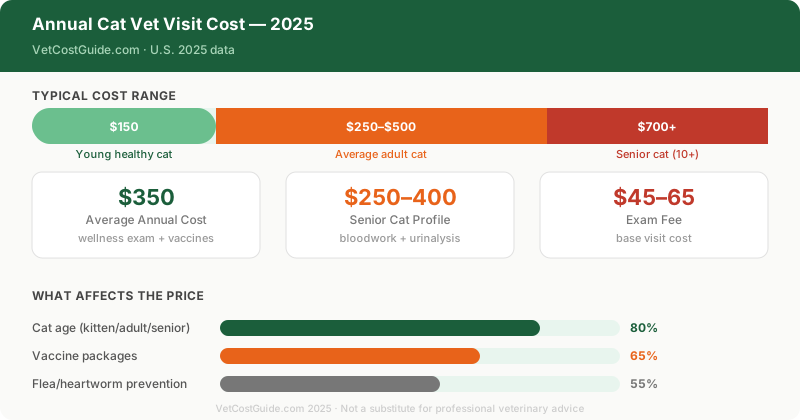
Owning a healthy cat still costs real money every year — and that’s a good thing, because preventive care is what keeps minor problems from becoming major ones. A young, healthy cat’s annual vet costs run $200–$400 in 2025 for a wellness exam, core vaccines, and flea prevention. By the senior years (age 10 and up), annual costs climb to $500–$900 as age-appropriate bloodwork, dental care, and more frequent checkups become necessary. Planning for these expenses by life stage means no surprises — and a healthier cat.
- The wellness exam itself costs $45–$75 at most US veterinary clinics — the foundation of every annual visit.
- Core vaccine series (FVRCP + rabies) adds $45–$75 annually for boosters; vaccines due less frequently in adults reduce this cost in off years.
- Dental cleaning every 1–3 years costs $300–$700 and is the largest single planned expense for most cats.
- Senior cats (age 10+) should have bloodwork every 6–12 months at $150–$350 per panel — the most impactful age-related cost increase.
Cost Breakdown
| Service | Low | Average | High |
|---|---|---|---|
| Wellness Exam | $45 | $60 | $75 |
| FVRCP Vaccine (booster) | $25 | $35 | $45 |
| Rabies Vaccine | $20 | $25 | $30 |
| FeLV Vaccine (at-risk cats) | $30 | $38 | $45 |
| Flea/Tick Prevention (annual) | $60 | $120 | $200 |
| Heartworm Prevention (annual) | $40 | $65 | $90 |
| Senior Bloodwork Panel | $150 | $250 | $350 |
| Dental Cleaning (no extractions) | $300 | $475 | $700 |
| Annual Total — Young Healthy Cat | $200 | $300 | $400 |
| Annual Total — Adult Cat (3–9 yrs) | $300 | $450 | $600 |
| Annual Total — Senior Cat (10+ yrs) | $500 | $700 | $900 |
The senior total assumes annual bloodwork and a dental cleaning every 2 years averaged out monthly. If a dental cleaning falls in a given year, the bill for that year can be $400–$700 higher than average.
What’s Included
Wellness exam. The physical examination is the cornerstone of preventive care and the reason every annual visit starts here. Your vet evaluates your cat from nose to tail — eyes, ears, teeth, heart, lungs, abdomen, lymph nodes, skin, coat, weight, and musculoskeletal health. This is where early arthritis, heart murmurs, dental disease, and lumps are first detected. Cost: $45–$75.
Core vaccines. FVRCP (feline viral rhinotracheitis, calicivirus, panleukopenia) is the core combination vaccine recommended for all cats. After the initial kitten series and one-year booster, FVRCP is typically given every 3 years in adult cats. Rabies vaccine is legally required in most states — given annually or every 3 years depending on the product used. Annual vaccine cost typically runs $45–$75 depending on which vaccines are due.
FeLV vaccine. Feline leukemia virus vaccine is recommended for kittens and cats with outdoor access or exposure to other cats. Indoor-only adult cats with no exposure risk can often skip this. Cost: $30–$45 when due.
Flea, tick, and heartworm prevention. Monthly topical or oral preventives (Revolution Plus, Advantage Multi, Bravecto Plus) protect against fleas, ear mites, heartworm, and some ticks. Annual cost for a reliable product: $100–$200. Cats in heartworm-endemic regions should receive a dedicated heartworm preventive — your vet can advise based on your geographic risk.
Senior bloodwork (age 10+). Chemistry panel plus CBC screens for kidney disease, liver disease, hyperthyroidism, diabetes, and anemia — all conditions that become dramatically more common after age 10. Annual bloodwork at this life stage is the most cost-effective tool for early disease detection. Cost: $150–$350 per panel.
Dental cleaning. Most adult cats need a dental cleaning every 1–3 years (some more frequently). It’s the largest planned expense in any given year and requires general anesthesia. Cost: $300–$700 without extractions; $700–$1,400 if extractions are needed.
What Affects the Cost
1. Cat’s age. Young healthy cats have minimal preventive costs. Senior cats need more frequent bloodwork, more dental care, and often start accumulating chronic conditions that require medication and monitoring.
2. Indoor vs. outdoor lifestyle. Outdoor and indoor-outdoor cats need FeLV vaccination, may need more robust flea/tick prevention, and face higher exposure to parasites and infectious disease — adding $50–$100 to annual preventive costs.
3. Geographic location. Veterinary fees in urban coastal cities (NYC, LA, San Francisco) run 40–80% higher than rural Midwest or South. A $60 exam in rural Kansas may cost $120 in Manhattan.
4. Whether a dental cleaning falls that year. Annual budgets vary significantly depending on whether a dental is needed. Averaging $500/year in dental costs over 3 years is more realistic than expecting $0 in years 1–2 and $1,500 in year 3.
5. Clinic type. Corporate clinic chains (Banfield, PetSmart/Banfield, VCA) often offer annual wellness plans that bundle services at a predictable monthly cost ($30–$60/month). Independent practices may be cheaper or more expensive depending on location. Low-cost vaccine clinics can significantly reduce vaccine costs but don’t include comprehensive exams.
- “Vaccine-only” low-cost clinics as a complete care substitute. Low-cost vaccine events (often at pet stores or shelters) provide vaccines at $15–$30 each — a real savings. But they typically don’t include a full physical exam. A wellness exam with an experienced vet is essential for catching problems your cat isn’t showing symptoms of yet. Use vaccine clinics for cost savings on the vaccine itself, but don’t skip a full annual exam.
- Skipping senior bloodwork. Many owners decline senior bloodwork to save $150–$350, not realizing it’s precisely when it matters most. Hyperthyroidism, early kidney disease, and diabetes caught at Stage 1 cost a fraction of what they cost to manage at Stage 3 or 4. Early detection pays for itself multiple times over.
- Dental disease compounding silently. Cats with dental disease rarely show obvious pain signs. Skipping recommended dental cleanings allows periodontal disease to progress — each year of delay typically means more extractions needed, dramatically increasing the eventual bill.
Is Pet Insurance Worth It?
Wellness or preventive care add-on riders — offered by companies like Embrace, PetPlan, and ASPCA — reimburse for annual exams, vaccines, and sometimes dental cleanings. These riders typically cost $9–$18/month and provide $200–$400 in annual wellness reimbursements. For a young cat with predictable, modest annual costs, these wellness riders may not provide meaningful financial benefit once premiums are accounted for.
The stronger case for pet insurance is for the unpredictable: the emergency $4,000 blockage, the cancer surgery, the broken leg. Comprehensive illness coverage is most valuable for that scenario, with wellness reimbursement as a secondary benefit rather than the primary justification.
How to Save Money
Spread dental costs across years. If your vet says your cat’s teeth look good and can wait another year, take the extension — but set aside $50–$75/month in a dedicated pet savings account so the cost doesn’t blindside you when the time comes.
Use FVRCP’s 3-year interval for adults. After the initial series, adult cats with current vaccination history only need FVRCP every 3 years per AAFP guidelines. Confirm your cat is on this schedule and skip unnecessary annual FVRCP boosters — saving $25–$45 every other year.
Compare prices across clinics. A 2025 survey of US veterinary fees found a 3x price range for identical services within the same metro area. For routine wellness care (unlike emergencies where you go to whoever is open), calling 2–3 clinics for pricing is straightforward and can save $50–$150 per visit.
Ask about wellness packages. Many practices offer bundled annual wellness packages that include exam, vaccines, bloodwork, and fecal test at 10–20% less than itemized pricing. Ask your clinic what packages they offer.
Brush your cat’s teeth. Daily tooth brushing can delay the need for professional cleanings by 1–2 years — potentially saving $300–$700+ per cleaning cycle.
Frequently Asked Questions
Does my indoor cat really need annual vet visits? Yes. Indoor cats still need annual exams and appropriate vaccines (rabies is legally required in most states regardless of indoor status), and they age silently. Many of the most common feline diseases — hyperthyroidism, kidney disease, dental disease, diabetes — progress without visible symptoms until they’re advanced. The annual exam is the safety net.
How often do adult cats need vaccines? After kittenhood, FVRCP boosters are given every 3 years for adult cats with low risk. Rabies is given every 1 or 3 years depending on the vaccine product used. FeLV is recommended annually for at-risk cats. Your cat’s vaccine schedule depends on individual risk factors and vaccination history — your vet will guide you.
At what age is a cat considered a senior? Most veterinary guidelines classify cats as senior at age 10–11 and geriatric at 15+. Senior cats should have a wellness exam twice yearly (every 6 months) rather than annually, and bloodwork at least once yearly. The twice-yearly exam catches the rapid changes that can occur as cats age, when 6 months of progression can make a significant clinical difference.
What’s typically not covered in a standard annual wellness visit? Illness diagnosis and treatment, medications, dental procedures, specialist referrals, and imaging are all additional costs beyond the wellness visit. If your cat shows any signs of illness at the annual exam — weight loss, lumps, abnormal bloodwork — those issues are billed separately from the wellness exam and can substantially increase the visit total.